Cat 6 Wiring Guide: Speed, Standards, and How to Make a Cat 5 Cable
You’re setting up a home network and wondering whether to go with cat 6 wiring or stick with the older standard you already have on hand. Maybe you’ve heard about cat 5 speed limitations and want to understand how much of an upgrade you actually need. Or you have a spool of older cable and want to know how to make cat 5 cable for a short run. This guide breaks it all down.
Understanding the differences between cable categories helps you make smarter choices without overspending. Whether you need cat 5 cable wiring for basic connectivity or want to future-proof with Cat 6, the process of learning how to make a cat 5 cable is a skill worth having.
Cat 6 vs Cat 5: What the Standards Actually Mean
Cat 6 wiring supports speeds up to 10 Gbps over short runs (up to 55 meters) and is rated for 250 MHz bandwidth. Cat 5e, the modern version of the older Cat 5, tops out at 1 Gbps and 100 MHz. For most home users, Cat 5e handles everyday streaming, gaming, and video calls without issue.
The main difference in cat 6 wiring construction is the internal separator (spine) that runs between the wire pairs, reducing crosstalk. This matters in densely cabled environments like server rooms or office buildings more than in a single home run.
Cat 5 Speed: What You Can Expect
Raw cat 5 speed is 100 Mbps at 100 MHz — adequate for basic internet but a bottleneck for fast local file transfers. Cat 5e improved this with better pair twisting, reaching 1 Gbps. If your internet plan is under 500 Mbps, even older 5e cable wiring holds up fine for the WAN link.
Cat 5 Cable Wiring: The T568B Standard
Most residential cat 5 cable wiring follows the T568B pinout. The wire order from pin 1 to 8 is: white-orange, orange, white-green, blue, white-blue, green, white-brown, brown. This is the dominant standard in North America. T568A is used internationally and for crossover cables.
Tools You Need Before You Start
- RJ45 crimp tool
- Wire stripper
- Cable tester
- RJ45 connectors (get a few extras)
- Cat 5e or Cat 6 bulk cable
How to Make Cat 5 Cable Step by Step
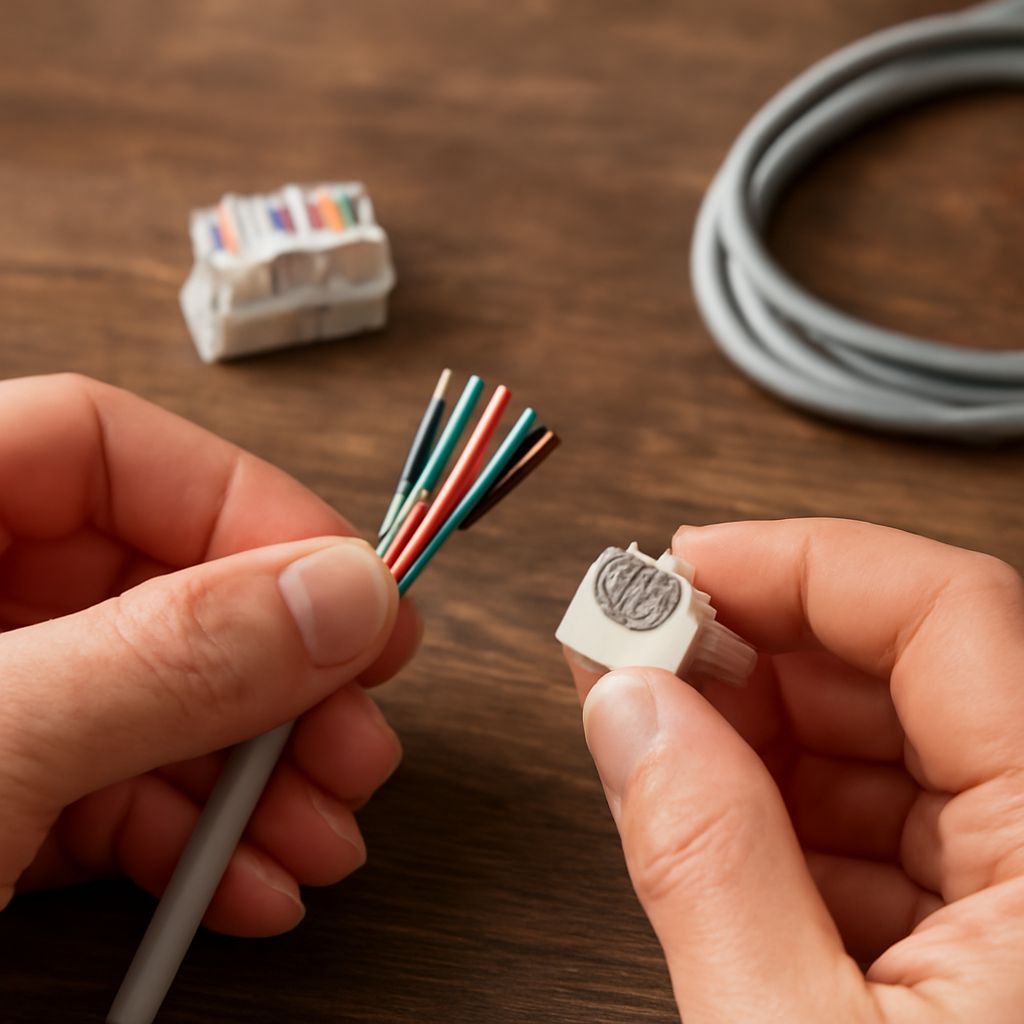
Learning how to make a cat 5 cable is straightforward with the right tools. Strip about 1.5 inches of the outer jacket without nicking the inner pairs. Untwist the pairs, arrange them in T568B order, and trim to an even 0.5-inch length. Insert into the RJ45 connector with the clip facing down, making sure each wire reaches the front. Crimp firmly.
How to Make a Cat 5 Cable: Testing the Result
After crimping both ends — or one end and a keystone jack — use a cable tester to verify all eight pins connect correctly. A faulty crimp shows up as an open pair or a short. Re-crimp if needed. The entire process of making a cat 5 cable from scratch takes under five minutes once you have the technique down.
Choosing Between Cat 5e and Cat 6 for New Runs
For brand new structured wiring, Cat 6 costs only marginally more per foot than Cat 5e and supports higher future speeds. If you’re fishing cable through walls you don’t plan to open again, the upgrade is worth it. For short patch cables under 10 feet, Cat 5e is perfectly adequate.
Next Steps
Label both ends of every cable you run and document the layout. Test with a cable tester before closing walls. For Cat 6 installations over 55 meters, drop back to 1 Gbps spec or use Cat 6A, which maintains 10 Gbps up to 100 meters.