Bathing Cats: How to Give Cat Baths Without the Drama
Your cat has gotten into something — motor oil, a sticky substance, something that smells awful — and self-grooming clearly isn’t going to cut it. You know bathing cats is not going to be a peaceful experience, but it has to happen. Or maybe your cat has a skin condition that requires medicated shampoo on a regular schedule, and you’re trying to figure out how to make the process less miserable for both of you.
Cat baths are genuinely necessary in certain situations. Most cats handle their own grooming efficiently, but there are real scenarios where you need to bathe cat thoroughly: flea infestations requiring flea shampoo, post-surgery grooming when your cat can’t self-clean, ringworm treatment requiring antifungal baths, and the occasional environmental contamination. Bathe a cat well enough, and the process gets faster with practice. Washing cats works best when you’re prepared and efficient — here’s how to do it right.
Preparation: Getting Everything Ready Before You Start
What You Need for a Cat Bath
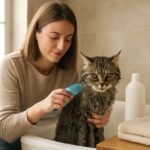
Gather everything before your cat is anywhere near the bathroom. You’ll need: a cat-specific shampoo (never human shampoo — the pH is wrong for feline skin), two large towels, a small cup or gentle handheld sprayer for rinsing, non-slip mat for the sink or tub bottom, and treats for after. If you’re using medicated shampoo, read the instructions on contact time — many require the product to sit on the skin for 5 to 10 minutes, which changes the whole dynamic of the bath.
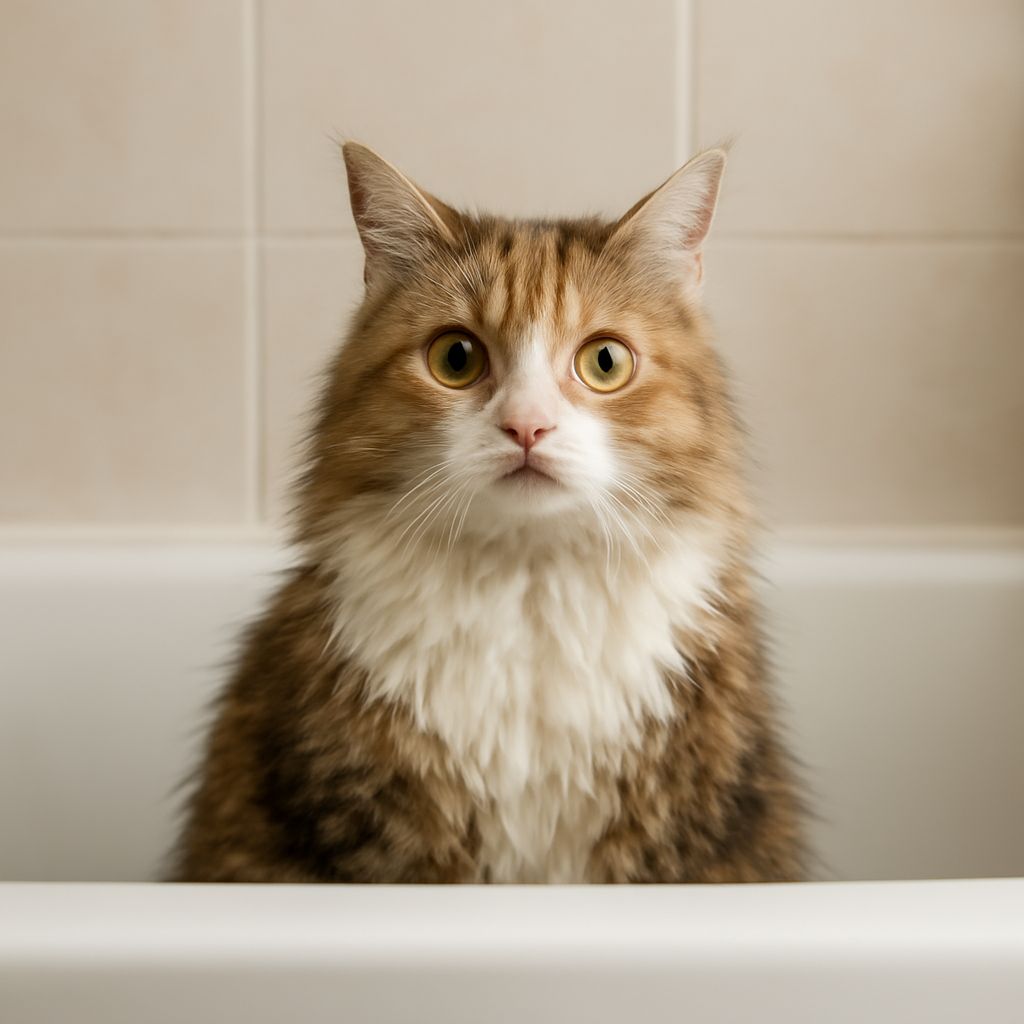
Warm the bathroom in advance. Cats lose heat quickly when wet, and a cold room makes the experience worse. Fill the basin or tub with 3 to 4 inches of lukewarm water before bringing the cat in — running water stresses most cats more than still water. Trim your cat’s nails before bathing if possible; this reduces injury risk for you if things go sideways.
Timing and Cat Disposition
The best time for cat baths is when your cat is already somewhat calm and has been recently active. A cat that’s just finished a play session is more relaxed and less likely to fight the process. Avoid bathing right after feeding. If your cat tends toward high anxiety, consider a pre-bath calming supplement (Zylkene, Feliway spray on a towel) about 30 minutes before, but check with your vet before using any calming products.
Step-by-Step: How to Bathe a Cat
Getting the Cat Wet
Place the cat in the prepared water. Keep your movements slow and confident — hesitation reads as uncertainty, and uncertain handlers escalate cat anxiety. Wet the cat from the neck down using your cup or sprayer, working toward the tail. Avoid the face, eyes, and ears entirely in this step; these areas are done separately at the end with a damp cloth, not submersion or direct spray.
Hold the cat firmly but gently with one hand under the chest. Cats feel most secure when they’re not sliding — hence the non-slip mat. Speak calmly throughout. Many cats will protest vocally but not actively fight if they feel stable and the water is the right temperature.
Shampooing and Rinsing
Apply shampoo from neck to tail, working it into a lather. The underside, between the toes, and around the tail base are areas to focus on for flea treatments and general washing cats situations. Rinse thoroughly — residual shampoo causes skin irritation and attracts dirt. Rinse twice if you’re uncertain. For medicated shampoos, check contact time instructions, keep the cat calm during the wait, and rinse completely.
Drying
Wrap the cat immediately in a towel when they come out of the water. Rub gently rather than aggressively — the goal is absorbing water, not friction that mats the fur. Switch to a second dry towel when the first is saturated. A handheld hair dryer on the lowest warm setting, held at least 12 inches away, can speed drying if your cat tolerates the noise. Most don’t, and towel drying to “damp” followed by a warm room is sufficient for most cats.
Keep the cat in a warm room until fully dry — particularly important in cold weather and for short-coated or senior cats that don’t thermoregulate as well.
Making Bathing Cats Less Stressful Over Time
Desensitization for Regular Baths
If your cat needs regular medicated baths, investing time in desensitization pays off significantly. Start by simply bringing the cat into the bathroom without any bathing. Then introduce the sensation of water on the paws. Then a brief neck-down wet without shampoo. Each step should be paired with treats and kept short. Over weeks, most cats become noticeably more cooperative, even if they never truly enjoy the process.
Professional Grooming as an Alternative
For cats that need regular baths but find them highly distressing, professional cat groomers are a practical option. Experienced groomers have techniques and setups that reduce cat stress significantly. Mobile groomers, who come to your home, are often even less stressful because the cat stays in a familiar environment.
Key takeaways: Successful cat baths depend on preparation — having everything ready before the cat is involved, using lukewarm water and cat-specific shampoo, and moving efficiently once you start. Washing cats is a skill that gets easier with repetition; desensitization training between bath sessions builds the cat’s tolerance over time. For medical bathing needs, your vet can advise on the specific shampoo, contact time, and frequency that applies to your cat’s condition.