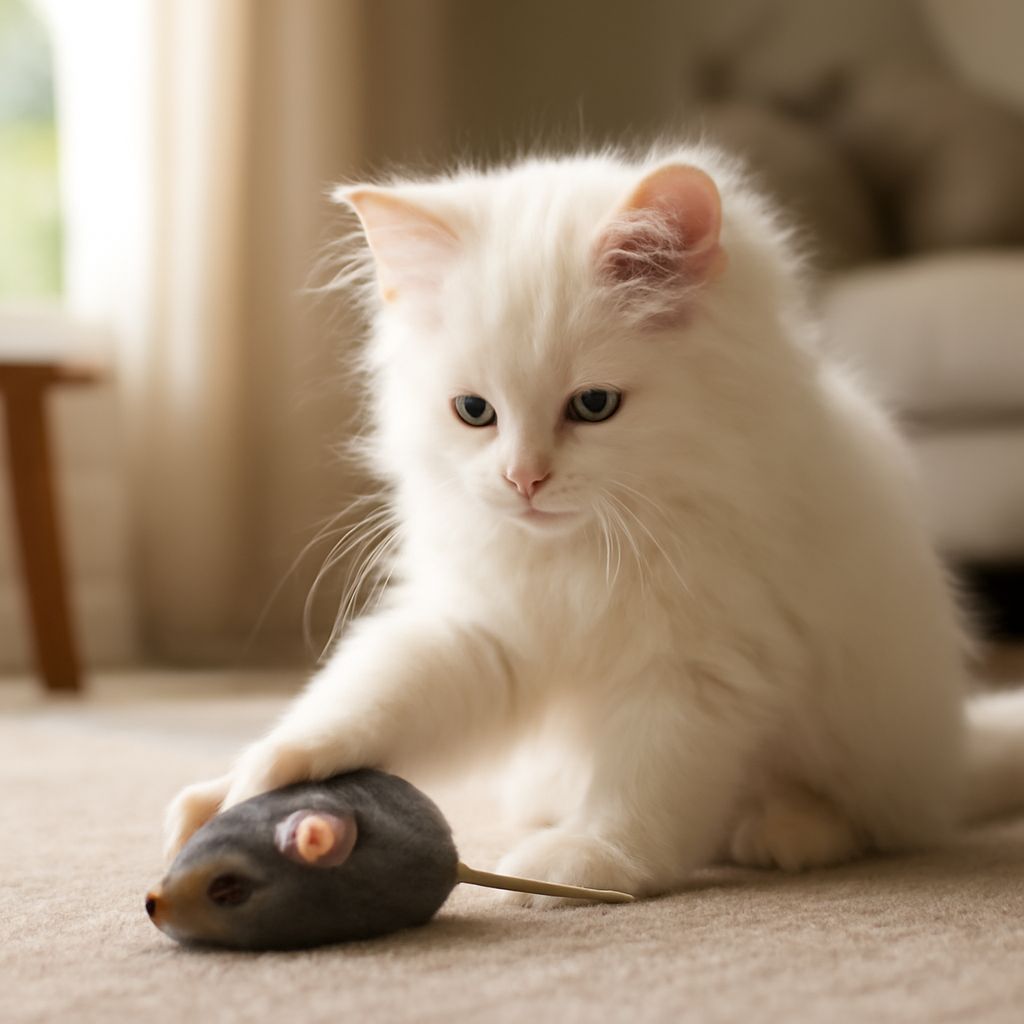
Cat Mouse Toy Guide: Best Types, Interactive Videos, and Safe Play
Your cat’s hunting instincts are wired deep. Even well-fed indoor cats stalk, pounce, and carry objects around the house — because the drive to hunt is separate from the drive to eat. A cat mouse toy taps directly into that circuitry, giving your cat an outlet that satisfies the full prey sequence: stalking, chasing, catching, and carrying. But not all mouse toys deliver the same level of engagement, and some hold your cat’s interest for about thirty seconds before getting ignored.
Whether you’re looking for a good mouse toy for cats that moves on its own, exploring whether a mouse video for cats actually works for screen-obsessed felines, or just trying to figure out the best mice for cats based on your cat’s play style, this guide covers what matters. Mouse toys for cats range from basic plush to electronic scurrying robots, and getting the right one makes a real difference in how much your cat actually uses it.
Types of Cat Mouse Toys
Plush and Catnip-Filled Mice
The simplest cat mouse toy is a small stuffed fabric mouse, often filled with catnip. These are inexpensive, machine-washable in most cases, and durable enough for most cats. The catnip response varies by individual — some cats go wild, others show no reaction. If your cat rolls around with a catnip mouse, kicks it with their back feet, and carries it around the house, you’ve found their match. Replace catnip fillings periodically since the potency fades within a few weeks of opening.
Electronic and Motorized Mouse Toys
Motorized mice that skitter across the floor on their own provide a more realistic prey simulation than static toys. Models like the SmartyKat Hot Pursuit or Hexbug Nano cat toys create unpredictable movement that triggers the stalking and pouncing response more reliably than anything you can replicate by dangling a toy yourself. Battery life and motor durability are the main variables to check before buying — some cheap models burn out within a week of regular use.
Wand and Feather Mouse Hybrids
Wand toys with a mouse-shaped lure at the end combine interactive play with the mouse-prey shape cats respond to. These require your participation, which makes them both more engaging for the cat and better for bonding. The Da Bird wand line and similar products let you create realistic fleeing movements that electronic toys can’t fully replicate. Twenty minutes of wand play per day is enough for most cats to satisfy their prey drive.
Mouse Videos for Cats and Screen Play
A mouse video for cats — a video of mice or other small animals moving across the screen — works for some cats and does nothing for others. Cats that respond to screen content tend to be younger, visually oriented cats who already show interest in fast-moving objects on TV. The video provides visual and auditory stimulation but no physical outlet, so it’s best used as a supplement rather than a replacement for hands-on play. If your cat paws at the screen and gets frustrated that nothing responds, switch to a physical toy instead.
For cats that do engage with screen content, dedicated cat TV channels on YouTube and streaming services offer hours of birds, squirrels, and mice in high definition. Position the screen at cat level so they can interact with it comfortably.
Safety Tips for Mouse Toy Play
Safety recap: Check mouse toys regularly for loose eyes, detached tails, or fraying fabric — small parts are a choking hazard. Remove electronic toys with batteries when you’re not supervising play; a determined chewer can access the battery compartment. Wand toys should always be put away after play sessions — leaving them out unsupervised can result in your cat swallowing the string or getting tangled.