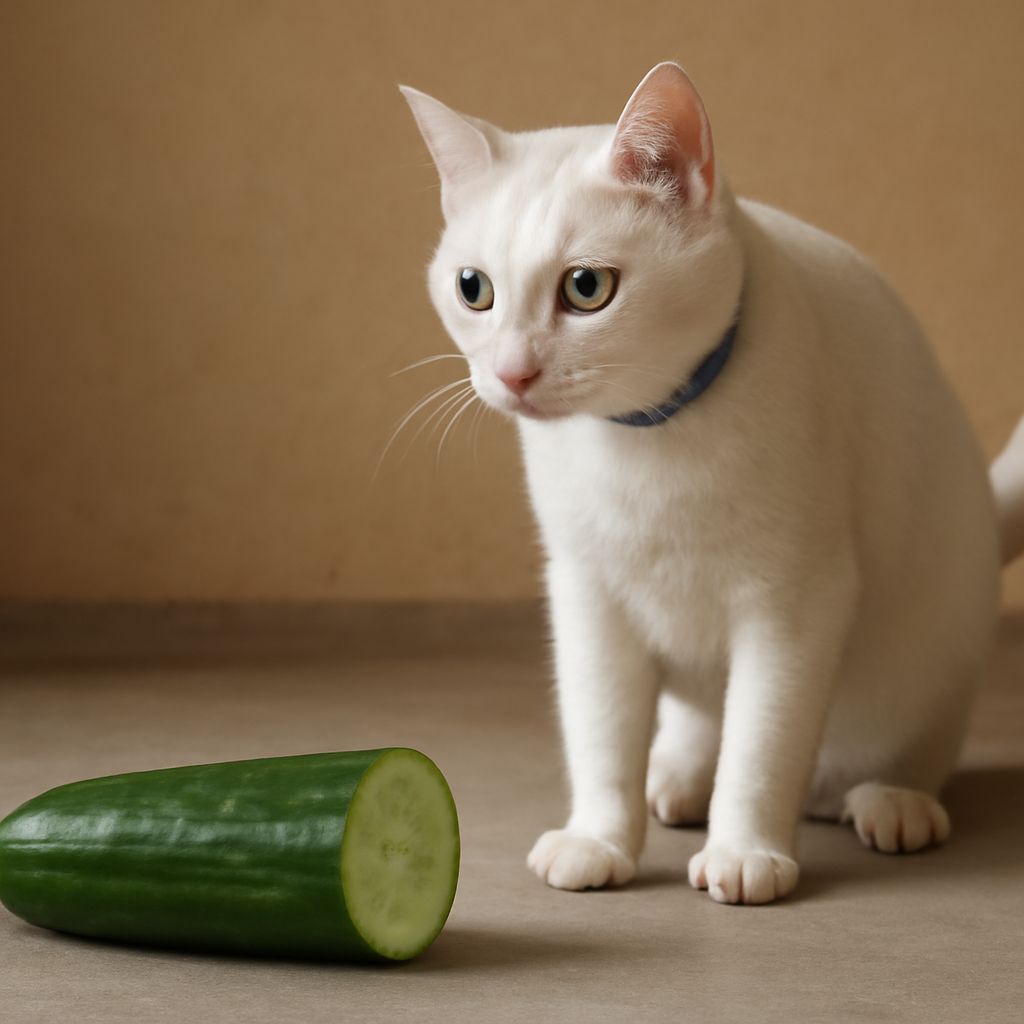
Why Are Cats Scared of Cucumbers? The Real Explanation
You’ve probably seen the videos: someone places a cucumber behind a cat while it’s eating, the cat turns around, and launches itself backward in a panic. The clips are funny, but if you’ve ever found yourself wondering why are cats scared of cucumbers, the explanation is more interesting — and more important to understand — than the laugh might suggest.
The short answer is that why cats are scared of cucumbers comes down to the element of surprise, not the cucumber itself. Are cats really scared of cucumbers as objects? Not really. Why are cats scared of cucumbers placed silently behind them has more to do with cat neurology and survival instincts than anything specific about the vegetable. And the fact that cats are scared of cucumbers in these situations carries a real welfare message that’s worth knowing.
The Science Behind the Startle Response
It’s About Surprise, Not Cucumbers
Cats have a highly tuned startle response. When something appears suddenly and silently in a space they thought was safe — like their feeding area — the brain’s threat-detection system fires immediately. The reaction is fast, full-body, and instinctive. A cucumber, a zucchini, a banana, or almost any unexpected object would produce a similar response under the same conditions. Cucumbers became famous online because of the videos, not because they’re uniquely terrifying to cats.
The Snake Theory
One common explanation is that cucumbers trigger an instinctive fear of snakes due to their elongated, curved shape. It’s a plausible idea — snakes are among the natural predators that evolved alongside cats’ ancestors. But the evidence for this specific explanation is anecdotal rather than scientifically confirmed. The more likely driver is simply the sudden, silent appearance of an unexpected object in a familiar, supposedly secure space.
Why the Feeding Area Matters
Cats feel most vulnerable while eating because they’re focused on food and not scanning for threats. Surprising a cat in this context produces a stronger reaction than the same stimulus would in a more neutral setting. It’s the combination of vulnerability plus surprise, not the cucumber itself, that produces the dramatic leap.
Why You Shouldn’t Test This on Your Cat
The viral videos make the startle reaction look funny, but the welfare cost is real. Deliberately inducing fear in a cat — even briefly — causes genuine stress. Repeated stress episodes can lead to anxiety, changes in eating behavior, and reduced trust toward the people in the household. Cats that are repeatedly startled in their feeding area may start avoiding the food bowl, eating less, or showing other stress-related behaviors.
Veterinary behaviorists have been consistent on this point: intentionally frightening a cat for entertainment is not harmless. The fact that the cat recovers in a few seconds doesn’t mean the experience was neutral. Chronic, low-level stress accumulates in cats just as it does in people.
What This Tells You About Cat Behavior
The cucumber response is a useful window into how cats process their environment. They build detailed mental maps of their spaces and have strong expectations about what should and shouldn’t be where. Unexpected changes — a new piece of furniture, a moved litter box, a strange smell in a familiar room — trigger cautious or avoidant responses even when there’s no visible threat. This is why gradual introductions and stable routines matter so much in feline care.
Key takeaways: Cats react to cucumbers because of sudden, unexpected appearance in a safe space, not because cucumbers are inherently frightening. The startle reflex is a normal survival response, not a quirky personality trait. Deliberately triggering it causes real stress and is worth avoiding regardless of how entertaining the reaction looks on screen.