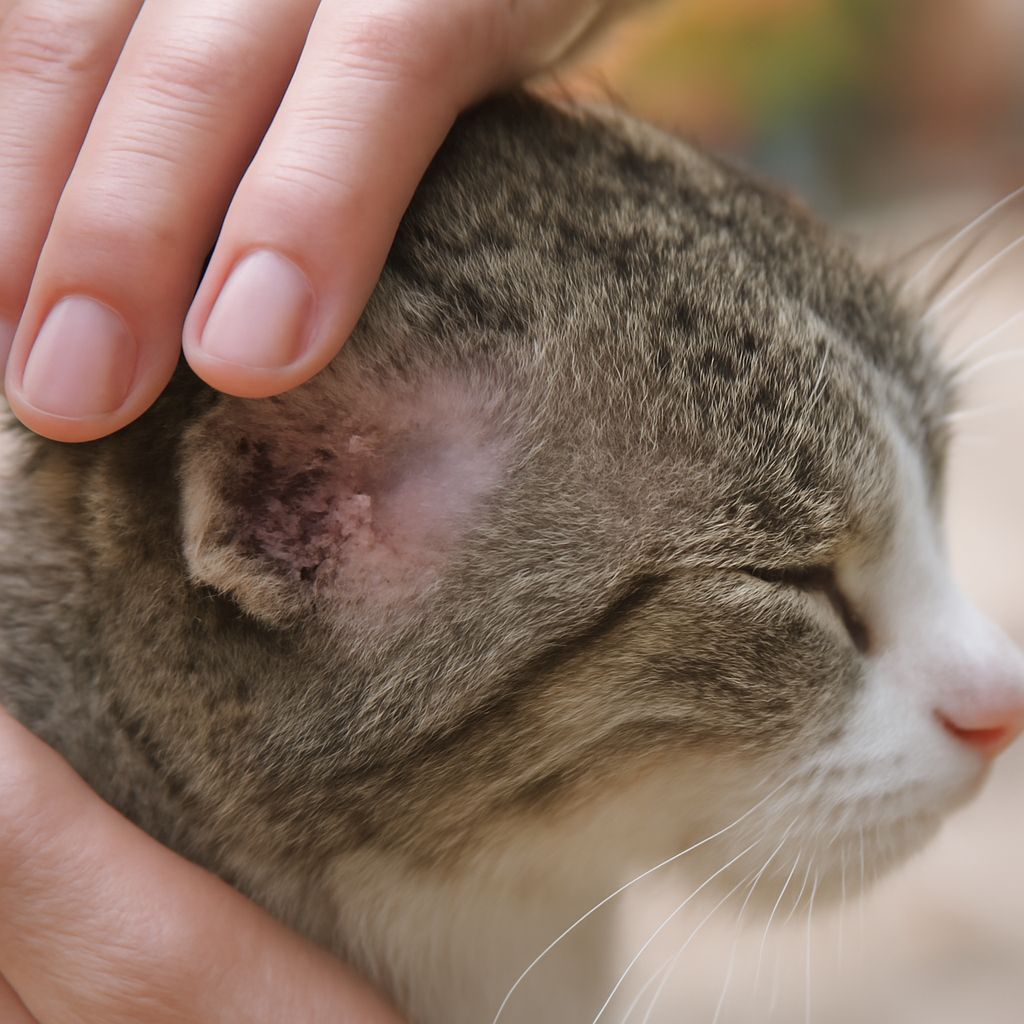
cat losing hair on legs: Causes and What to Do
You notice bald patches on your cat’s legs and lower belly, or you are finding clumps of fur around the house and your cat’s coat is looking noticeably thinner. Cat losing hair on legs is a symptom worth investigating, because the cause ranges from completely benign over-grooming to a medical condition that needs treatment. Catching the pattern early makes a real difference in how quickly you can address it.
Cat losing fur on legs often happens gradually enough that owners do not notice until the hair loss is significant. The fur loss might accompany other changes: weight loss, changes in appetite or energy, or visible skin irritation. Cat losing hair and weight together is a stronger signal that something systemic is happening. Cat losing clumps of hair in large amounts suddenly is different from gradual thinning. Cats hair loss is a broad category, and the location, pattern, and associated symptoms all point toward different causes.
Common Causes of Hair Loss on Cat Legs
Over-Grooming and Psychogenic Alopecia
One of the most common reasons for cat losing fur on legs is excessive self-grooming. Cats that are stressed, bored, or anxious may groom compulsively, pulling out fur in the process. The hair loss from over-grooming typically follows the pattern of the tongue — even, symmetrical stripes along the inner legs and belly. Psychogenic alopecia, as this condition is called, usually produces clean skin underneath without redness or scaling.
Parasites: Fleas, Mites, and Ringworm
Fleas cause intense itching that leads to over-grooming and hair pulling. Even if you cannot see fleas, flea dirt (small dark specks in the fur) confirms their presence. Mange mites cause more severe skin changes — crusty, scaly, or raw patches alongside cats hair loss. Ringworm is a fungal infection, not a worm, and causes circular patches of hair loss with scaling and sometimes redness. All of these need specific treatment rather than general care.
Allergies
Food allergies and environmental allergies both cause itching that leads to over-grooming and hair loss. Cats losing hair on their legs due to allergies typically show the loss on areas they can easily groom — inner thighs, abdomen, and lower legs. Food allergies in cats most commonly implicate the protein source in the diet. A hypoallergenic elimination diet trial is the standard diagnostic step.
Hormonal Conditions
Hyperthyroidism and, less commonly, Cushing’s disease can cause cats hair loss as a systemic symptom. Cats with hyperthyroidism often show weight loss alongside coat changes, which is why cat losing hair and weight together points toward thyroid testing. The hair loss from hormonal causes tends to be more diffuse — thinning across the body rather than localized patches.
What to Do When Your Cat Is Losing Hair
Veterinary Diagnosis First
Because cat losing clumps of hair has so many different causes, a veterinary examination is the right starting point. Your vet can distinguish between parasitic, allergic, hormonal, and behavioral causes through skin scraping, fungal culture, blood work, or a food trial. Treating without a diagnosis risks missing the real cause and prolonging the problem.
Addressing Stress and Environment
If over-grooming is identified as the cause, environmental enrichment and stress reduction are the primary interventions. More playtime, puzzle feeders, vertical space, and reducing household stressors all support a calmer cat. In some cases, short-term anti-anxiety medication is appropriate while behavioral modifications take effect.
Cat losing hair on legs is nearly always treatable once the cause is identified. Parasites respond to appropriate antiparasitic treatment. Allergies improve with dietary change or allergen management. Hormonal conditions are managed with medication. Over-grooming responds to behavioral support. A vet visit early in the process gets you to answers faster and avoids guesswork.