
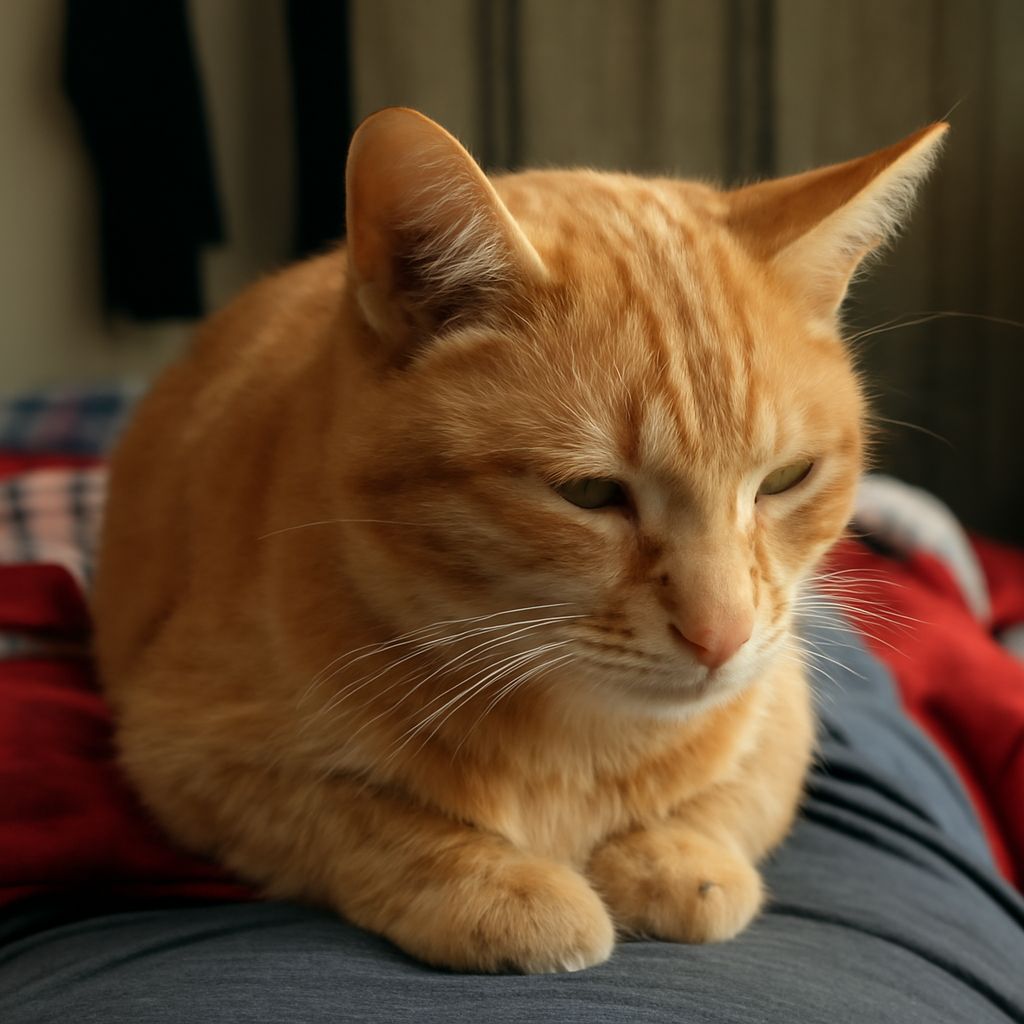
Why Does My Cat Lay on My Chest? 6 Reasons It Happens
You’re lying in bed reading or watching something, and without warning your cat climbs up and plants itself directly on your chest. It’s warm, heavy, and honestly kind of lovely. But why does my cat lay on my chest instead of literally any other surface in the house?
Why do cats lay on your chest is one of those questions that sounds simple but has several real answers. Why does my cat sleep on my chest every night versus only sometimes? Why do cats sit on your chest when you’re upset? And why does a cat sleeps on my chest behavior feel so deliberate? The short answer is that it’s about warmth, heartbeat, scent, and something that looks a lot like affection.
Warmth and Heat-Seeking
Cats run warmer than humans — their normal body temperature is 101–102.5°F. They seek heat sources constantly. Your chest, particularly over the heart and lungs, radiates consistent warmth. You’re essentially a living heated mattress. This is the simplest explanation and probably the most fundamental one.
Your Heartbeat Is Familiar
Kittens spend their first weeks pressed against their mother, calmed by her heartbeat and breathing rhythm. Adult cats retain this association. The steady thump of your heart and the rise and fall of your chest as you breathe mimics that early comfort. For cats that bond strongly with their owners, lying on your chest may be genuinely soothing.
Scent and Territorial Marking
Cats have scent glands on their cheeks, paws, and body. When your cat lies on you and kneads, it’s also depositing scent. You become marked as part of its territory in the most literal sense. This is not aggression — it’s a form of bonding and ownership that feels mutual from the cat’s perspective.
Security and Attachment
A cat that sleeps in a vulnerable position on a person it trusts is showing genuine attachment. Sleeping requires letting the guard down. Choosing to do that on your chest is a vote of confidence. Cats that chest-sleep tend to be highly bonded to their specific person rather than just the household.
Stress Relief
Cats prone to anxiety often seek physical contact with their preferred human when stressed. If your cat gravitates to your chest during thunderstorms, vet visits, or household disruptions, the contact is providing genuine comfort. Your steady presence has a regulatory effect on the cat’s nervous system.
Attention and Habit
If chest-sitting has historically resulted in petting, scritches, and focused attention, your cat has learned that this spot gets results. Cats are more strategic than they appear. Once a behavior produces a reliable reward, they repeat it.
What to Do If It Bothers You
If chest-sleeping disrupts your sleep or is uncomfortable, redirect gently rather than pushing the cat away abruptly. A heated cat bed placed beside you, or a consistent cue that you’re going to sleep, helps the cat learn there’s a nearby alternative. Abrupt rejection can cause anxiety in very attached cats.