
How Can I Treat My Cat’s UTI at Home? What Actually Helps
Your cat is making frequent trips to the litter box, straining, or crying out while trying to urinate. You’re wondering: how can I treat my cats uti at home? The honest answer is that true bacterial urinary tract infections in cats require veterinary diagnosis and usually antibiotics — but there are supportive steps you can take alongside treatment.
Knowing what can i give my cat for a uti versus what is safe to try as a home remedy for cat uti matters a lot. Some commonly suggested home remedies for uti in cats do have supporting logic, while others may delay necessary care. For male cat uti home remedy searches, extra caution is warranted — urinary blockages in male cats are life-threatening emergencies that cannot be managed at home.
Understanding Feline Urinary Problems
Most cats with urinary signs don’t have a true bacterial infection — they have feline idiopathic cystitis (FIC), a stress-related inflammation with no bacterial cause. Antibiotics don’t help FIC. A urine culture is the only way to know whether bacteria are present.
When to Go to the Vet First
Do not attempt home care if your cat is straining without producing any urine, vocalizing in pain, lethargic, vomiting, or if you cannot feel any urine in the litter box after multiple attempts. Male cats with urinary blockage can deteriorate within hours. This is a veterinary emergency, not a home remedy situation.
Hydration: The Most Important Home Support
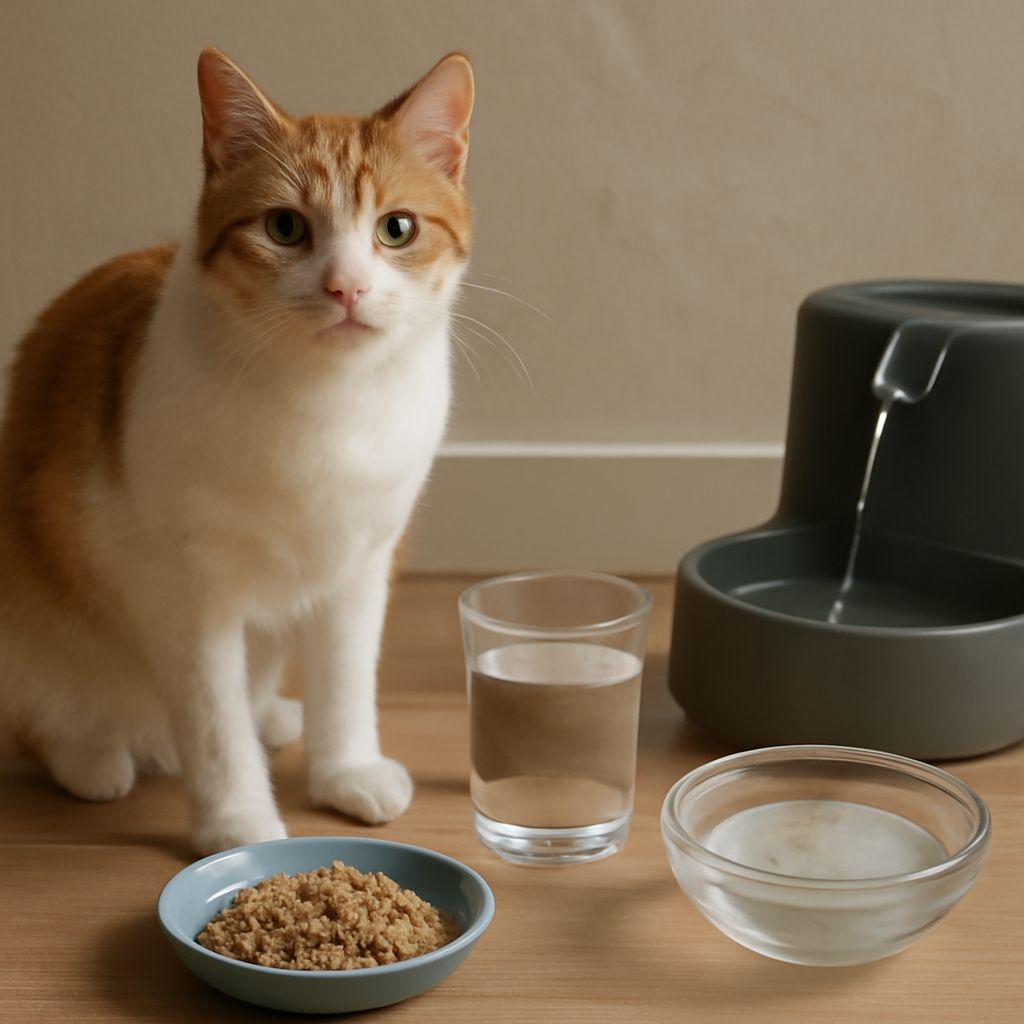
Increased water intake dilutes urine and helps flush the urinary tract. Switch to wet food, add a water fountain, or offer low-sodium broth in a separate bowl. Many cats drink more from running water sources. Better hydration reduces the concentration of irritants in the bladder and may reduce recurrence frequency.
Stress Reduction for FIC
Because most feline urinary issues are stress-related, environmental management is a genuine intervention. Add litter boxes (the rule is one per cat plus one extra), clean them daily, provide vertical space and hiding spots, and minimize household disruption during flare-ups.
Safe Supplements to Discuss With Your Vet
Cosequin for cats (a urinary health supplement with glucosamine) has some evidence for reducing FIC flare frequency. Probiotics and omega-3 fatty acids are sometimes recommended as part of a broader management plan. Always discuss supplements with your vet before starting them.
What Not to Give Your Cat
Cranberry juice, apple cider vinegar, and human urinary supplements are not appropriate for cats. Cats have different physiology, and some of these contain compounds that can cause further problems. D-mannose, sometimes effective in humans, lacks solid evidence in cats.
Prescription Diets
If your vet diagnoses struvite crystals or oxalate crystals, a prescription urinary diet may be the most effective long-term management tool. These diets are formulated to keep urine pH in a range that discourages crystal formation.
Next Steps
Start with a vet visit to confirm what you’re dealing with — bacterial UTI, FIC, or crystals each require a different approach. Once you have a diagnosis, layer in hydration improvements, stress reduction, and any supplements your vet recommends. Keep a log of litter box habits so you can spot recurrence early and act quickly.