Is Coconut Oil Good for Cats? What the Evidence Shows
You’ve probably seen coconut oil praised as a cure-all for everything from dry skin to digestive issues in humans. Now you’re wondering: is coconut oil good for cats? The answer is more cautious than the internet often suggests, and knowing both sides helps you make a genuinely informed choice.
Coconut oil and cats have a complicated relationship. While small amounts appear to be tolerated by most healthy cats, the claimed benefits of coconut oil for cats are not well-supported by veterinary research. Before you decide whether you can give your cat coconut oil, it’s worth understanding what it actually does — and doesn’t do — for a feline system. A coconut oil cat application might seem harmless, but there are real considerations to weigh.
What Coconut Oil Contains and How Cats Process It
Medium-Chain Triglycerides (MCTs)
Coconut oil is high in MCTs, particularly lauric acid. MCTs are metabolized differently than long-chain fats and have been studied for various effects in humans and some animals. Some veterinary researchers have explored MCT oil for cognitive support in dogs, though this research does not directly translate to coconut oil use in cats.
Fat Content and Feline Metabolism
Cats are obligate carnivores whose digestive systems are designed around animal protein and fat. Coconut oil is a plant-derived fat, and while cats can digest small amounts, their systems are not optimized for it. Too much can cause digestive upset — loose stools, vomiting, or diarrhea — and the high caloric density can contribute to weight gain.
Claimed Benefits and What the Evidence Actually Shows
Coat and Skin
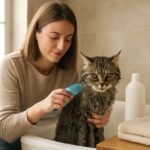
Applied topically, coconut oil can add temporary moisture to dry, flaky skin or a dull coat. However, cats groom themselves extensively, meaning anything applied to the coat will likely be ingested. The topical benefit has to be weighed against the ingested amount.
Hairball Reduction
Some owners report that a small amount of coconut oil mixed into food helps with hairball passage. There is no clinical evidence for this, but the lubricant effect is plausible. Purpose-made hairball remedies with petroleum-based or malt-based formulas are better studied.
Flea and Parasite Repellent
Lauric acid has some demonstrated antimicrobial properties, and a few sources claim it repels fleas. The evidence is weak, and it should not replace veterinary-approved parasite prevention.
How to Use It Safely If You Choose To
If your vet is on board, the general guidance is a very small amount — a quarter teaspoon or less, two to three times per week at most. Start with an even smaller amount to check for digestive tolerance. Never use it as a substitute for veterinary treatment.
Cats with pancreatitis, obesity, or liver disease should not receive additional dietary fat without veterinary clearance. Keep portion sizes minimal, and if your cat develops loose stools, stop immediately.
Safety Recap
Coconut oil is not toxic to cats in small amounts, but it is not a proven therapeutic either. Always consult your vet before adding any supplement to your cat’s routine. If you use it topically, do so sparingly and watch for signs of overgrooming or skin irritation.