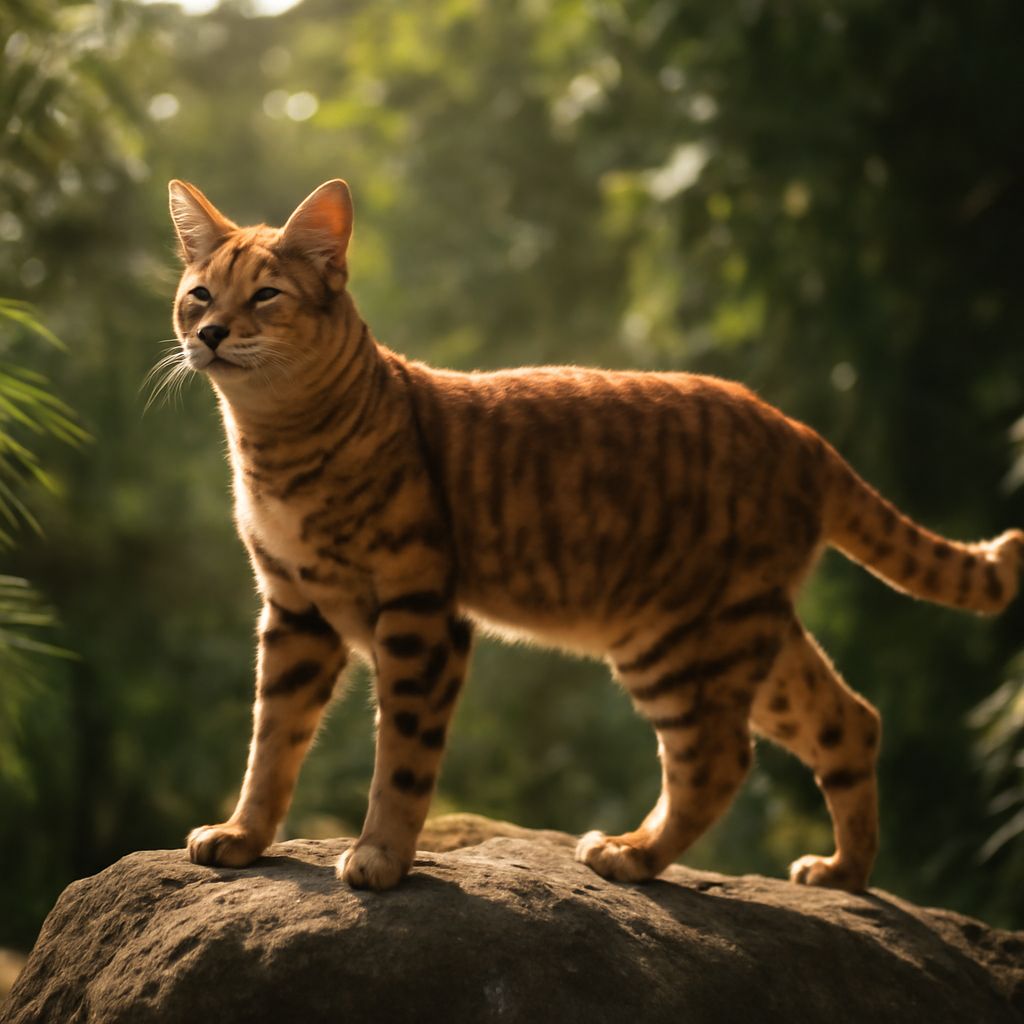
Jungle Cats and Wild Cat Names: A Guide to Forest Felines
You’ve probably heard of lions and tigers, but the world’s forests and wetlands are home to a much broader cast of felines that most people couldn’t name on the spot. Whether you’re drawn to jungle cats by a nature documentary or just curious about wild cat names beyond the obvious ones, there’s a lot more variety out there than you might think.
The cat jungle is dense with species — from the actual Jungle Cat of Asia to the ocelots and margays of rainforest cats in Central and South America. If you love spotted wild cats, you’ll find no shortage in these habitats. Learning these animals by name and range turns casual interest into genuine knowledge about some of the planet’s most skilled hunters.
Wild Cats of Asian Jungles and Wetlands
The Jungle Cat (Felis chaus)
Despite the dramatic name, this medium-sized wild feline is more at home in reed beds and scrublands than dense canopy. It ranges from Egypt through South and Southeast Asia. Tawny-coated with ticked fur and long legs, it swims readily and preys on birds, rodents, and small deer.
The Clouded Leopard
One of the most striking wild cat names in Southeast Asian forests, the clouded leopard has the longest canine teeth relative to body size of any living cat. Its cloud-patterned coat provides camouflage in dappled forest light. Two separate species exist: mainland and Sunda Island.
The Fishing Cat
Found near wetlands from India to Southeast Asia, the fishing cat is built for water, with partially webbed front toes and a habit of patting the water’s surface to lure fish. It’s a threatened species largely due to wetland loss.
Rainforest Cats of the Americas
Ocelot
The ocelot is one of the most recognizable spotted wild cats in the Western Hemisphere. Found from Texas to Argentina, it hunts at night using excellent low-light vision and keen hearing. Its beautifully patterned coat once made it a target for the fur trade.
Margay
Smaller than the ocelot but similarly spotted, the margay is built for life in the cat jungle canopy. It has uniquely flexible ankles that allow it to climb headfirst down trees, a skill shared by very few mammals.
Jaguarundi
Unlike most rainforest cats, the jaguarundi lacks obvious spots. It comes in two color phases — a dark gray and a reddish-brown — and is active during the day. Often mistaken for a weasel or otter at a distance.
What Makes These Cats So Hard to Study
Most of these species are solitary, nocturnal, and live in dense habitats that make direct observation difficult. Much of what researchers know about jungle cat behavior comes from camera traps and radio telemetry. For several species, population estimates are little more than educated guesses.
Habitat loss is the common thread linking threats to nearly all these animals. Deforestation fragments their ranges, reduces prey, and pushes them into conflict with humans.