How to Help a Cat Lose Weight: A Practical Guide for Owners
Your vet mentioned at the last checkup that your cat is carrying a few extra pounds — or you’ve noticed yourself that she doesn’t move as easily as she used to. Figuring out how to help cat lose weight is less complicated than many owners expect, but it does require some consistency. Most cats gain weight gradually over years, and that weight tends to come off slowly too.
If you’re searching how to make cat lose weight or specifically how to make my cat lose weight, the good news is that the core approach is the same regardless of how much weight she needs to lose. Understanding how to get your cat to lose weight involves adjusting both what she eats and how active she stays. The goal isn’t rapid loss — gradual, steady progress is healthier and more sustainable. When a cat lose weight too quickly, it can cause a serious liver condition called hepatic lipidosis, so patience matters here.
Adjusting Food Intake
Measure Every Meal
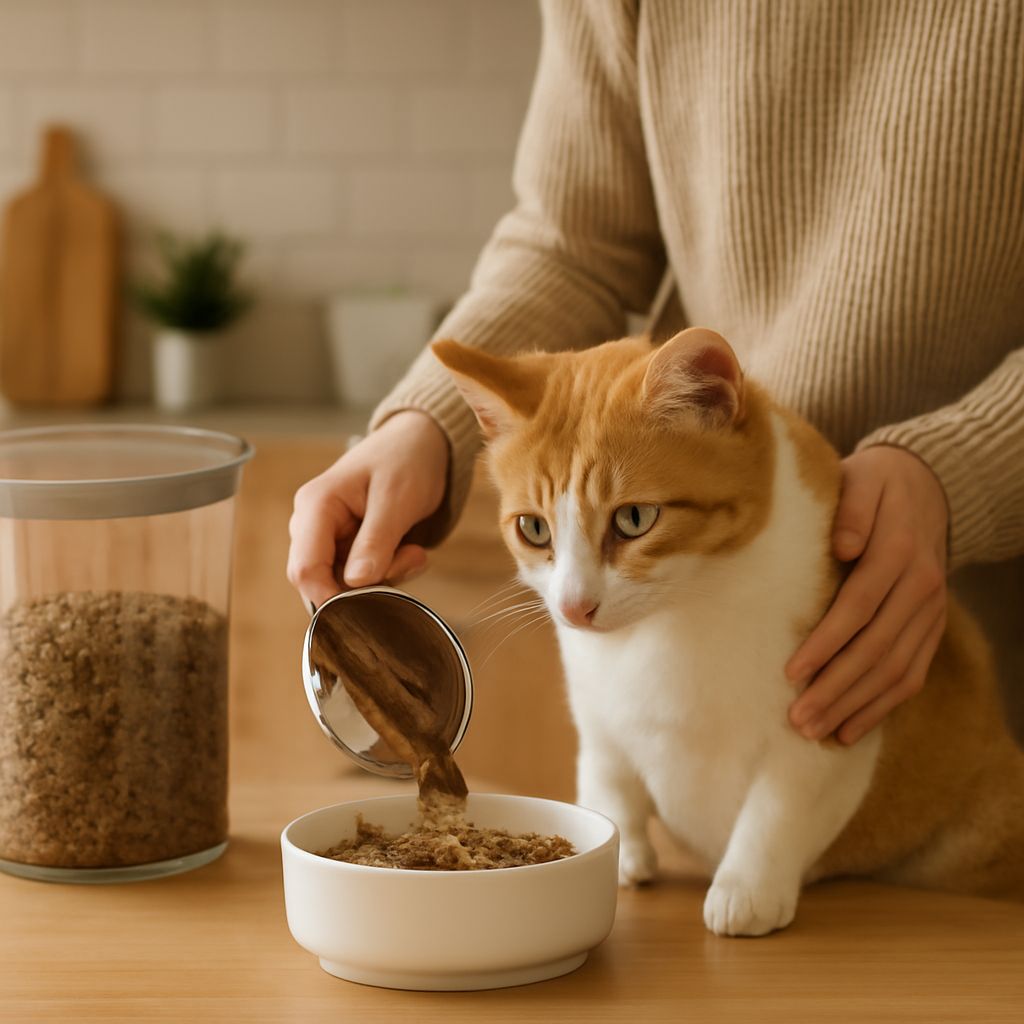
Free-feeding — leaving food out all day — is one of the most common reasons indoor cats become overweight. Cats snack constantly when food is available, regardless of whether they’re hungry. Switching to measured meals twice a day is the single most impactful change most owners can make. Your vet can calculate the right daily calorie target based on your cat’s current weight and target weight.
Choose the Right Food
Weight management or “light” cat foods have reduced calories per serving, but the quality of the protein source still matters. Look for foods where a named meat (chicken, turkey, salmon) is the first ingredient. High-protein, lower-carbohydrate options help cats feel more satisfied on fewer calories. Wet food is often recommended for weight loss because its water content increases volume without increasing calories, which can help cats feel fuller.
Limit Treats
Treats add up fast. A few extra pieces throughout the day can easily account for 10 to 20 percent of a cat’s daily caloric intake without anyone noticing. If treats are part of your routine, count them as part of the day’s total calories rather than in addition to it. Low-calorie treat options — small pieces of plain cooked chicken, for example — let you maintain the habit without the calorie load.
Increasing Activity
Interactive Play
Indoor cats need intentional exercise. Two 10 to 15 minute play sessions per day using a wand toy, laser pointer, or anything that triggers your cat’s chase instinct will burn calories and build muscle. The key is genuine engagement — a toy being dangled listlessly won’t do much. Move it like prey: erratic, unpredictable, with pauses.
Puzzle Feeders and Food Toys
Feeding your cat through a puzzle feeder or food-dispensing toy slows eating, creates mental engagement, and requires physical effort to retrieve food. These tools work well in combination with measured portions — your cat eats the same amount, but has to work for it over a longer period rather than finishing in 30 seconds.
Environmental Changes
Cat trees, shelves, and climbing structures encourage vertical movement that burns more energy than walking across a flat floor. If your cat currently has nowhere to climb, adding a single multi-level cat tree near a window gives her a reason to move up and down throughout the day.
Key takeaways: Switch from free-feeding to measured twice-daily meals as the first step in any weight loss plan. Combine dietary changes with daily interactive play to address both sides of the energy equation. Check with your vet before starting — they can give you a safe target calorie range and confirm there’s no underlying health condition driving the weight gain.