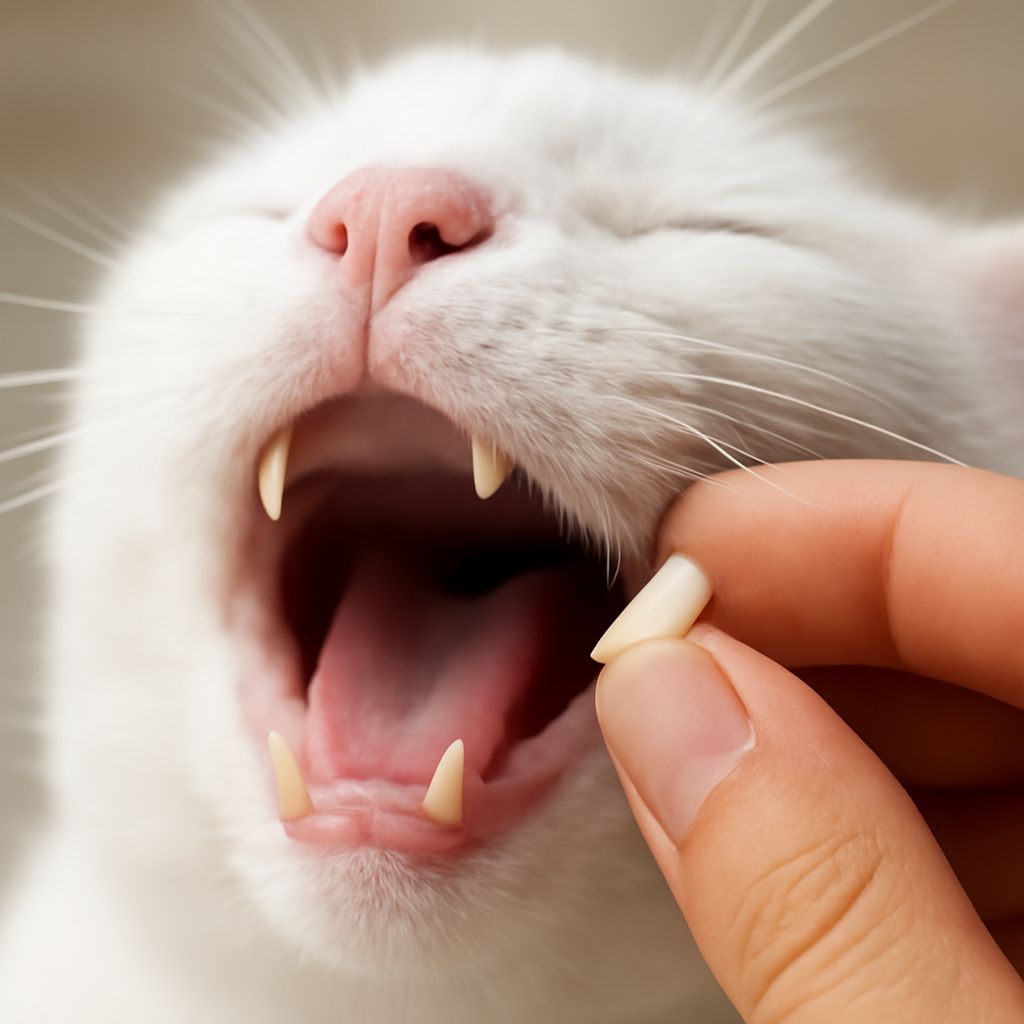
Cat Tooth Fell Out: What It Means and When to See a Vet
You’re cleaning up and you find a small tooth on the floor — and now you’re trying to figure out if a cat tooth fell out naturally or if something’s wrong. Your first question is probably whether this is normal, and the answer depends entirely on how old your cat is and which tooth it was.
When a cats tooth fell out and your cat is a kitten under six months old, that’s almost certainly a baby tooth and nothing to worry about. But if my cat lost a tooth and she’s a fully grown adult, that changes the picture. Adult cats don’t shed teeth the way kittens do. If you’re asking when do cats lose their teeth in adulthood, the answer is: they shouldn’t, and tooth loss in an adult cat usually points to a dental or health issue worth investigating. A cat lost canine tooth situation in particular — those long fang-like teeth — is almost always worth a vet call.
Kitten Tooth Loss: Normal Development
The Baby Tooth Timeline
Kittens are born without teeth and develop their first set — deciduous teeth, also called milk teeth — between two and six weeks of age. These 26 baby teeth start being replaced by 30 permanent adult teeth beginning around 11 to 16 weeks. Most kittens have completed the transition to a full adult set by six months of age.
What Kitten Tooth Loss Looks Like
You may or may not find baby teeth when they fall out — kittens often swallow them while eating. If you notice your kitten drooling slightly more than usual, chewing on things, or having a brief decrease in appetite around 3 to 6 months, that’s normal teething behavior. Finding a tiny tooth on the floor is a milestone, not a problem.
When Retained Baby Teeth Become a Problem
Occasionally a baby tooth doesn’t fall out on schedule and a permanent tooth erupts beside it. This is called a retained deciduous tooth, and it’s worth having a vet check. Two teeth in the same socket crowd the permanent tooth and can cause misalignment or trap food and bacteria. If you notice double teeth at the canine position in a kitten over five months old, mention it at the next wellness visit.
Adult Cat Tooth Loss: When to Be Concerned
The Most Common Cause: Dental Disease
Periodontal disease is the leading cause of tooth loss in adult cats. It starts as plaque buildup, progresses to tartar, and eventually causes gum recession and bone loss around the root. By the time a tooth falls out due to periodontal disease, there’s usually significant deterioration that’s been happening for a while. Other signs include bad breath, difficulty chewing, pawing at the mouth, and dropping food.
Tooth Resorption
Feline tooth resorption is a condition where the tooth structure breaks down from the inside out, often starting at the gum line. It’s painful, common in adult cats, and frequently causes tooth loss. Cats often don’t show obvious pain because they’re good at hiding discomfort, so a tooth simply found on the floor may be the first sign an owner notices.
Trauma
A cat that has fallen, been in a fight, or had any kind of facial impact can lose a tooth from trauma. If you know your cat had an accident or find a tooth alongside other signs of injury, have the cat examined. A fractured tooth that hasn’t fully dislodged can be more painful than one that came out cleanly.
What to Do After Finding a Lost Tooth
If your cat is a kitten, monitor for any signs of discomfort and continue as normal. If your cat is an adult, call your vet and describe what you found. Bring the tooth if you can. Your vet will likely recommend a dental exam under sedation to assess what’s happening with the surrounding teeth and gums. Don’t wait and watch for weeks — dental issues in cats can progress quickly and cause significant discomfort in the meantime.
Key takeaways: Tooth loss in kittens during the six-month window is normal development. In adult cats, a tooth falling out almost always has an underlying cause — dental disease and tooth resorption are the two most common. A vet exam is the right next step whenever an adult cat’s tooth comes out unexpectedly.