Why Don’t Cats Like Cucumbers? The Real Reason Behind the Reaction
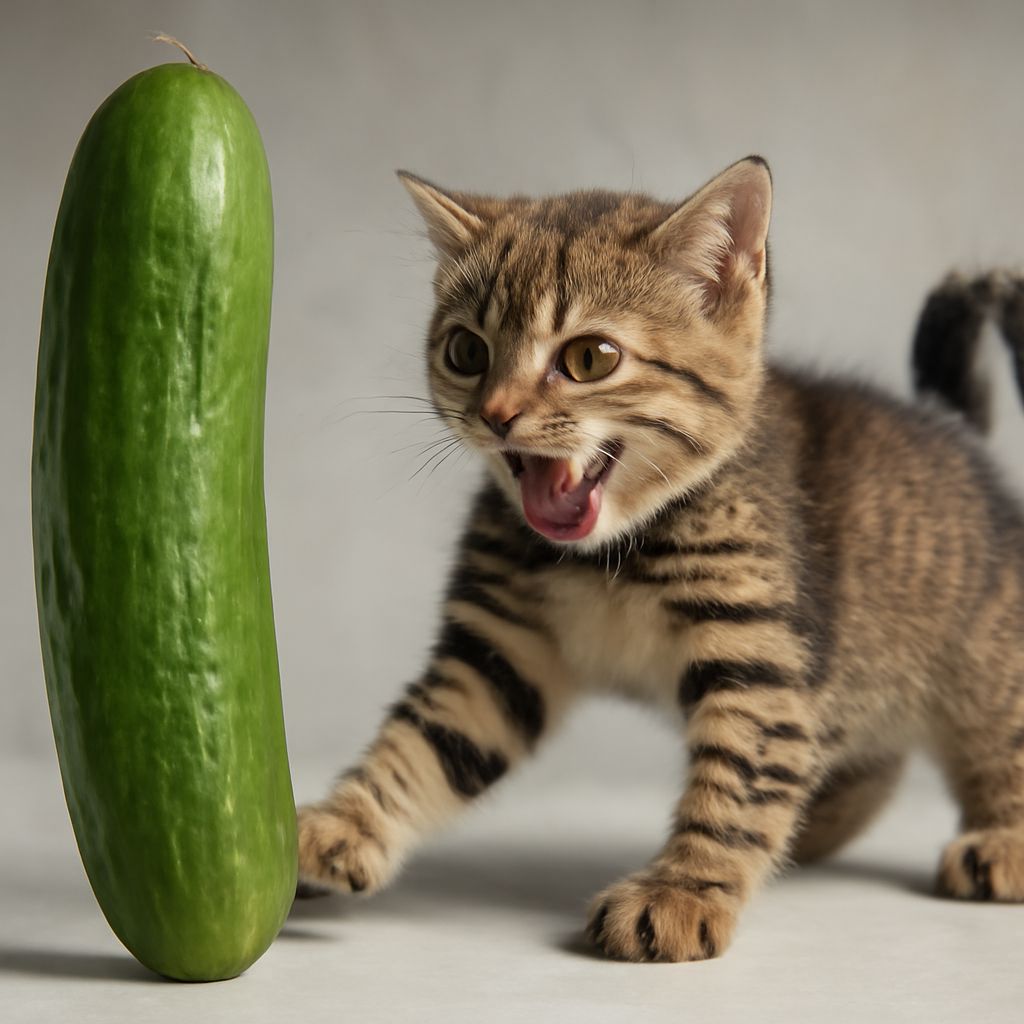
You’ve probably seen the videos: a cat eating calmly from its bowl, a cucumber placed silently behind it, and then the cat turns around and launches itself into the air in what looks like pure panic. If you’ve ever wondered why don’t cats like cucumbers, you’re not alone — those clips went viral for a reason. The reaction is fast, dramatic, and hard to explain with just “they’re surprised.”
Understanding why do cats freak out over cucumbers gets more interesting when you look at how cats process unexpected stimuli, especially near their food. The explanation behind why cats afraid of cucumber isn’t really about cucumbers at all. The reason why dont cats like cucumbers comes down to instinct, not produce. And figuring out why are cats so scared of cucumbers reveals something important about how you should — and shouldn’t — interact with your cat at home.
The Snake Theory: Hardwired Fear Responses
Snakes as an Evolutionary Threat
The leading explanation among animal behavior researchers is that cats react to cucumbers because the elongated green shape on the floor resembles a snake. Cats and their wild ancestors have coexisted with venomous snakes for millions of years. A sudden, unexpected snake-shaped object appearing near a cat’s body triggers an immediate startle reflex — no reasoning required, no time to inspect.
This is an example of what’s called a “prepared fear” — a fear response that evolution has wired in because the cost of not reacting (getting bitten by a snake) historically outweighed the cost of a false alarm. The cat doesn’t know it’s a cucumber. It processes the shape and location, matches it to a threat template, and reacts before the conscious brain has a chance to intervene.
Location Matters More Than the Object
Not all cats react to cucumbers placed in the middle of a room. The videos that show the most dramatic responses almost always involve cucumbers placed directly behind a cat while it eats. The feeding area is a space where cats feel safe and let their guard down. A strange object appearing there — right behind them, without warning — violates that expectation of safety in a way that would startle most mammals.
This is part of why cats afraid of cucumber in one setting may completely ignore the same vegetable in another. Context drives the fear as much as the object itself.
What the Reaction Tells You About Cat Stress
The Cost of the Prank
The reason why cats freak out over cucumbers matters beyond satisfying curiosity — it has real implications for how you treat your cat. That full-body launch into the air followed by frantic fleeing is not a funny quirk. It’s a genuine stress response. The cat experiences a spike in cortisol, adrenaline floods the system, and the fight-or-flight mechanism fires at full intensity.
Repeated stress responses like this can make cats generally more anxious, more reactive, and less trusting of their environment — especially the areas where they eat and drink. A cat that becomes wary of its food bowl location because of repeated scares is going to be harder to manage, more likely to eat erratically, and more prone to stress-related health issues like feline idiopathic cystitis.
Why Cats Don’t Like Unexpected Things Near Their Food
Cats are creatures of strong spatial habit. They map their environment carefully and notice when something is out of place. An unexpected object near the food bowl triggers hypervigilance even without the snake-shape element — the cucumber just amplifies the reaction because of the additional visual cue. The same thing happens when owners move the food bowl to a new location, introduce a new cat, or change the feeding routine without transition.
How to Reduce Fear and Anxiety in Your Cat
If you’ve already tried the cucumber experiment and your cat reacted badly, the practical response is simple: don’t repeat it. Give your cat normal access to its feeding area without modifications, and let routine rebuild that sense of safety. Most cats recover from a single startle incident without lasting effects, but repeated pranks accumulate stress.
More broadly, reducing environmental unpredictability helps cats that are generally anxious. Consistent feeding times, furniture that doesn’t shift, predictable human routines, and plenty of vertical space all support a cat’s sense of control over its environment. Cats that feel safe in their spaces are calmer, healthier, and easier to live with — which is far more rewarding than watching a stress response go viral. The answer to why are cats so scared of cucumbers is rooted in survival instinct, and respecting that instinct is part of being a good cat owner.