
How to Get a Cat to Lose Weight: Practical Steps That Work
Your vet just told you your cat is overweight, probably a 7 or 8 on the body condition scale, and you need to do something about it. You’ve been told before to cut back on food, but every time you reduce portions your cat becomes relentless about demanding more, and you cave within a few days. Figuring out how to get a cat to lose weight requires a more structured approach than just feeding less, because the how matters as much as the how much.
How to help a cat lose weight involves understanding why cats gain weight in the first place, how to adjust calories without triggering food obsession, and how to increase activity in an animal who would rather sleep sixteen hours a day. Whether you’re trying to figure out how to help your cat lose weight on your own or following a vet plan, these strategies make the process more manageable. How to help cats lose weight in multi-cat households has additional layers worth covering. The goal is simple: help cat lose weight steadily and safely.
Understanding Why Cats Gain Weight
Most indoor cats gain weight for straightforward reasons: too many calories in and not enough activity to burn them off. Free-feeding dry kibble is one of the most reliable paths to feline obesity. Dry food is calorie-dense and palatable enough that many cats eat well beyond their needs when given unlimited access.
Neutering reduces metabolic rate, and many cats start gaining weight in the months following the procedure if feeding amounts aren’t adjusted. Older cats also burn fewer calories than younger ones, so the same food amount that maintained a healthy weight at two can cause gradual weight gain by age seven.
Setting a Realistic Weight Loss Target
Safe weight loss in cats is slow, typically 0.5 to 1% of body weight per week. Faster loss risks hepatic lipidosis (fatty liver disease), which is a serious condition triggered when cats metabolize fat too rapidly. Never dramatically cut a cat’s calories all at once. A 15-pound cat who needs to reach 11 pounds is looking at a realistic timeline of six months to a year, not six weeks.
Your vet can calculate a target calorie intake based on your cat’s ideal body weight rather than their current weight. This number becomes your daily feeding limit, split across at least two meals rather than one big serving or free access.
Practical Feeding Changes
Measure Calories, Not Cups
Cup measurements of dry food are imprecise because different kibble sizes pack differently. Use a kitchen scale to weigh food portions once and calibrate your scoop. The calorie density on the bag label is your reference point, not the feeding guideline chart, which is almost always overestimated by the manufacturer.
Switch to Wet Food Strategically
Wet food has a much lower calorie density than dry food because it contains 70 to 80% water. Many cats feel more satisfied after a wet food meal than the same caloric amount in kibble. Switching partially or fully to wet food helps cats lose weight because they get volume without excess calories. It also increases water intake, which supports kidney health.
Puzzle Feeders and Slow Feeding
Making cats work for their food slows eating and provides mental stimulation. Puzzle feeders, lick mats, and scatter feeding (spreading kibble across a surface to forage) all extend meal duration and help cats feel more satisfied. For a food-obsessed cat, any strategy that makes eating take longer reduces the frantic hunger behavior between meals.
Increasing Activity
Exercise is a smaller lever for weight loss than calorie restriction, but it matters for muscle maintenance and overall health. Two 10-minute interactive play sessions per day with a wand toy give most cats meaningful activity. The key is sustained movement, not brief bursts. After the play session, feed the meal; this mimics natural hunt-then-eat sequencing and tends to produce calmer, more satisfied cats.
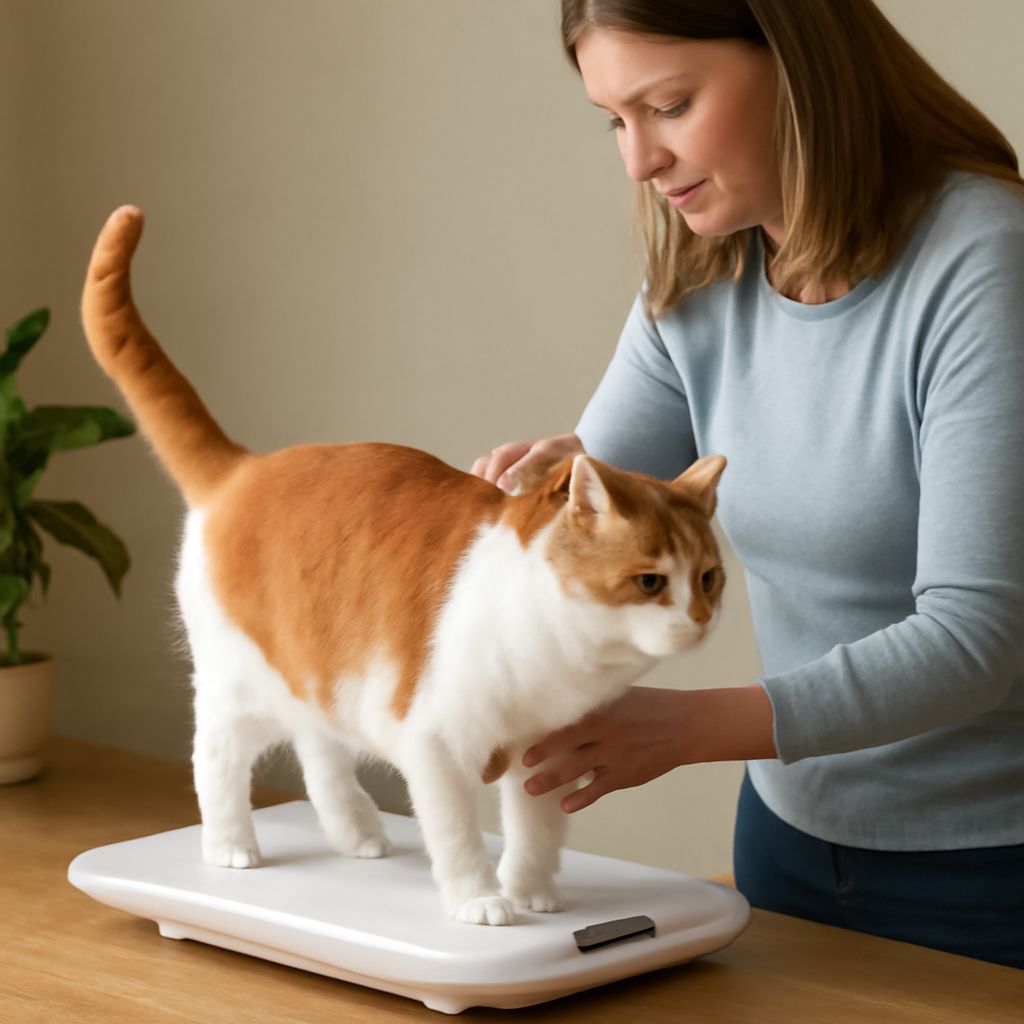
Key takeaways: Weight loss in cats requires measured portions, ideally with a dietary shift toward higher-moisture food, combined with daily interactive play. Go slow, aim for gradual loss over months not weeks, and schedule regular weigh-ins every four weeks to track progress without daily fluctuation noise.