
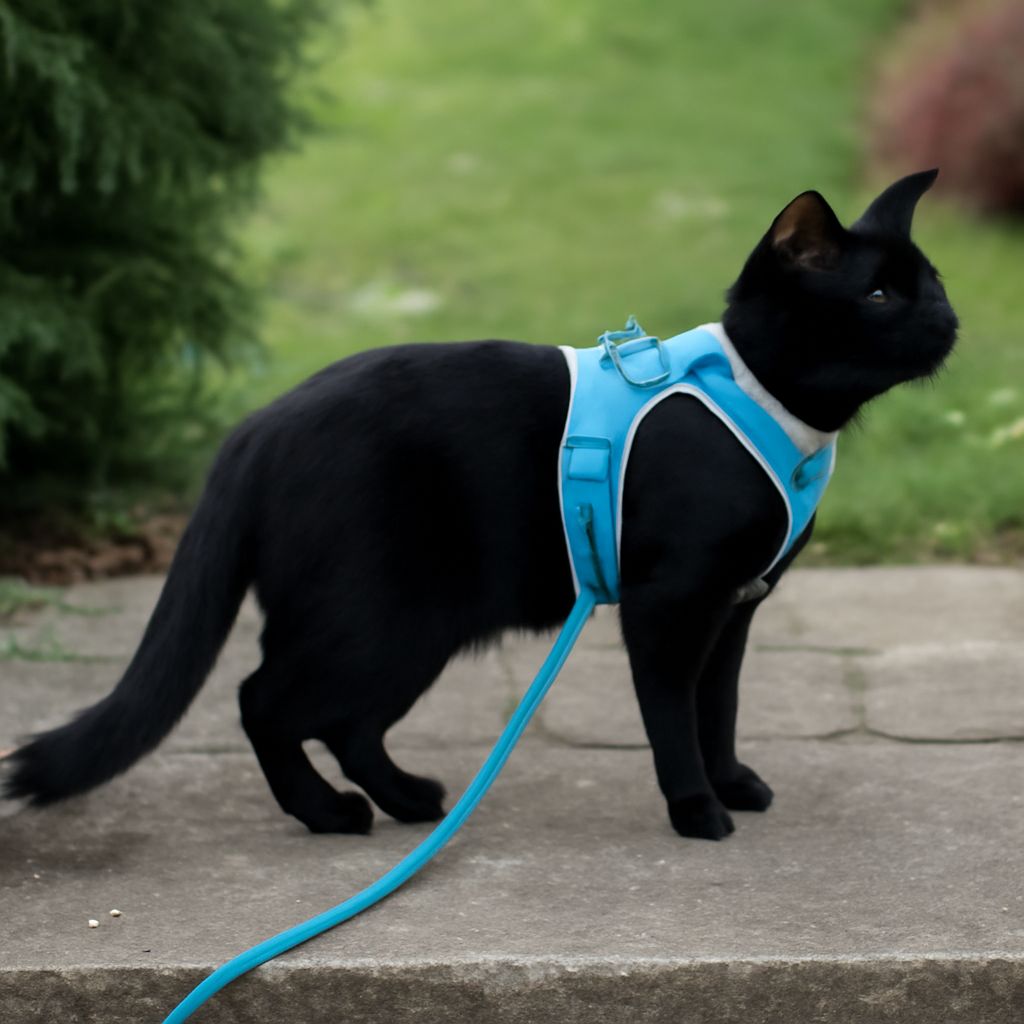
Cat Harness Guide: Finding the Best Harness for Your Cat
You’ve decided to take your indoor cat outside, and you already know from that one disastrous collar-and-leash attempt that a different approach is needed. A cat harness distributes pressure across the chest and back rather than concentrating it at the throat, making it a far safer and more comfortable option for leash walks. Finding the best cat harness for your specific animal, though, requires knowing what to look for across several competing factors.
For large breeds, standard sizing often doesn’t fit. For escape artists, a large cat harness that fits correctly today can slip off after weight changes or if your cat learns to back out of it. The best cat harness no escape designs exist specifically to solve that problem. This guide covers what separates a good harness from a frustrating one, and what the best harness for cats actually looks like in practice.
Harness Types and When to Use Each
Cat harnesses fall into three main categories: H-style, vest style, and figure-eight. Each has real trade-offs depending on the cat’s body shape, activity level, and tolerance for being dressed.
H-style harnesses are lightweight and easy to put on cats who won’t tolerate a lot of fussing. The two loops, one around the neck and one around the chest, connect along the back. They’re adjustable and work for cats with narrow chests, but determined escape artists can slip them by wriggling backward.
Vest harnesses wrap around the torso and fasten with velcro or buckles across the back. They distribute pressure more evenly and are harder to back out of. These are a strong choice if you need the best harness for cats who try to reverse their way out of every constraint.
Figure-eight or Roman harnesses use a crossed strap design that tightens slightly under pressure without choking. For a large cat harness specifically, this design often provides a better fit than vest designs that don’t accommodate unusually deep chests.
What Makes a Harness Escape-Proof
No harness is truly inescapable, but the best cat harness no escape designs come close. The key features are proper fit, back-clip attachment points, and snug fastening at multiple contact points so a cat can’t back straight out.
Fit is the biggest factor. A harness that allows more than one or two fingers to slip under the strap at any point is too loose for most cats. Cats, unlike dogs, have flexible skeletal structure and can compress their bodies significantly to slip free. Check fit after every adjustment.
Reinforced stitching at stress points, especially where leash clips attach, prevents the hardware from pulling through soft fabric under sudden force. If your cat lunges after a bird or tries to dart under a bench, weak stitching fails fast.
Fitting and Introducing the Harness
Put the harness on indoors first. Let the cat wear it for short sessions before adding a leash. Many cats initially freeze or flop over dramatically when first harnessed; this is normal and passes within a few sessions as the cat associates the harness with positive things like outdoor time or treats.
When fitting a harness, start with the neck loop: you should fit two fingers underneath comfortably. Then adjust the chest strap the same way. Cats who sit still for treats during fitting sessions learn to tolerate the process much faster than cats who are harnessed while struggling.
Harness Safety on Outdoor Walks
Even with the best harness for cats, never leave a harnessed cat unattended outdoors. Harnesses can catch on branches, fences, or furniture in ways that can injure a cat who panics and pulls. Keep walks short initially, stay in calm areas away from traffic and dogs, and carry your cat back inside if they show signs of stress like flattened ears, tail tucking, or attempting to hide.
Pro tips recap: Measure your cat’s neck and girth before buying, check fit every time you put the harness on, and reintroduce the harness after any significant weight change. For the most reliable outdoor control, pair any cat harness with a bungee-style leash to absorb sudden lunges without transferring full force to the cat’s body.