
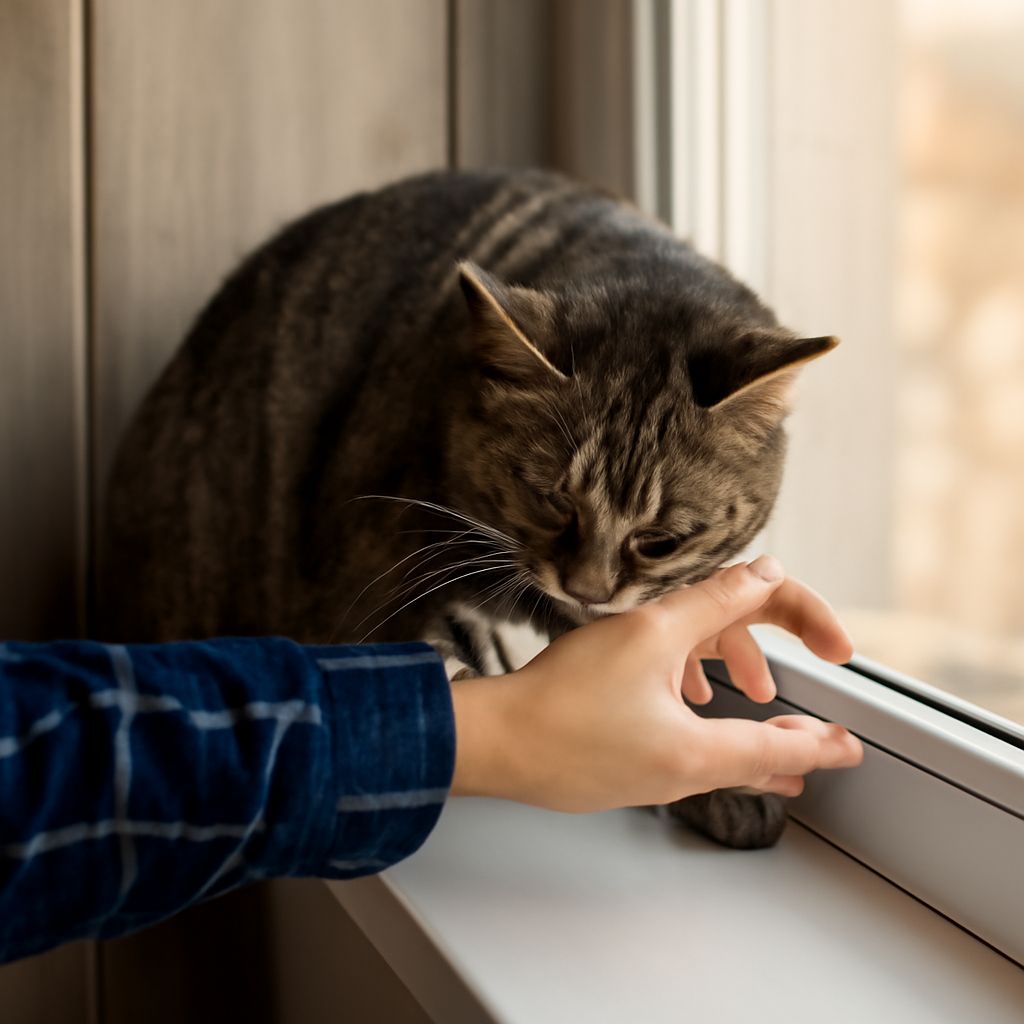
why do cats bite their owners? Understanding Feline Biting Behavior
Your cat is sitting in your lap, purring contentedly, and then out of nowhere she bites your hand. No growling, no hissing — just a sudden nip that leaves you confused and slightly offended. why do cats bite their owners is a question nearly every cat owner asks at some point, and the answer depends heavily on context.
Knowing what does it mean when your cat bites you requires reading the situation rather than treating all bites as the same event. Sometimes a bite is frustration; sometimes it’s play; sometimes it’s communication. If you’ve been asking why does my cat lightly bite me without breaking skin, that’s a very different situation from an aggressive bite with full pressure. Understanding why does my cat like to bite me during petting sessions, or decoding the gentle why does my cat nip me moments that happen during cuddle time, makes you a more effective cat communicator.
Types of Cat Bites and What They Mean
Overstimulation Bites
This is the classic scenario: your cat is being petted and seems to enjoy it, then suddenly bites. Called petting-induced aggression or overstimulation biting, it happens when the cat reaches a threshold of sensory input and needs it to stop. Watch for pre-bite signals: tail flicking, skin rippling along the back, flattened ears, or a tense body. These are warnings. When you see them, stop petting and give the cat space. Most cats who bite from overstimulation are telling you exactly what they need — you just need to read the signals earlier.
Play Biting
Cats who were not properly socialized with other kittens or who were taken from the litter too early often don’t understand how hard is too hard. Play biting in cats mimics hunting behavior — they grab, bite, and kick. A cat who bites your hand during play is treating your hand like prey, which means the play style needs adjustment, not punishment. Redirect to a wand toy or other object that keeps your hands out of the “prey zone.”
Love Bites and Gentle Nips
Some cats deliver small, soft bites without breaking skin during grooming or close contact. These are often called love bites and are a form of social bonding behavior — cats groom each other and may transfer that behavior to their owners. A gentle nip that doesn’t hurt is generally not a problem unless you’d prefer the cat not do it. You can redirect by offering a toy or simply standing up to end the session.
Fear or Pain-Based Biting
A cat who bites when picked up, touched in a specific area, or approached when cornered is biting defensively. Fear bites tend to come with clear body language: flattened ears, dilated pupils, a crouched or sideways-facing body. Pain-based biting happens when you accidentally touch an area that hurts — an injury, an infected wound, or arthritis. If a previously tolerant cat suddenly starts biting when touched in a specific area, a vet exam is warranted.
How to Reduce Unwanted Biting
Never use punishment — flicking, spraying, or yelling — in response to a bite. These responses increase stress and often make the behavior worse. Instead, focus on reading your cat’s body language earlier, so you can disengage before a bite occurs. Keep a consistent play schedule using toys that mimic prey and let the cat fully complete the hunt-catch-kill sequence — this reduces pent-up predatory energy that might otherwise redirect to your hands.
For cats who bite during petting, establish a clear end signal. Some owners use a specific word or simply stand up. The cat learns the petting session is over before overstimulation triggers the bite reflex.
Next Steps
Pay attention to when bites happen and what precedes them. Identifying the pattern — play, petting, fear, or pain — tells you which intervention is appropriate. If biting is escalating or accompanied by other behavior changes, a consultation with a cat behavior specialist can provide tailored guidance.