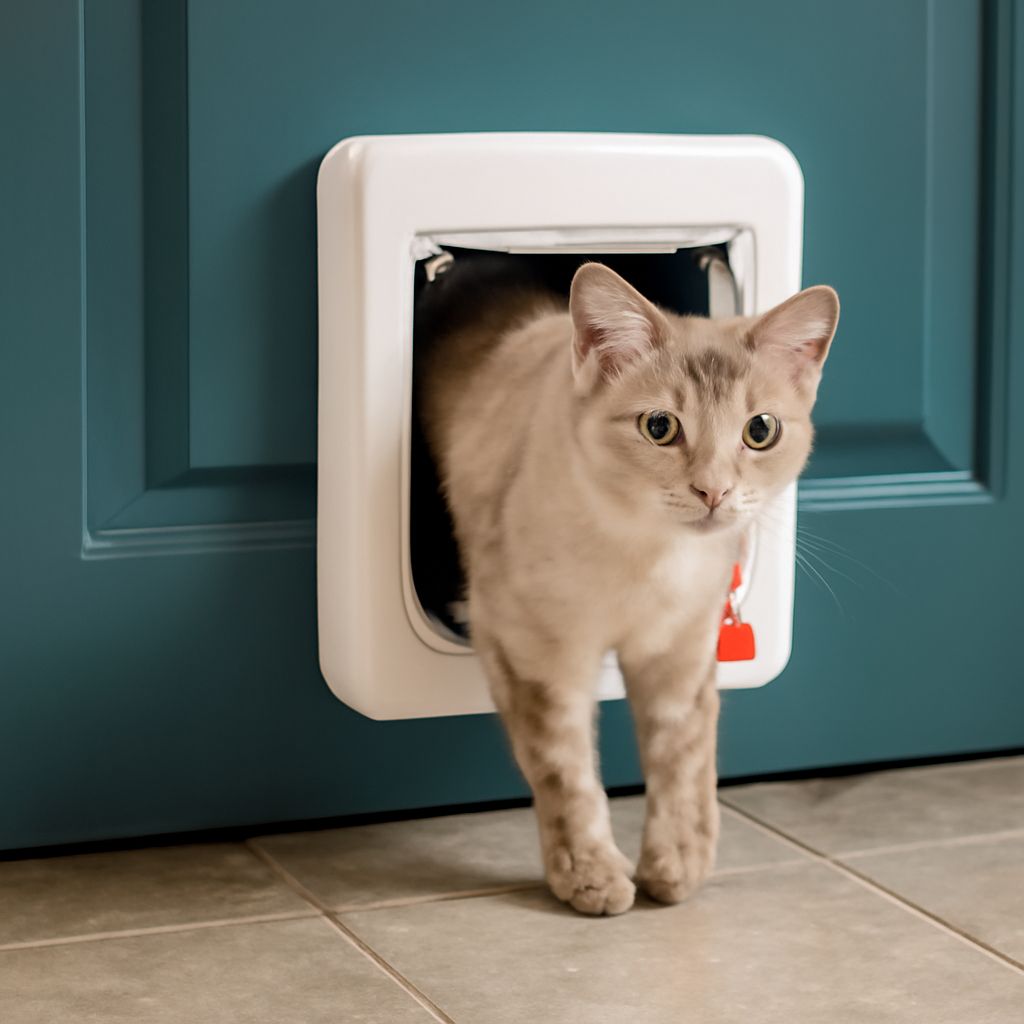
cat door Options: How to Choose the Right Entry for Your Home
You’re tired of getting up a dozen times a day to let the cat in and out. Or maybe you’ve got a multi-cat household and you need a way to give the cats access to a room with the litter boxes without leaving the door permanently open. Installing a cat door sounds straightforward until you start looking at the options and realize there are more variables than you expected.
The variety of cat doors on the market ranges from simple flap inserts to microchip-activated electronic units. You might need a cat door for door — meaning an insert that goes into an interior or exterior door panel — or something designed for walls, sliding glass doors, or windows. If you have a petite breed, a small cat door might be adequate, but a large Maine Coon needs a different size. And if you have dogs as well, a selective cat pet door that only opens for your cat’s microchip might be exactly what you need.
Types of Cat Door Inserts
Basic flap doors are the least expensive and simplest to install. They consist of a frame and a flexible plastic or rubber flap that swings both ways. These work fine for mild climates and for interior use, but they don’t insulate well and any animal — including neighborhood cats or small wildlife — can push through them.
Magnetic cat doors add a small magnet to your cat’s collar that triggers the flap to unlock. This keeps non-collar-wearing animals out, though a determined animal could still push through if the magnetic lock isn’t strong enough. Microchip-activated doors are the most secure option — they read your cat’s implanted microchip or a compatible RFID tag and only open for registered pets. They cost more but solve the problem of outdoor animals entering your home.
Sizing a Cat Door Correctly
Measure your cat from the top of the shoulder blades to the bottom of the chest, and add an inch on each side for clearance. The height of the opening should be slightly taller than your cat’s back height when walking. Most manufacturers publish sizing charts — a typical house cat fits a medium or large opening, while breeds over 15 pounds need an extra-large or dog-small size. Getting the sizing wrong is the most common installation mistake, so measure before you buy.
Installation Locations: Door, Wall, or Window
Interior door installations are the easiest DIY project — most require just a jigsaw and a drill. Exterior door installations need weatherstripping around the frame to prevent drafts. Wall installations are more complex because you’re cutting through multiple layers including insulation, but they work well when a door isn’t conveniently placed. Sliding glass door inserts sit in the existing door track and don’t require cutting anything, making them a renter-friendly option.
Weather Resistance for Outdoor Use
If the flap leads outside, insulation matters. Dual-flap designs trap a pocket of air between two panels, significantly reducing heat loss. Some models include a sealed magnetic closure that prevents the flap from blowing open in wind. Cheaper flaps warp in cold temperatures and become stiff or noisy — worth paying slightly more for a well-sealed exterior unit.
Training Your Cat to Use the Door
Most cats figure out a basic flap within a few days using treats and patience. Tape the flap open at first so there’s no resistance. Put a treat on the other side and let the cat figure it out. Once the cat is consistently walking through, lower the flap gradually over several sessions until it’s fully closed. Electronic doors may take longer because the mechanism produces a click or buzz — let the cat hear the sound with the door locked before training starts.
Bottom Line
The right cat door depends on your home setup, your cat’s size, and how much security you need. A simple flap works for interior use; a microchip door is worth the investment for exterior access. Measure your cat first, install carefully, and expect a brief training period before your cat is using it independently.