cat comforter buying guide: duvets, sets, and bedding picks
You want your bedroom to reflect your love of cats in a way that actually looks good and not just kitschy. A cat comforter is the obvious starting point, and the options have expanded considerably from the basic novelty prints that used to dominate this space. Modern cat-themed bedding ranges from subtle watercolor designs to bold graphic prints, and the quality spans equally wide. You want something you will still like in two years, not something that seemed fun in the cart and looks cheap on the bed.
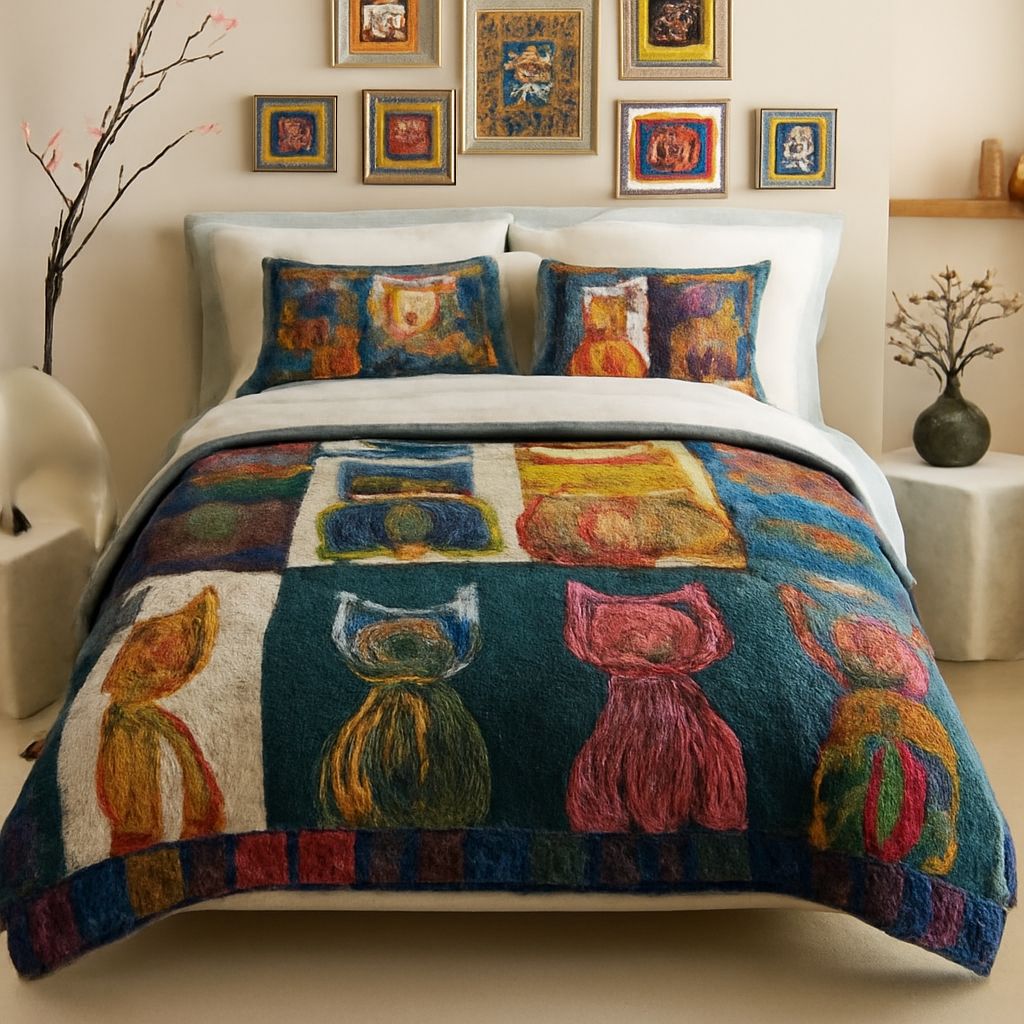
Cat duvet cover options give you flexibility since you can swap out the interior insert seasonally while keeping the look consistent. A cat comforter set bundles the main piece with shams and sometimes decorative pillows, which simplifies the styling process. Cat themed bedding covers a broader category that includes blankets, throws, pillow covers, and sheets. A cat bedspread, typically a flat piece used as a top layer, suits certain bedroom styles better than a traditional duvet setup. Knowing which format you want before you shop saves a lot of scrolling.
Comforter vs. Duvet Cover
A comforter is a single piece with filling already inside. You wash the whole thing, which can be cumbersome for larger sizes. A duvet cover wraps around a separate insert, so you wash only the cover regularly while cleaning the insert less often. For households with cats, a duvet cover is almost always more practical. Cat hair and the general affection cats show for warm bedding means frequent washing is a reality.
Duvet cover closure types matter too. Zipper closures are generally more secure and easier to use than button closures. Some covers use ties at the corners to keep the insert from shifting, which helps maintain the look without constant readjustment.
Design Styles That Wear Well
The designs that hold up best aesthetically over time tend to be those that treat cats as a design element rather than a novelty gimmick. Repeated silhouette patterns, geometric cat motifs, and illustrated breeds rendered in a painterly style all age better than cartoonish faces or bright photographic prints. If you can imagine the pattern on a dish towel at a design-forward kitchen store, it will probably work in a bedroom setting for more than one season.
Color palette matters as much as the cat imagery. Neutral backgrounds with muted accent colors work in more room settings and photograph better. A dark navy background with white cat outlines reads as intentional design rather than novelty decor.
Materials Worth Paying For
Cotton percale and cotton sateen are the two most common materials for cat comforter covers and sets. Percale has a matte, crisp feel and tends to be more breathable. Sateen has a slight sheen and a softer, heavier drape. Both work well; the choice comes down to personal texture preference.
Thread count matters less than weave quality and fiber composition. A 300-thread count percale from long-staple cotton will outlast a 600-thread count product made from short-staple cotton. Look for the cotton variety listed on the product, not just the thread count number.
Microfiber is less expensive and often very soft initially, but pills more quickly than cotton and retains pet odors more stubbornly over time. For a primary bed covering that gets washed regularly in a cat household, cotton is the better long-term investment.
Sets vs. Individual Pieces
A cat comforter set offers coordination out of the box. You get the comforter, standard shams, and sometimes a decorative throw pillow, all in matching print. The limitation is that every element is locked to that one design choice. If you want to mix in solid pillows or a different texture accent, buying individual pieces gives you more control.
Buying a cat duvet cover plus separate shams plus a throw gives you maximum flexibility but requires a bit more styling effort. For anyone who enjoys bedroom decor as a design exercise, this approach is more satisfying. For anyone who just wants everything to match without thinking about it, the set format is the practical choice.
Key takeaways: a cat duvet cover is the most washable and flexible option for cat households. Choose designs with strong graphic composition and muted palettes over novelty prints that look dated quickly. Cotton outperforms microfiber over time in both durability and odor resistance in homes with cats.