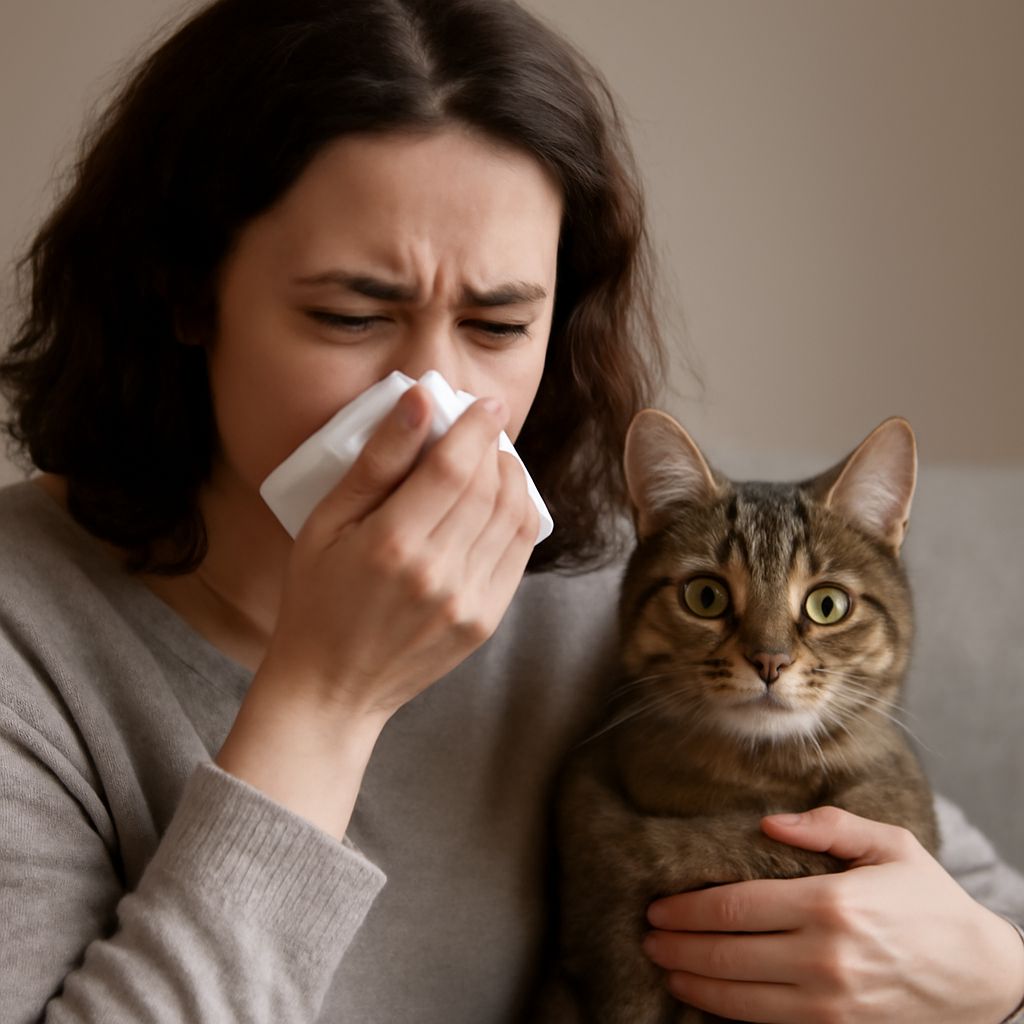
can cats catch colds from humans: what the science says
You have been down with a nasty cold for three days, sneezing, congested, and generally miserable. Now your cat is hovering nearby, which is sweet, but it raises a reasonable question: can cats catch colds from humans? The short answer is that the viruses responsible for most human colds, particularly rhinoviruses, do not infect cats. You are dealing with different pathogens that evolved for different hosts.
But the full picture is more nuanced than a flat no. Can cats catch human colds depends on which virus you have. Some respiratory pathogens do cross species lines in limited ways. Can cats get colds from humans involving a rhinovirus is extremely unlikely. Whether can cats catch a cold from humans in any form applies to influenza is a separate question with a different answer. And if you are wondering whether can cats get human colds and pass something back to you, that bi-directional question also deserves a clear look.
The Species Barrier and Common Cold Viruses
Rhinoviruses and Cats
Rhinoviruses are responsible for roughly 30 to 50 percent of human colds. These viruses bind to specific receptors in the human upper respiratory tract that cats simply do not have in the same form. Transmission from person to cat through casual household contact, including sneezing, touching, and sharing space, is not a documented concern for this class of virus.
Cats do get their own version of upper respiratory infections, often caused by feline herpesvirus or feline calicivirus. These cat-specific pathogens cause symptoms that look a lot like a human cold: runny nose, sneezing, and eye discharge. But they cannot infect humans, and your human cold viruses cannot infect your cat. The resemblance is a parallel evolution of respiratory infections, not a shared pathogen pool.
Influenza and the Cross-Species Question
Influenza viruses are more complicated. Cats have been documented to contract H1N1 (swine flu) from infected humans, and cats can catch certain strains of influenza A under the right conditions. This is not the common cold, but it is a respiratory illness humans regularly refer to as a cold in casual conversation. The risk is low but not zero.
If you have confirmed influenza and your cat seems to develop sneezing, nasal discharge, or lethargy, a vet call is reasonable. The reverse pathway, cats passing feline respiratory illness to humans, is not a documented risk for standard feline respiratory pathogens.
Protecting Your Cat When You Are Sick
Simple Precautions During Human Illness
If you have influenza or are dealing with any respiratory illness and your cat appears healthy, basic hygiene goes a long way. Wash your hands before handling your cat. Avoid letting your cat close to your face when you are actively sneezing or coughing. Keep your cat out of your bedroom if you prefer to be cautious.
These precautions are reasonable for influenza specifically. For a common cold caused by rhinovirus or coronavirus (the seasonal cold strains, not pandemic strains), the cross-species risk is negligible and these precautions are not strictly necessary.
Recognizing a Sick Cat
Cats get respiratory infections from other cats, not from you. But if your cat develops sneezing, runny eyes, nasal congestion, or reduced appetite around the time you were ill, that timing may be coincidental rather than causal. Feline respiratory infections spread through contact with infected cats at shelters, boarding facilities, or outdoor exposure.
Signs that warrant a vet call include open-mouth breathing, green or yellow discharge, loss of appetite lasting more than 24 hours, or lethargy. A cat showing mild sneezing without other symptoms often recovers on its own in a few days, but your vet can confirm whether treatment is needed.
Bottom line: can cats catch colds from humans in the way we usually think of colds? No, the rhinoviruses behind most human colds do not infect cats. The influenza exception is real but low-risk. Your cat is far more likely to pick up a respiratory infection from another cat than from you, and your cold is not something your cat needs to worry about.