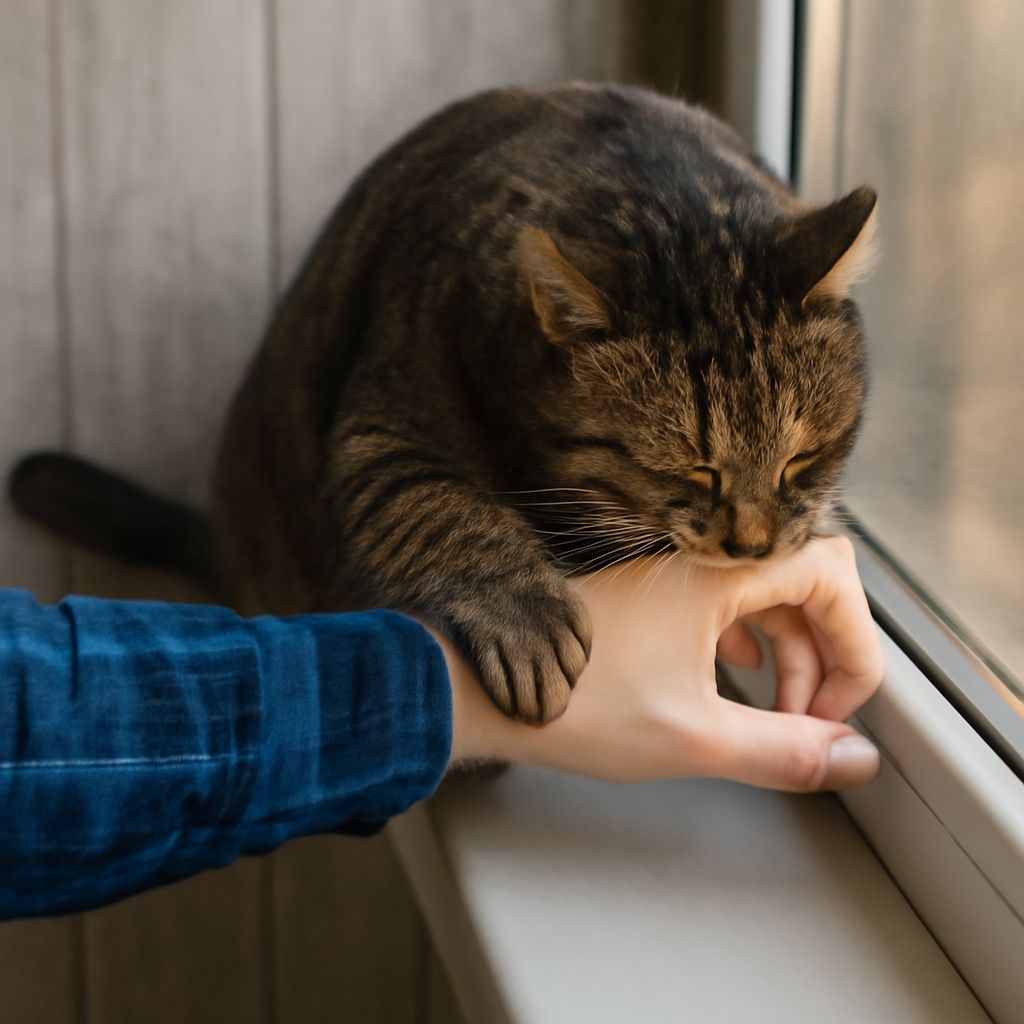
why does my cat bite me? Understanding Feline Biting Behavior
You’re petting your cat, everything seems fine, and then without obvious warning there are teeth in your hand. Sound familiar? If you keep asking yourself why does my cat bite me, you’re in good company. Most cat owners have been there. The behavior isn’t random, even when it feels that way, and understanding why do cats bite you is the first step toward actually changing the pattern.
The answer isn’t always the same. Why do cats nip at you during play is completely different from why did my cat bite me when I was just sitting nearby. Context is everything. And understanding why does cat bite under different circumstances lets you respond appropriately instead of just hoping it stops on its own.
Why Cats Bite: The Main Reasons
Overstimulation Biting
This is the most common type. Your cat is enjoying being petted, then something crosses a threshold and the bite happens. Cats have sensitive skin with densely packed nerve endings, particularly along the back and belly. Prolonged petting builds up sensory stimulation to a point where the cat’s only available response is to make it stop. The bite is communication, not aggression. Watch for early signs: skin rippling, tail flicking, flattened ears, or the cat turning its head toward your hand. Those are warnings that a bite is coming.
Play Biting
Kittens learn bite inhibition from littermates. A hard nip during play gets a squeal and play stops, which teaches the biter to moderate pressure. Cats raised alone or weaned too early miss this feedback loop. The result is an adult cat that plays with full tooth pressure because no one ever told them it hurt. Play biting is usually paired with other predatory behaviors: stalking, pouncing, grabbing with front paws.
Fear and Defensive Biting
A scared cat bites to create escape room. If your cat is cornered, in pain, or overwhelmed by handling, a bite is a last resort after other warnings have been ignored. Hissing, growling, flattened ears, and wide pupils all come before a defensive bite. If you miss those signals, the bite is the only option left.
Redirected Aggression
Your cat sees something outside the window, another cat, a bird, something that triggers intense arousal. They can’t get to that target, so the energy redirects to whatever is nearest, which is often you. Redirected biting can seem completely unprovoked because the trigger isn’t obvious. If this happens, give the cat space and time to calm down before interacting again.
How to Respond When Your Cat Bites
Don’t Pull Away Sharply
A fast pull-back triggers the prey drive and often results in a harder second bite. Instead, go slightly toward the bite pressure for a fraction of a second, then slowly withdraw. This counterintuitive response breaks the predatory cycle faster.
Stop All Interaction Immediately
No yelling, no punishment. Stand up, turn away, and leave. Removing your attention is the clearest signal that biting ends the good thing. Do this consistently and the connection forms: teeth mean interaction stops.
Redirect to Appropriate Targets
Keep a wand toy or a thick rope toy nearby during play sessions. When a cat starts to overstimulate or shows early signs of biting, redirect that energy to the toy. This teaches the cat where teeth are acceptable. Never use your hands as play targets.
Bottom Line
Cats bite for reasons that make sense from their perspective: too much stimulation, play instinct, fear, or redirected arousal. Consistent responses that remove your attention when biting occurs, combined with appropriate play outlets, reduce the frequency for most cats within a few weeks. If biting is severe or comes with no warning at all, a veterinary behavioral consultation is worth pursuing.