How to Tell if Cats Are Playing or Fighting: Key Differences
You hear thumping from the other room, then a yowl, and you rush in to find your two cats in a heap on the floor. Your heart rate spikes. But are they actually hurting each other, or just being cats? Knowing how to tell if cats are playing or fighting is one of the most genuinely useful things any multi-cat household owner can learn.
The line between cats playing or fighting is not always obvious, especially for new owners. The sounds cats make during play can be alarming. Cats fighting or playing can look identical at a glance — rolling, biting, chasing, wrestling. Understanding why do cats play fight, what it looks like versus real aggression, and the key difference between cats playing and fighting will help you respond appropriately instead of interrupting something that is actually healthy social behavior.
Signs This Is Play, Not a Fight
Body Language That Says “Game On”
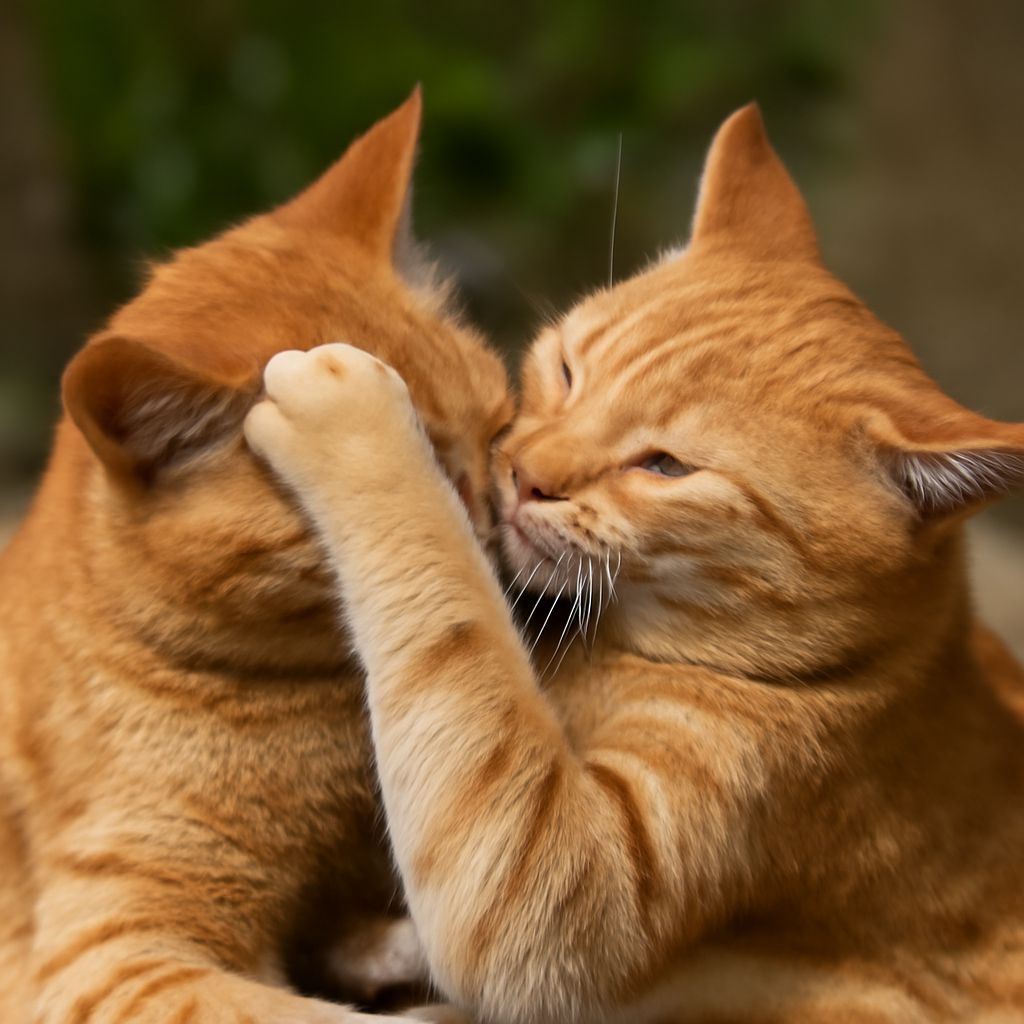
Cats engaged in genuine play tend to have relaxed body posture between bursts of activity. The tail may be loosely held or slightly puffed from excitement, but not bristled flat along the back. Ears are forward or slightly to the side, not pinned flat. Pupils may be dilated from arousal but the face stays relatively loose.
Turn-Taking
One hallmark of mutual play is role reversal. One cat chases, then the other chases back. One cat is on top, then the other gets on top. If you watch for a few minutes and the dynamic shifts back and forth, it is very likely play. When one cat consistently dominates and the other never gets a turn, that shifts toward real conflict.
Inhibited Bites and Claws
Play biting uses dramatically less force than real biting. You rarely see broken skin from play bites, even in vigorous play sessions. Claws in play are typically sheathed or only partially extended. Real fights produce scratches and wounds.
Signs This Has Crossed Into Real Aggression
Vocalization
Play is mostly quiet or includes soft chirps and trills. Hissing, growling, yowling, and screaming are signs that one or both cats are genuinely distressed. A single hiss can be a warning during play; continuous hissing or growling means intervention may be needed.
Escape Attempts
When one cat is actively trying to get away and the other is pursuing aggressively, this is not consensual play. Watch the cat on the receiving end — if it is crouching flat, trying to hide, or vocalizing distress, the interaction has gone wrong.
Post-Interaction Behavior
After healthy play, cats usually groom themselves, wander off calmly, or even groom each other. After a real fight, you’ll see sustained hiding, defensive posturing, excessive grooming of a specific area, or refusal to enter rooms where the other cat is.
Key Takeaways
Look for turn-taking, soft bites, and calm post-interaction behavior to confirm that cats are playing or fighting harmlessly. Hissing, screaming, and one-sided pursuit signal real aggression that may need management. When in doubt, redirect with a toy rather than intervening physically.