
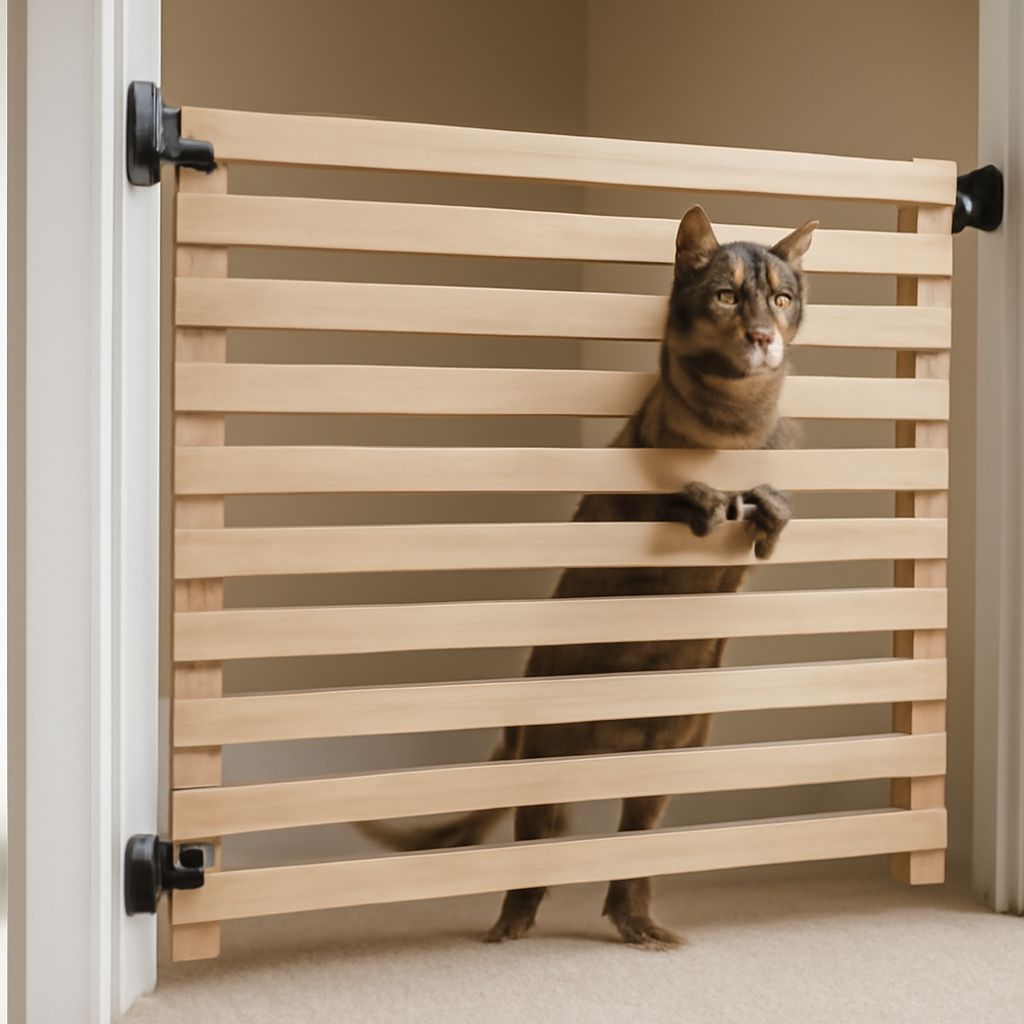
Tall Cat Gate Guide: Choosing the Best Barrier for Clever Climbers
You’ve tried the basic pressure-mounted gate from the baby section, and within twenty minutes your cat has cleared it with ease. If you need a tall cat gate that actually works, you’re not alone — many cat owners discover the hard way that standard gates simply aren’t designed with athletic, agile felines in mind. Whether you want to keep your cat out of a specific room, away from stairs, or separated from a new pet, a properly sized barrier makes all the difference.
Finding a cat gate tall enough to stop determined climbers and jumpers is the first challenge. The market offers everything from simple pressure-mounted panels to elaborate freestanding enclosures. Before you buy an extra tall cat gate, it pays to understand what features matter most, how installation affects effectiveness, and why an extra tall pet gate for cats differs from a gate designed for dogs. This guide covers everything you need to choose from the best tall pet gates for cats available.
Why a Standard Gate Won’t Cut It for Most Cats
Most pet gates on the market are engineered primarily for dogs, topping out around 24–30 inches in height. For the average dog, that barrier is sufficient. Cats, however, can leap four to six times their own height from a standing start — making a low gate little more than a minor inconvenience.
How High Can Cats Really Jump
A healthy adult cat can typically jump five to six feet vertically with ease. Younger, more athletic cats may clear even greater heights. This means gates shorter than 40 inches offer minimal resistance to most felines, and even 40-inch panels can be scaled by particularly motivated animals.
The Problem With Dog Gates Used for Cats
Dog gates often feature widely spaced bars — a design that can allow slim cats to squeeze through. The height that stops a Labrador won’t stop a determined tabby. A cat-specific or extra-tall gate addresses both the height deficit and the spacing problem in one product.
When a Tall Cat Gate Becomes Essential
There are situations where a taller barrier is a genuine necessity: separating a newborn from a territorial pet, protecting a dog-free zone for a cat recovering from surgery, keeping cats away from dangerous machinery or chemicals in a garage or utility room, or managing multi-pet households during feeding times.
Choosing the Right Extra Tall Cat Gate
Once you’ve established that height is a priority, you’ll need to evaluate several other factors — from construction materials to gate style — to find an option that works in your specific home.
Height and Material Considerations
Look for gates that stand at least 40–45 inches tall, with some premium models reaching 48 or even 60 inches. Metal and wood constructions tend to be more durable than plastic, and rigid frames resist the pressure of cats pushing or scratching against them. Mesh panels combine lightweight design with solid containment.
Walk-Through vs. Pressure-Mounted vs. Hardware-Mounted Gates
Walk-through gates are the most convenient for daily human use. Pressure-mounted styles are easy to install and remove without tools, but may not hold up to persistent cats in high-traffic areas. Hardware-mounted gates attach directly to wall studs and offer the most secure fit — ideal for permanent placements at the top of stairs.
Gates With Cat Doors vs. Full-Panel Designs
Some extra-tall pet gates designed for cats include a small built-in cat door at the base. This clever feature lets your cat pass freely while blocking dogs or young children. Full-panel designs, on the other hand, create complete separation — useful when you want to keep your cat confined to a specific area entirely.
Top Features to Look for in Tall Pet Gates for Cats
Beyond height, prioritize: narrow bar spacing (no wider than 2 inches to prevent escape), a locking latch that resists paw manipulation, non-tip bases for freestanding designs, and easy one-hand operation for walk-through models. Some owners also appreciate gate extensions that add 6–12 inches of height to an existing unit.
Installation and Placement Tips
Even the best gate is only effective when installed correctly. Pay close attention to the specific dimensions of your doorway or hallway before purchasing, and always verify that your chosen model fits the opening width.
Stairways and Hallways
At the top of stairs, always use a hardware-mounted gate — pressure-mounted models can shift under impact and create a fall hazard. At the bottom of stairs, pressure-mounted options are generally acceptable. For wide hallways, look for gates with adjustable panels or purchase extension kits.
Room Dividers and Open Floor Plans
Open floor plans present a unique challenge since there may be no doorframe to mount against. Freestanding extra-tall gates or configurable panel systems that can be arranged in a custom shape work best in these layouts. Secure freestanding units to walls or furniture where possible to prevent tipping.
Key takeaways: A tall cat gate must reach at least 40 inches, feature narrow bar spacing, and match your specific installation location for maximum effectiveness. Choose hardware-mounted designs for permanent placements and walk-through or pressure-mounted options for flexible, everyday use. Matching gate height and construction to your cat’s athleticism is the surest way to achieve reliable home access control.