Vintage Cat Clock: A Collector’s Guide to Felix, Black Cat, and Kitty Cat Clocks
You spot a vintage cat clock at an estate sale — its tail swinging, eyes shifting from side to side, body painted in that familiar glossy black. Something about it feels like a piece of Americana you didn’t know you needed. Cat wall clocks have captivated collectors and casual admirers alike for nearly a century, and the market for these charming timepieces remains lively and rewarding for those who know what to look for.
The iconic cat wall clock has appeared in diners, farmhouse kitchens, and mid-century living rooms across America. Whether you’re hunting for an original black cat clock in working condition, searching for a rare kitty cat clock variant, or tracking down an authentic felix cat clock to anchor your collection, this guide covers the history, identification, and care of these beloved collectibles.
The History of the Vintage Cat Clock
The swinging-tail cat clock emerged in American popular culture in the mid-twentieth century and became one of the most recognizable novelty timepieces ever produced. Its staying power speaks to a combination of functional design, whimsical personality, and cultural nostalgia.
Origins of the Felix Cat Clock and Its Cultural Impact
Felix the Cat — the animated black cat created in the silent film era — inspired generations of cat-themed merchandise, including clocks. The Felix cat clock, produced in various licensed and unlicensed forms from the 1940s onward, features the cartoon cat’s distinctive features: large eyes, white gloves, and a wide grin. Genuine licensed Felix clocks from the original production run are now collector’s items, with prices ranging from $50 for later reproductions to several hundred dollars for original mid-century pieces in excellent condition.
How the Black Cat Clock Became an American Icon
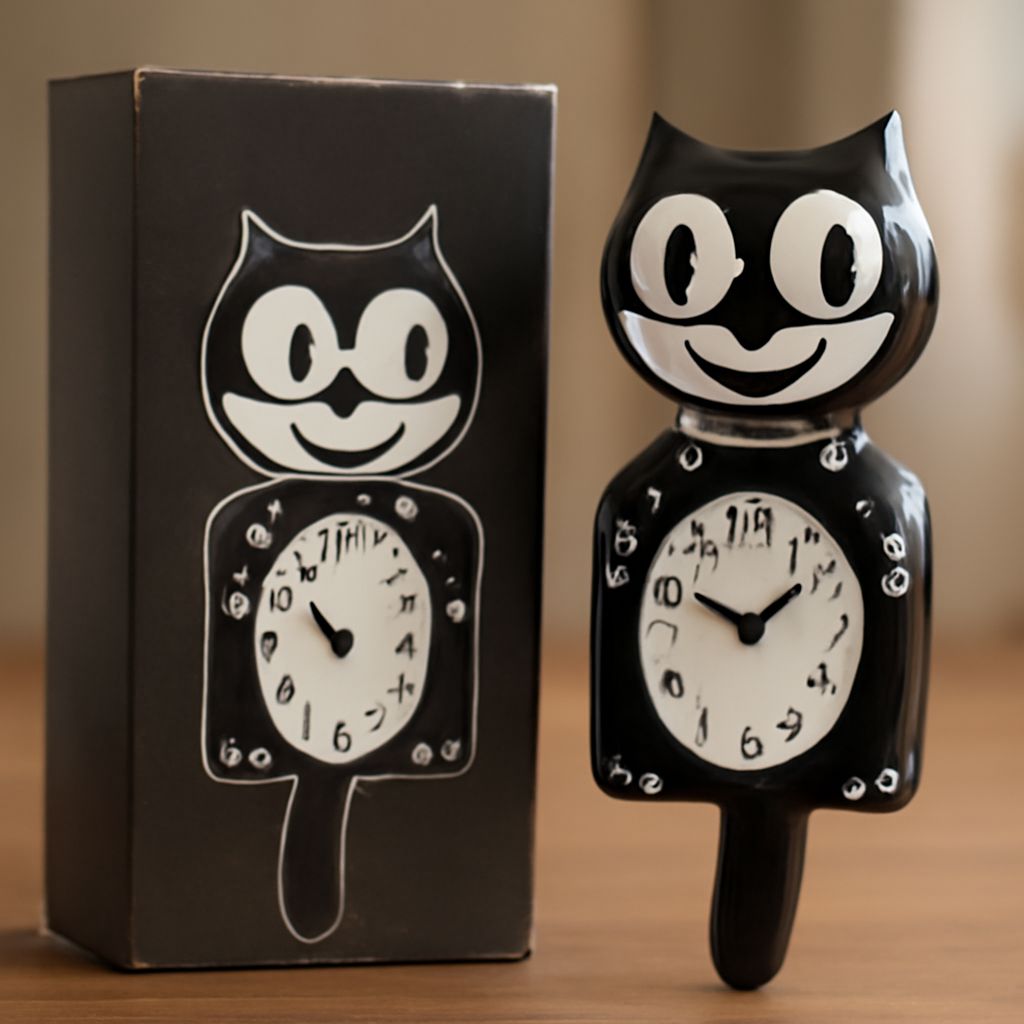
The black cat clock’s most famous form is the Kit-Cat Klock, first manufactured by the California Clock Company in 1932. The design — a stylized black cat with a pendulum tail and shifting eyes — was an immediate hit and has been in continuous production ever since, making it one of the longest-running novelty clock designs in history. Vintage black cat clocks from the 1930s through 1960s are particularly sought after by collectors who value original mechanisms and period-correct paint finishes.
The Kit-Cat Klock and Its Enduring Design
The Kit-Cat Klock design has remained remarkably consistent: a wall-mounted cat silhouette approximately 15 inches tall, with a battery-powered or wind-up movement driving the signature swinging tail. The eyes move in synchrony with the tail via a simple mechanical linkage. Early models used bakelite cases and spring-wound movements; later versions transitioned to plastic and quartz mechanisms. The California Clock Company continues to manufacture Kit-Cat Klocks today, though vintage examples from the first three decades of production command a premium among serious collectors.
Types of Collectible Cat Wall Clocks
The cat wall clock category is broader than the Kit-Cat alone. Understanding the range of styles helps collectors make informed purchasing decisions.
Identifying Authentic Vintage Pieces
Genuine vintage cat clocks show specific signs of age: patina on metal hardware, yellowing or crazing of early plastic or bakelite cases, wear patterns consistent with decades of use, and manufacturer markings that correspond to known production periods. Original Kit-Cat Klocks from the 1930s–1950s will have “California Clock Co.” or “Allied Manufacturing” markings. Reproductions and modern reissues will lack these vintage markers, though they still have collector interest as design objects.
Most Sought-After Brands and Styles
Beyond the Kit-Cat, collectors prize: Lux Clock Manufacturing cat pendulum clocks from the 1940s–1950s; mid-century ceramic cat clock figurines with built-in clock faces produced by California pottery companies; novelty alarm clocks featuring cat motifs from German and Japanese manufacturers; and hand-painted folk art cat clocks from regional American artisans. Each subcategory has dedicated collectors and its own pricing structure.
What Determines Value in a Kitty Cat Clock
Condition is the primary value driver — a kitty cat clock in fully working order with original finish commands significantly more than a non-working or repainted example. Provenance (documentation of ownership history or original purchase receipts) adds value. Rarity matters: limited-edition colors, promotional variants produced for specific businesses, and early production examples with distinct mechanical features all command premiums. Original packaging, when present, can double the value of a piece.
Displaying and Caring for Your Cat Clock Collection
Cat wall clocks are functional objects, and preserving both their visual appeal and mechanical integrity requires thoughtful care. Mount clocks on interior walls away from direct sunlight, which fades paint and degrades plastic and bakelite over time. Maintain original mechanisms wherever possible — professional clock repair is preferable to replacement with modern movements for pieces of collector value. Store non-displayed clocks in acid-free tissue in a climate-controlled environment. For clocks with swinging tail mechanisms, hang them level to ensure proper pendulum operation and minimize mechanical wear.
Key takeaways: Vintage cat clocks — particularly original Kit-Cat Klocks and Felix cat variants — represent an accessible and charming collectible category with genuine historical significance. Condition, provenance, and original mechanisms are the primary value drivers in any cat wall clock purchase. Whether displayed as whimsical decor or preserved as serious collectibles, these timepieces connect owners to a playful chapter of American design history.