
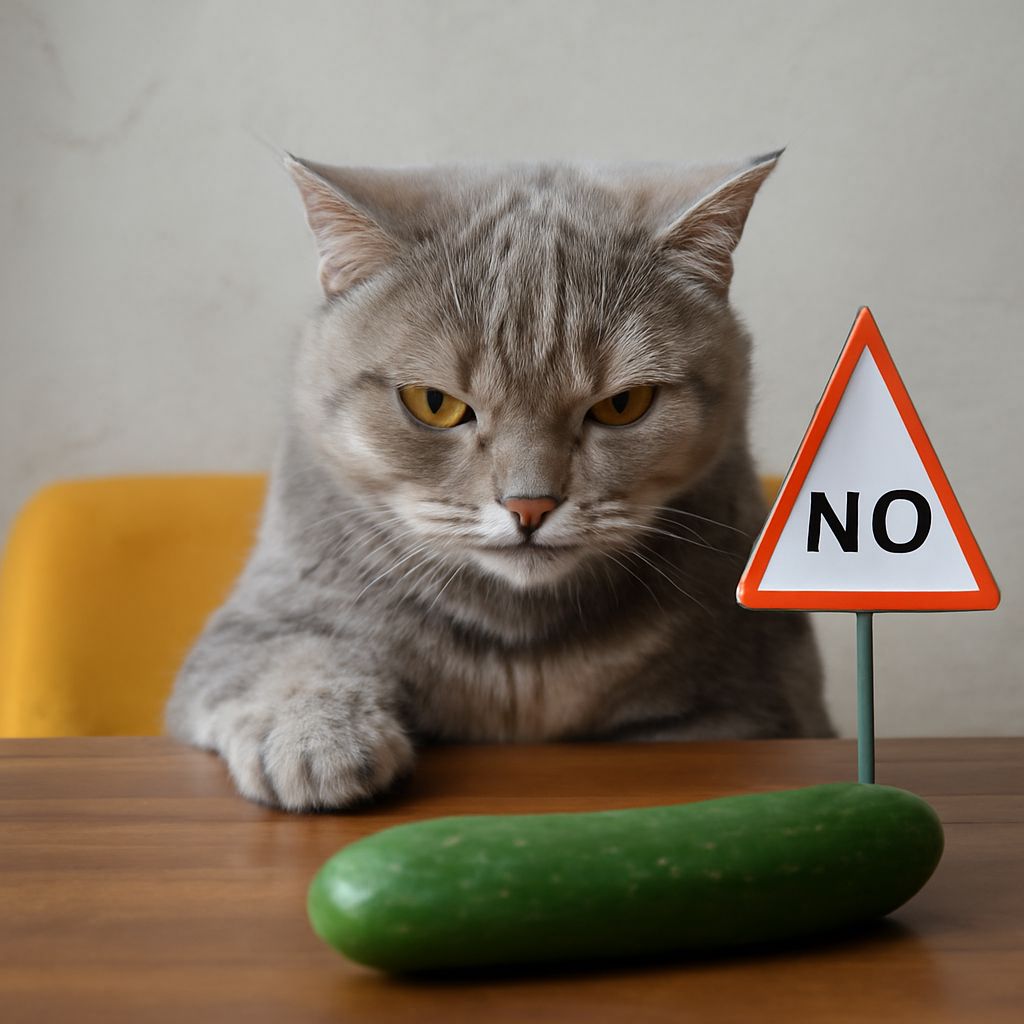
Why Do Cats Not Like Cucumbers? The Real Reason Behind the Reaction
You’ve probably seen the videos: a cat eating peacefully, its owner silently places a cucumber behind it, and when the cat turns around — instant panic. The clips went viral for a reason. Watching a cat explode off the floor in sheer terror over a salad ingredient is objectively hilarious. But if you’ve ever wondered why do cats not like cucumbers, the answer is more scientifically interesting than the humor suggests.
Understanding cats and cucumbers why they react so dramatically starts with cat psychology rather than vegetable phobia. The question of why are cats scared of cucumber is really a question about how cats process sudden, unexpected stimuli. Whether cats hate cucumbers specifically or simply anything that appears behind them without warning — and even why why are cats afraid of pickles in some videos — all points back to the same core feline instinct.
The Science Behind Why Cats Fear Cucumbers
The leading explanation among animal behaviorists is that cats don’t fear cucumbers specifically — they fear anything that appears suddenly in their environment without their awareness, particularly when they’re in a vulnerable position like eating. The long, cylindrical shape of a cucumber may also trigger an innate wariness of snake-like objects, a survival reflex preserved from ancestral wild cat behavior. Snakes represent real predatory danger to small felines in nature, and the hardwired response to snake-shaped objects likely persists in domestic cats even though most house cats have never encountered a real snake. The combination of unexpected appearance and ambiguous snake-resembling shape creates a perfect storm for a startle response.
Is It Safe to Scare Cats With Cucumbers?
The short answer is no — it’s not a harmless prank, despite the internet entertainment value. Deliberately startling cats while they eat is genuinely stressful for the animal. Cats feel most vulnerable while feeding, and repeatedly frightening them in this context can cause lasting anxiety around their food bowl, leading to behavioral changes like reluctance to eat, food aggression, or litter box avoidance as stress manifests elsewhere. A single cucumber incident is unlikely to cause lasting harm, but making a habit of frightening cats — even “just for fun” — undermines the trust and security that makes cats comfortable in their home environment.
Why Are Cats Afraid of Pickles and Other Surprises?
The same principle applies to pickles and other long or cylindrical objects placed behind cats unexpectedly. It’s not the smell of vinegar or the specific vegetable that triggers the reaction — it’s the sudden appearance of an unrecognized object in a location where the cat is certain there was nothing a moment ago. This cognitive dissonance — “I just looked there and it was empty” — triggers an immediate fight-or-flight response before the cat’s brain has time to process whether the object is actually dangerous. The reaction is evolutionary common sense operating faster than rational assessment.
What the Cucumber Reaction Tells Us About Cat Psychology
The viral cucumber phenomenon is actually a useful window into feline cognition. Cats maintain detailed mental maps of their environment and notice changes acutely. They’re also conservative processors of novel stimuli — when something unexpected appears, the default response is avoidance or retreat rather than investigation, because in the wild, hesitation can be fatal. This conservatism explains why cats can take extended periods to accept new furniture, new pets, or rearranged rooms. Their environmental awareness is precise and any disruption registers as potentially significant. The cucumber’s ability to provoke such a dramatic response demonstrates how efficiently the threat-detection system operates even in pampered domestic cats.
How to Support an Anxious or Startled Cat
If your cat was frightened by a cucumber incident or experiences regular environmental anxiety, the recovery approach is straightforward. Give the cat space immediately after the startle — don’t try to comfort with forced holding, which adds additional stress. Let the cat return to the area on its own timeline. Resume normal routines as quickly as possible; predictability is the antidote to feline anxiety. For cats with chronic anxiety, environmental enrichment — puzzle feeders, elevated perches, hiding spots, and consistent interaction schedules — reduces baseline stress levels and makes individual startle events less impactful. If anxiety is persistent or interfering with normal behavior, a veterinary consultation about behavioral support or pheromone therapy (such as Feliway) is worthwhile.