
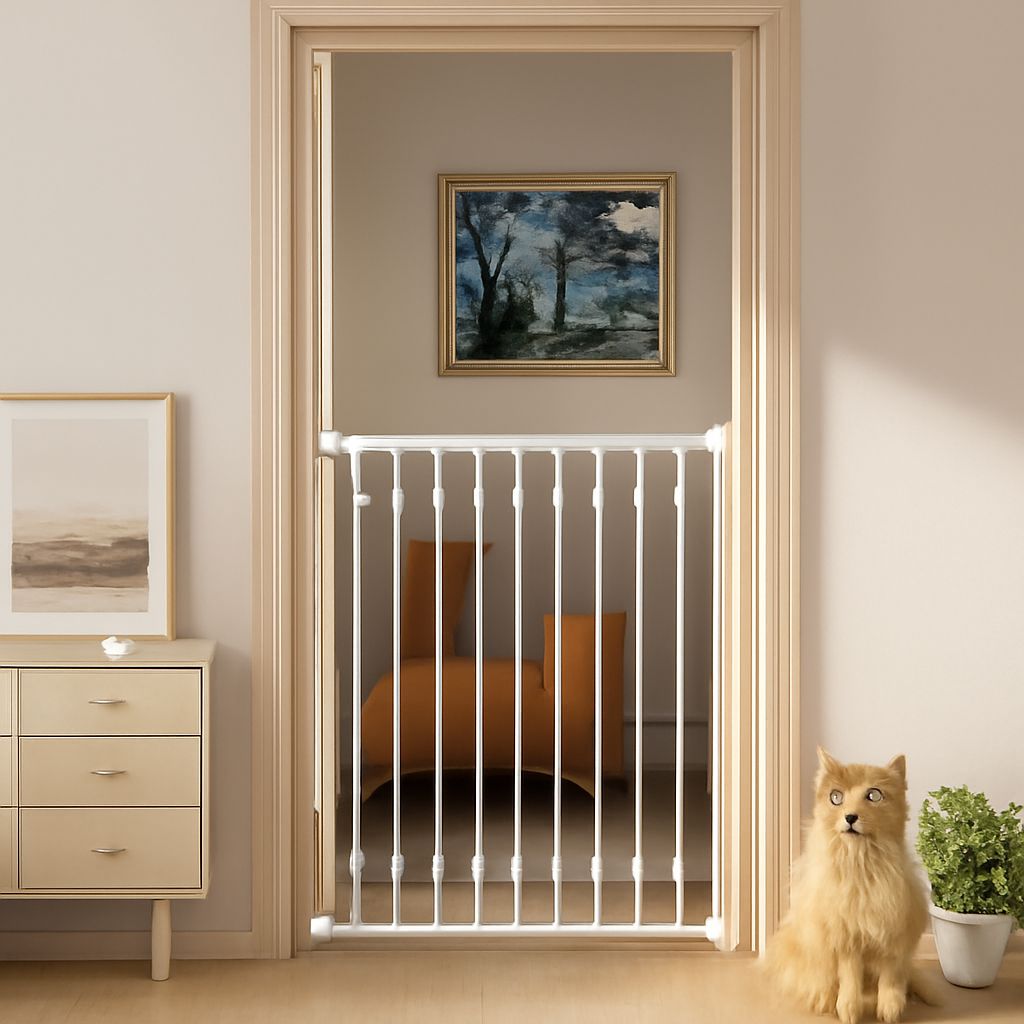
Cat Gate: Choosing the Best Pet Gate to Keep Your Cat Safe and Contained
You just brought home a new kitten and realized within the first hour that your home has no boundaries — the kitten is on the counter, behind the washing machine, and investigating the space under the stove with alarming enthusiasm. A cat gate is one of the most practical tools for managing feline access in a home, whether you are protecting a newborn from an overly curious older cat, keeping your cats away from a dog’s food bowl, or blocking access to a staircase after surgery. Cat gates and pet gates for cats come in a wide range of sizes, styles, and mounting types, and the right choice depends heavily on your specific cat and your home layout.
Unlike baby gates designed for toddlers, the challenge with gates for cats is that cats are climbers and jumpers. A standard baby gate that works perfectly for a dog may take your cat approximately four seconds to scale. This guide covers what makes a good cat gate, the difference between standard and tall pet gate for cats options, and how to choose and install the right barrier for your situation.
Why You Need a Cat Gate
Cat gates serve several important functions in a multi-pet or safety-conscious household. They allow you to keep cats and dogs separated during feeding times, preventing food guarding and resource competition. They block access to rooms where dangerous items are stored — laundry rooms with toxic cleaning products, garages, or home offices with small objects cats could swallow.
Post-surgical recovery often requires restricting a cat to a single room to prevent climbing, jumping, or running that could damage healing sutures. A cat gate makes this possible without the stress of a small crate for extended periods. Gates for cats also protect spaces where you need cat-free zones — a baby’s room, a guest bedroom, or an elderly family member’s space.
Cats vs. Dogs: Why Regular Pet Gates Often Fail
Most dog-focused pet gates are designed to block animals that push against barriers. Cats approach containment differently — they jump over, climb, or find gaps to squeeze through. A 24-inch gate that stops a medium-sized dog will not slow most domestic cats for a moment. This is why cat-specific gate design matters, and why height is the single most important specification when shopping for pet gates for cats.
Types of Cat Gates Available
Pressure-mounted cat gates use tension between two walls to stay in place without drilling. They are easy to install and remove, making them ideal for renters or temporary use. The trade-off is that pressure-mounted gates are less secure than hardware-mounted options — a determined or heavy cat can sometimes dislodge them.
Hardware-mounted cat gates are secured to the wall with screws. They are more stable and better suited to doorways or staircase openings where a gate failure would be dangerous. If you are blocking the top of stairs with a cat gate, hardware mounting is the only appropriate choice.
Walk-through cat gates feature a door built into the gate panel, allowing adults to pass through without lifting the entire gate out of the way. This is highly practical in high-traffic doorways. Look for walk-through designs with a door latch that operates with one hand — you will thank yourself when your hands are full.
Extra-wide cat gates use an accordion or panel expansion system to span openings wider than a standard doorway. These are useful for open floor plans, large archways, or at the bottom of wide staircases.
Mesh vs. Slat vs. Solid Panel Gates
Mesh panels are lightweight and allow airflow and visibility between spaces. Slat designs with vertical bars can be problematic if the spacing is wide enough for a cat to stick a leg or head through — look for slat spacing of two inches or less. Solid panel gates block sight lines completely, which can be useful for reducing inter-pet stress but limits your ability to monitor the contained cat easily.
Choosing the Right Height and Style
Height is the defining feature when choosing a tall pet gate for cats. Most cats can jump four to five feet with ease; athletic cats can clear six feet or more. Standard baby gates stand twenty to twenty-four inches — completely inadequate for even an average-sized domestic cat. A cat gate designed specifically for felines should stand at least thirty-six inches; forty to forty-eight inches is better for athletic breeds or young cats at peak jumping ability.
Some cat owners add a mesh or fabric extension to the top of an existing gate to increase effective height without purchasing a new unit. This can work, but the extension must be secured well enough that a jumping cat landing on it does not knock the entire gate over.
Consider whether the gate needs to be fully opaque or whether visibility between spaces is acceptable. If you are separating cats who have tension between them, a solid or low-visibility gate reduces visual stressors. If you are simply blocking access to a hazardous room, a mesh or slatted gate that lets you see your cat easily is preferable.
Gates for Multi-Cat Households
In multi-cat homes, pet gates for cats also need to account for whether some cats should pass freely while others are blocked. Small cat doors built into some gate designs allow a smaller cat to pass while blocking a larger dog. Elevated pass-throughs work similarly — installed high enough that a dog cannot use them but a cat can jump through with ease.
Installing and Maintaining Your Cat Gate
Install pressure-mounted gates at the correct tension — too loose and they slide; too tight and you stress the wall surfaces. Follow the manufacturer’s pressure guidelines. For hardware-mounted cat gates, use the included wall anchors and ensure at least one screw per side goes into a stud or appropriate drywall anchor for solid hold.
Check gate stability weekly. Cats test barriers repeatedly and consistently — a gate that is slightly loose today will be on the floor next week. Inspect latches and hinges monthly for wear. Clean mesh or fabric panels regularly to prevent odor buildup, which can make the gate a target for marking or scratching.
Next steps: Measure your doorway width and the height your cat can jump before purchasing. Check whether you need a pressure-mounted or hardware-mounted option based on your wall type and the safety stakes of the location. For staircase tops, always choose hardware mounting and a tall pet gate for cats rated for the opening width. A well-chosen and properly installed cat gate makes household management significantly easier for everyone — human and feline alike.