Bengal Cat Adoption: Finding Your Bengal Cat and Understanding Their Wild Roots
You have been captivated by photos of spotted, athletic cats with coats that look like they belong in a jungle rather than a living room, and now you are looking into bengal cat adoption as your path to bringing one home. Bengal cats are among the most visually striking domestic breeds, and their personalities live up to their appearance — active, intelligent, and demanding in the best possible way. If you have seen searches for bengal cat for adoption and wondered whether this breed is available through rescue or only through breeders, the answer is both. Searches for asian leopard cat for sale often appear alongside bengal cat searches because the bengal breed was created by crossing domestic cats with the Asian leopard cat — a small wild felid — producing the distinctive spotted coat that attracts so much attention. Understanding what that wild ancestry means for the breed’s temperament and care needs is essential before you pursue leopard cats for sale listings or rescue adoption.
This guide covers the breed’s origins, how bengal cat adoption works through rescue channels, and what life with a bengal actually looks like day to day.
What Is a Bengal Cat and Where Do They Come From
The Bengal breed was developed in the 1960s and 1970s through deliberate crosses between domestic cats and the Asian leopard cat (Prionailurus bengalensis), a small wild cat native to South and Southeast Asia. The goal was to create a domestic cat with the exotic appearance of a wild cat and the temperament of a pet. Early generation hybrids — F1 through F3 — are still partially wild in their behavior and are often not suitable as ordinary household pets. By the fourth generation (F4) and beyond, bengals are fully domestic in behavior and are what the breed standards and most breeders sell.
When people search for asian leopard cat for sale or leopard cats for sale, they are sometimes searching for the source wild species itself, sometimes for early-generation hybrids, and sometimes for fully domestic bengal cats. Owning an actual Asian leopard cat or early-generation hybrids is regulated or prohibited in many states and countries, and requires specialized facilities and care. Fully domestic F4+ bengals are legal everywhere domestic cats are kept and are the appropriate choice for household pets.
The Bengal Coat and Physical Characteristics
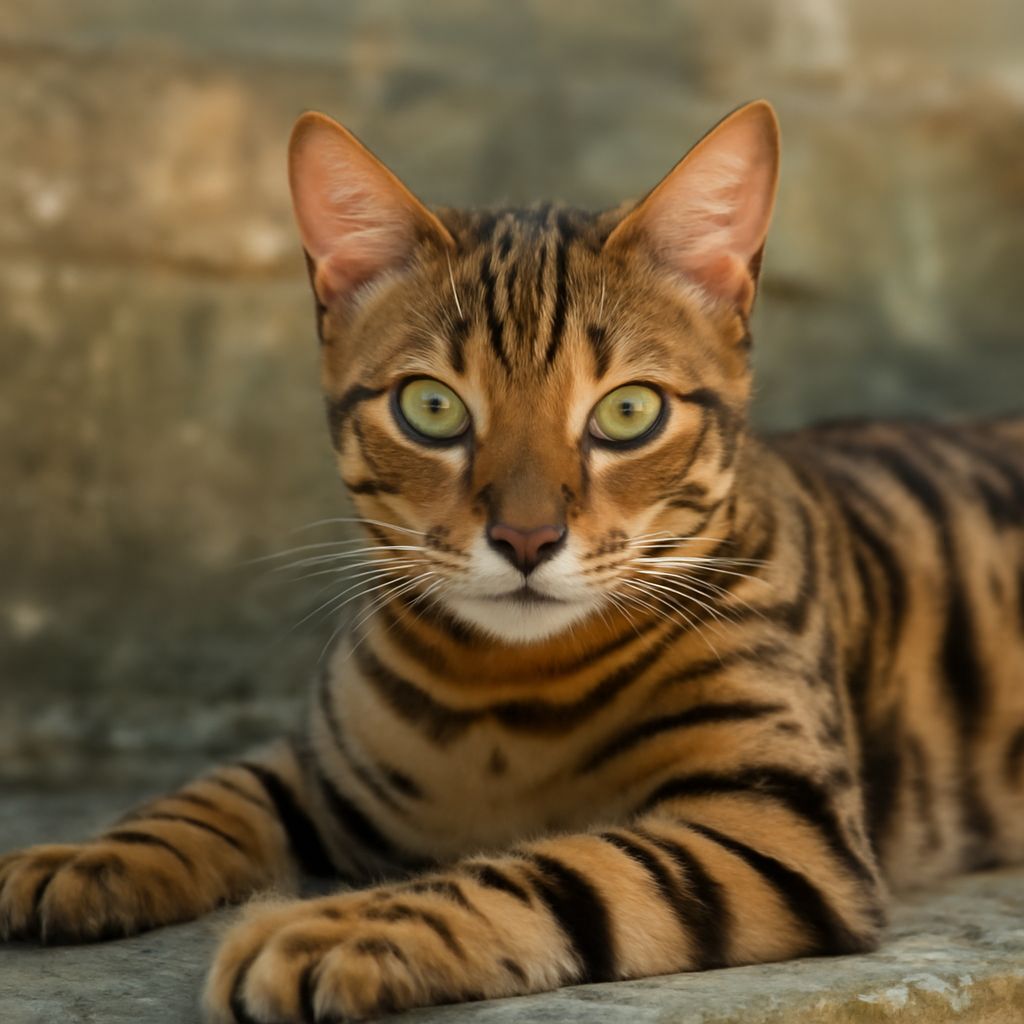
Bengal cats have a short, dense, surprisingly soft coat with markings that come in spotted and marbled patterns. The spots can be solid or rosetted — two-toned like a jaguar’s spots — with rosetted bengals being particularly sought-after. Coat colors range from brown and golden to silver, snow, and charcoal. The coat has a distinctive glitter in many bengals, giving it an almost metallic sheen in direct light. This is a physical characteristic unique to the breed.
Bengal Cat Adoption: Rescues and What to Expect
Bengal cat adoption through rescue is a real option, though bengals in rescue are less common than mixed-breed cats. They end up in rescue for the same reasons other cats do: owners who underestimated the breed’s energy and activity requirements, allergies, financial hardship, or life changes. Several breed-specific rescues operate nationally and internationally — searching for bengal cat for adoption through organizations like The Bengal Rescue Network or regional breed-specific groups gives you access to cats that have been temperament-assessed and vetted.
Expect a thorough adoption application process from bengal rescues. They typically ask about your home environment, experience with active breeds, whether you have other pets, and how much time you are home. This is not bureaucratic gatekeeping — it is appropriate matching that reduces the chance of a bengal ending up back in rescue because the fit was wrong.
Adopting from a Reputable Breeder
When bengal cat adoption through rescue is not immediately available, buying from a reputable breeder is the alternative. Signs of a responsible breeder include health testing for conditions like hypertrophic cardiomyopathy (HCM) and progressive retinal atrophy (PRA), willingness to answer detailed questions about the parents, genetic history documentation, early socialization of kittens in a home environment, and a contract that requires return to the breeder if you cannot keep the cat. Avoid anyone selling bengals without health documentation, without meeting the parents, or at unusually low prices — these are red flags for kitten mills or unethical breeding operations.
Why People Search for Asian Leopard Cat for Sale
Some people search for asian leopard cat for sale because they want the wild look without understanding the difference between the wild species and the domestic bengal breed. The true Asian leopard cat is a wild animal with complex behavioral and dietary needs that cannot be met in a typical home. They are solitary, nocturnal hunters with strong territorial instincts and are not appropriate as pets in most circumstances.
Searches for leopard cats for sale also sometimes lead to listings for first or second generation bengal hybrids, which are also not suitable for inexperienced owners. These early-generation cats retain significant wild behaviors including extreme fearfulness or aggression toward strangers, inappropriate elimination, and strong predatory instincts. If you encounter listings for F1 or F2 bengals or wild hybrid cats, understand that these require experienced exotic animal caregivers, not typical cat owners.
Is a Bengal Cat Right for Your Home
Bengal cats are not for everyone, and that is not a criticism — it is a fact worth understanding before you pursue bengal cat adoption. They are high-energy cats who require significant daily interaction and enrichment. They are vocal, opinionated, and will use cabinets, counters, high shelves, and any available vertical space. They often enjoy water — some bengals will join you in the shower or play in water bowls. They can be leash-trained and many do very well with harness walking, which addresses some of their exercise needs.
They do best in homes where someone is present for a significant part of the day, or in pairs where they can entertain each other. A bengal left alone in a small apartment with insufficient enrichment will find its own entertainment — usually in the form of something you would rather they left alone.
If you have the time, energy, and space to meet a bengal’s needs, the bond you build is extraordinary. They are intensely loyal cats who form strong attachments to their people. Bengal cat adoption — whether through rescue or a responsible breeder — brings one of the most visually spectacular and personality-rich cat breeds into your home.