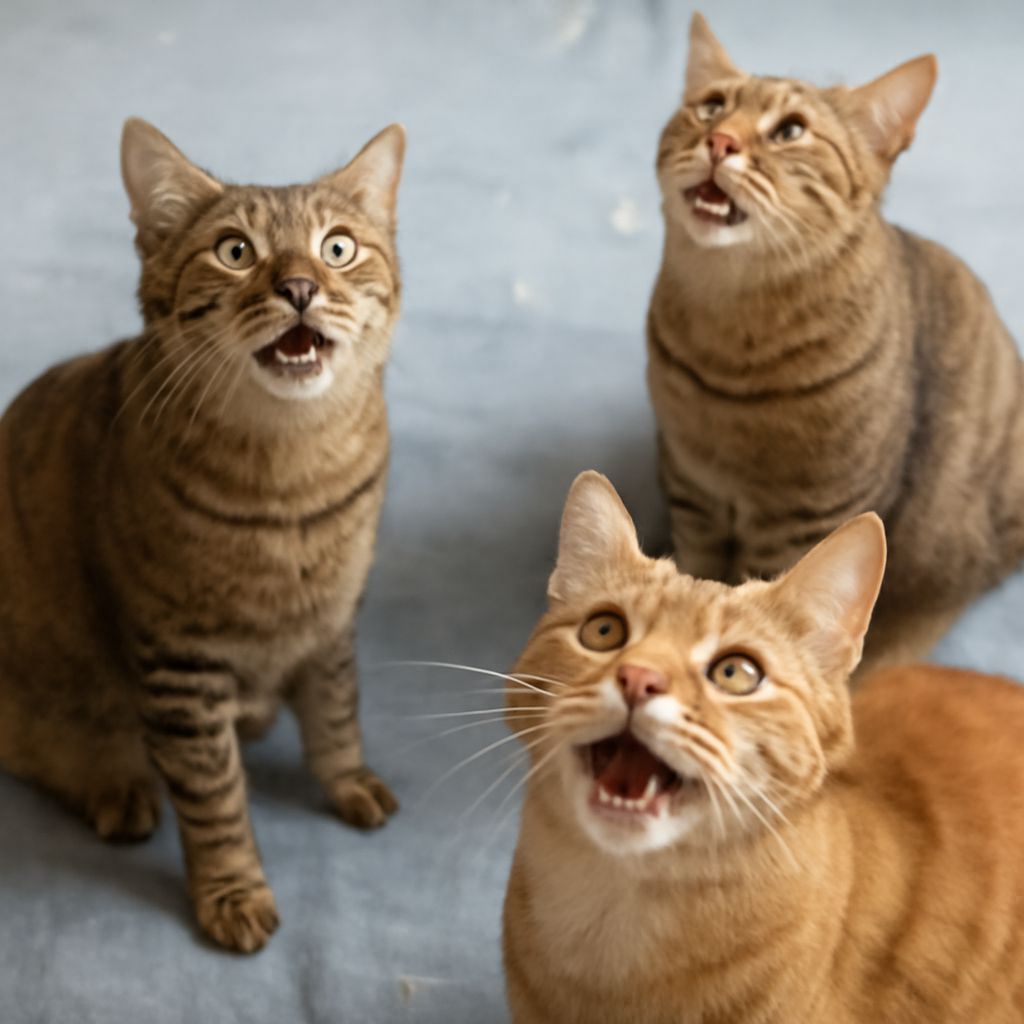
Why Do Cats Chirp? Understanding the Cat Chirp Sound and What It Means
You are sitting quietly when your cat spots a bird through the window and starts making a rapid, staccato sound that is neither a meow nor a purr. You find yourself wondering: why do cats chirp at things they can clearly see but not reach? The cat chirp is one of the most fascinating and least understood vocalizations in feline communication. When my cat chirps at a squirrel on the fence, it sounds almost like frustration mixed with excitement — and that interpretation is not far from what researchers believe is actually happening. A cat chirrup, which is a slightly rolled or trilled version of the same sound, often appears in a different context entirely — as a gentle greeting directed at you. And when cat chirps appear in yet another context, aimed at prey or at a toy moving across the floor, they signal something deeply instinctive.
Understanding why cats make these sounds connects to both their wild ancestry and their relationships with the people who live with them. This guide breaks down every version of the sound and what each one communicates.
What Is a Cat Chirp and What Does It Sound Like
A cat chirp is a short, rapid, high-pitched vocalization made with the mouth partly closed. The sound is typically pulsing — produced in a quick burst or rapid series rather than as a sustained tone. It is distinct from a meow, which is an open-mouth vocalization that cats primarily use to communicate with humans. The chirp is also different from the purr, which is a continuous vibration produced during both inhale and exhale.
Chirp vs. Chatter vs. Trill: The Differences
These three sounds are closely related but distinct. The chirp is a single short note or rapid burst. Chattering is an extended series of rapid jaw movements accompanying quick clicks or stuttering vocalizations — almost always directed at prey. The trill or cat chirrup is a rising, rolled sound that cats typically use in social contexts, often as a greeting. The three sounds exist on a spectrum; a cat may transition fluidly from chirruping a greeting to chirping excitedly as it spots movement across the room.
When Cat Chirps Are Most Common
Cat chirps appear most predictably in two situations: when a cat spots prey — real or simulated — and when a cat greets a trusted companion. Window birds are the classic trigger for the hunting-context chirp. A toy pulled across the floor at the right speed can produce the same response. The social chirrup occurs when cats greet kittens, other familiar cats, or people they are bonded to — often as the cat walks toward you with its tail raised.
Why Do Cats Chirp at Birds and Windows
The hunting-context cat chirp has fascinated researchers for decades. The most widely accepted explanation connects the sound to the kill bite — the precise bite to the back of prey that delivers a fatal blow to the nervous system. Some researchers propose that cats make these sounds when they see prey because the sight of prey triggers an involuntary activation of the motor patterns associated with the kill bite, and the sound is a byproduct of that muscular activity in the jaw and larynx.
The Prey Drive Connection
When cats watch birds from a window, they are in full predatory arousal — pupils dilated, body tense, tail tip twitching. The cat chirps because it is neurologically in hunting mode even though it cannot physically pursue the prey. The sound accompanies the internal activation of hunting instincts. Domestic cats retain these instincts in full even though most never need to hunt for survival. A cat that chirps intensely at window birds has robust prey drive — a healthy sign in a young or active cat.
What Happens in a Cat’s Brain During Chirping
The chirping vocalization likely involves the periaqueductal gray region of the brainstem, which plays a role in both vocalization and predatory behavior. When the visual system detects prey-like movement, it triggers downstream activation in motor and vocal circuits simultaneously. The chirping cat is not making a deliberate choice to vocalize — it is experiencing an involuntary response to predatory arousal, similar to how humans may gasp involuntarily when startled.
What My Cat Chirps at Me Might Mean
When my cat chirps or trills in my direction, the context is almost always social and positive. This chirrup-as-greeting behavior is how mother cats call to their kittens — a gentle, high-pitched sound that signals safe approach. Adult cats who chirp or chirrup at their human companions are treating them as part of their social group, using the same communication they would use with trusted feline companions.
A cat that chirps at you when you enter a room, when you move toward the food area, or when you pick up a favorite toy is communicating anticipation and social connection. The sound says: I see you, I know what is about to happen, and I am engaged. Cats that chirp frequently at their owners tend to be well-socialized, highly bonded, and confident in their environment.
Some cats chirp as a request — at the food bowl, at the door to a room they want to enter, or at a toy they want you to animate. This is a learned association between the sound and the response it produces. If chirping at you has historically resulted in food or play, a smart cat will use it deliberately.
How Chirping Fits Into Cat Communication Broadly
Cats have a remarkably diverse vocal repertoire compared to most mammals. The meow is primarily a human-directed communication developed over thousands of years of domestication — adult cats rarely meow at each other. Chirps, trills, and chirrups, by contrast, appear across both cat-to-cat and cat-to-human communication. Purring signals contentment and sometimes self-soothing. Hissing and growling signal threat. Yowling signals distress, territorial conflict, or reproductive signaling.
The cat chirrup occupies a unique and gentle space in this vocabulary — it is almost always positive, often anticipatory, and deeply rooted in maternal communication. When you hear your cat making that soft rolling sound as it approaches you, you are hearing a sound that has been used between cats for far longer than humans and cats have shared their lives together.
Understanding why cat chirps and chirrups happen makes living with a vocal cat richer and more rewarding. Each sound is a window into what your cat is experiencing — whether that is intense predatory focus on a bird, excited anticipation of dinner, or a simple, affectionate hello as they walk into the room.