
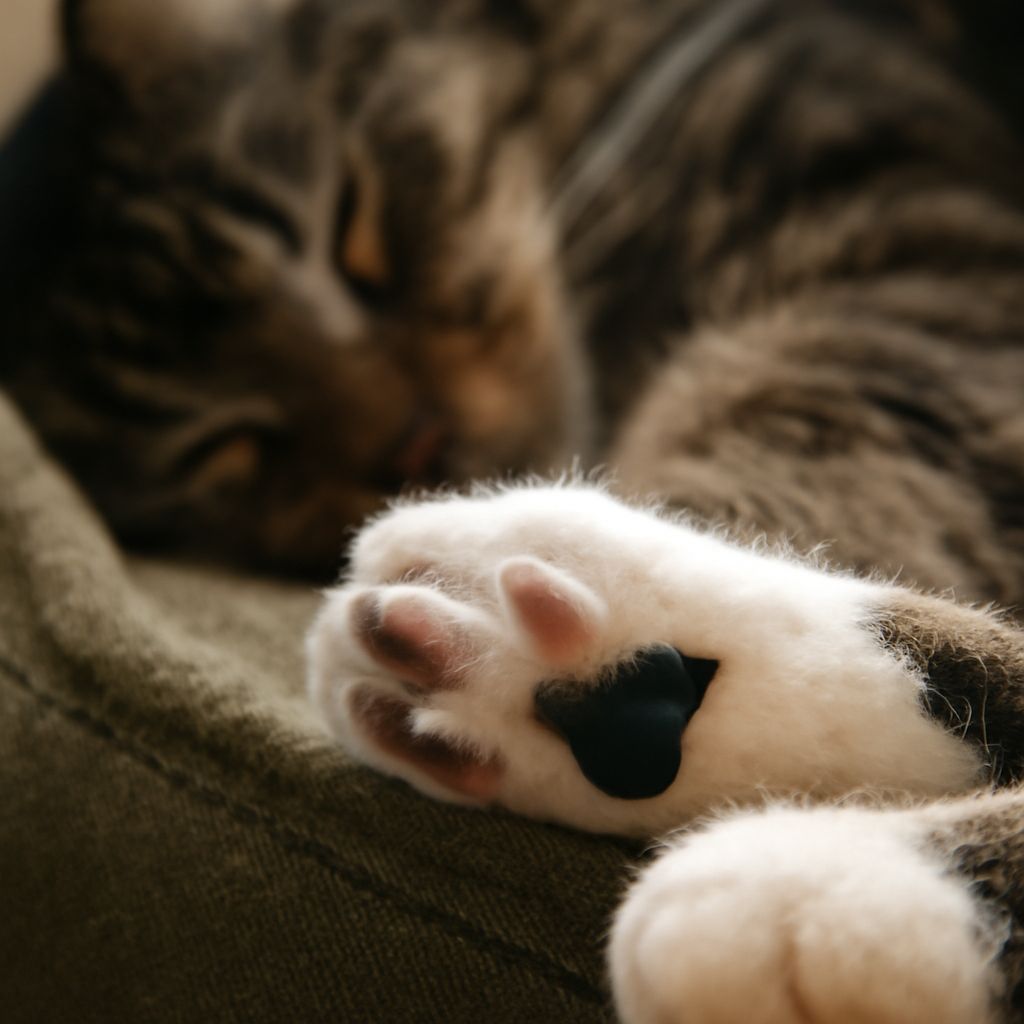
You’re trimming your cat’s nails when you notice that one claw higher up on the leg — the cat dew claw — and suddenly realize you’re not sure what it is or how to care for it. Unlike the other claws that contact the ground during walking, the dew claw sits on the inner side of the front legs (and sometimes rear legs in polydactyl cats). Because it doesn’t wear down naturally, the cat dew claw is prone to becoming a thick cat claw that curves back into the paw pad if left untrimmed. A cat claw injury in this area can be surprisingly painful, so regular attention is essential.
Understanding the dew claw also means knowing about the cat claw sheath, a thin outer layer that cats shed as their claws grow. Whether you’re considering claw caps for cats to protect furniture or recovering from an overgrown nail situation, this guide walks you through everything you need.
What Is the Cat Dew Claw
The dew claw is an extra digit found on the inner surface of the front leg, roughly where a human thumb would be. Most cats have dew claws on their front paws; some breeds or individual cats also have them on the rear. Because this claw doesn’t touch the ground during normal movement, it never gets the friction-based wear that keeps other claws short.
Left alone, a dew claw can grow in a complete circle, embedding itself into the paw pad and causing pain or infection. This makes regular trimming of the dew claw non-negotiable as part of your cat’s grooming routine.
Do All Cats Have Dew Claws
Nearly all domestic cats have front dew claws. Rear dew claws are less common and are more often seen in polydactyl cats — cats with extra toes. If your cat has rear dew claws, apply the same trimming schedule you would for the front ones.
How Often to Trim
Most cats benefit from a trim every two to four weeks. The dew claw may need attention more frequently than the others because it grows faster without natural wear. Check it weekly as part of a quick grooming check.
Cat Claw Sheath Shedding and Normal Anatomy
Cat claws grow in layers. The outermost layer — the cat claw sheath — is a thin, translucent husk that cats shed naturally through scratching. You may find these empty sheaths around scratching posts or on furniture. Sheath shedding is completely normal and indicates healthy claw turnover.
The dew claw also sheds its outer sheath, but because it doesn’t have a convenient surface to scratch against, the shed layer can sometimes cling longer. If you notice the sheath stuck on the dew claw, do not pull it forcibly — it will fall away on its own, or your vet can remove it safely during a routine visit.
Anatomy of the Claw Quick
The claw’s pink inner core — called the quick — contains blood vessels and nerves. Cutting into the quick causes pain and bleeding. On a thick cat claw or heavily pigmented claw, spotting the quick is harder. Use a bright light and trim conservatively, taking only small amounts at a time.
Recognizing and Treating a Cat Claw Injury
A cat claw injury can range from a minor split at the tip to a serious embedded claw situation. Warning signs of a dew claw problem include your cat limping or favoring one leg, licking or chewing at the paw, visible swelling around the claw base, discharge or blood near the nail, or vocalizing when you touch the foot.
For a mildly split tip, clean the area with saline solution and monitor it. A deeply cracked claw, embedded nail, or any sign of infection — redness, warmth, pus — requires a vet visit the same day. Never attempt to remove an embedded dew claw at home. The vet may need to trim the claw, clean the wound, and prescribe antibiotics if infection is present.
First Aid for Minor Claw Injuries
If you accidentally cut the quick during trimming, apply styptic powder or cornstarch to the tip and hold gentle pressure for thirty seconds. The bleeding typically stops quickly. Keep the area clean for a few days and monitor for any limping or swelling that might signal the injury was deeper than it appeared.
Thick Cat Claw and Claw Caps for Cats
As cats age, their claws often become thicker and less flexible — this is normal, especially in senior cats. A consistently thick cat claw that resists trimming or appears discolored may signal a fungal infection or other underlying issue. Ask your vet to take a look if the texture seems abnormal beyond normal aging.
Claw caps for cats are soft vinyl covers that slip over the claw tip and are secured with adhesive. They are popular for cats that scratch furniture or people, and they are safe when applied correctly. Claw caps last four to six weeks as the claw sheath grows out, at which point they fall off and new ones are applied. They do not interfere with normal retraction or walking.
Next steps: Set a recurring reminder to check your cat’s dew claws weekly, trim them every two to four weeks, and schedule a vet check if you notice any swelling, limping, or embedded growth. Consistent care prevents the most common cat claw injury scenarios and keeps all claws — including the often-overlooked dew claw — in good shape.