
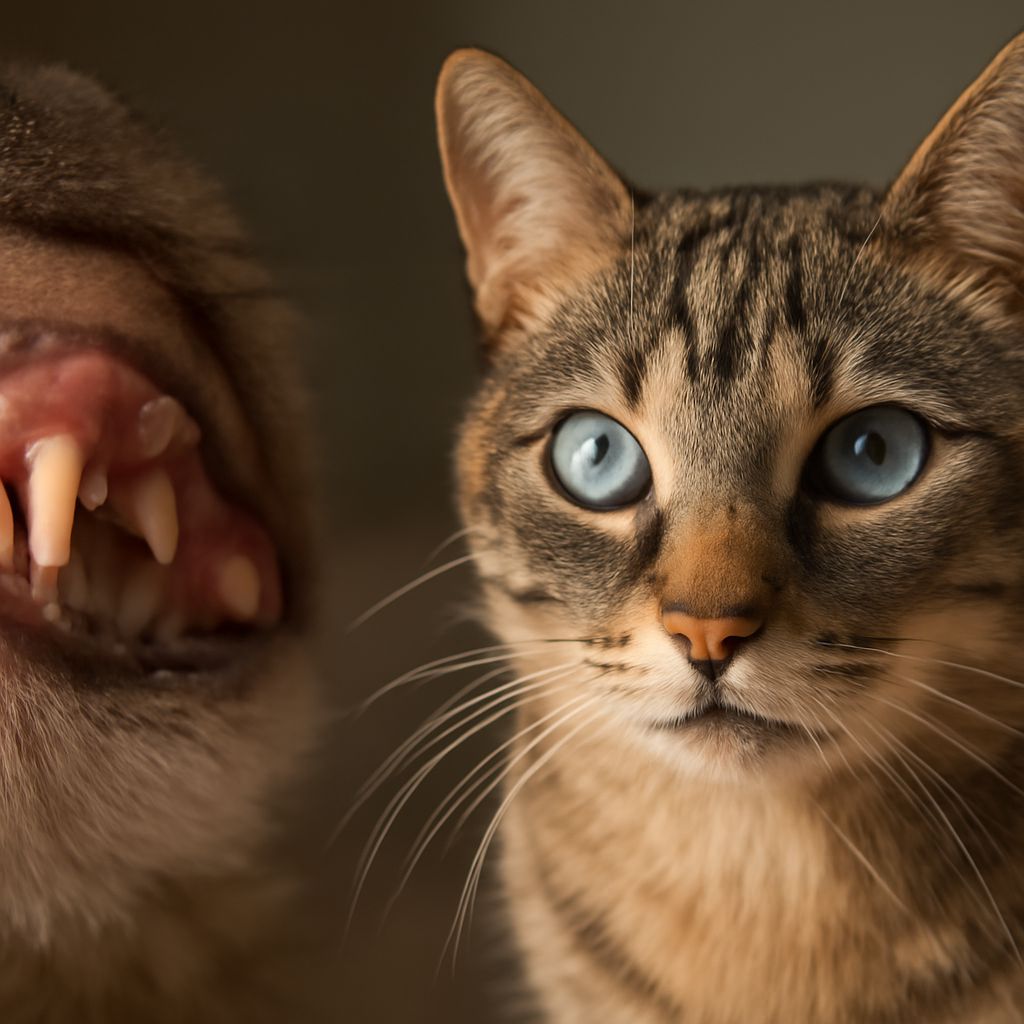
You make eye contact with your cat and notice one of those deeply expressive cats eyes staring back at you — pupils that shift from wide black circles to narrow vertical slits depending on the light and mood. A cat’s eyes are remarkably communicative, and cat pupils are among the most sensitive health indicators a cat has. At the same time, while you are watching those expressive eyes, dental disease in cats may be quietly progressing in the background. Cat dental problems affect the majority of adult cats over age three, yet most owners do not notice cat teeth problems until they have become advanced enough to cause visible pain.
Understanding what both cats eyes and oral health can tell you — and knowing when to act — puts you in a much stronger position to keep your cat healthy throughout their life.
What Cats Eyes and Cat Pupils Tell You About Health
A cat’s eye responds constantly to light and emotional state. In bright light, cat pupils constrict to vertical slits, protecting the retina from overexposure. In low light or during excitement, the pupils dilate to wide circles to maximize light intake. This is normal and nothing to be concerned about.
Abnormal pupils are a different matter. Cats eyes with unequal pupil sizes — one larger than the other — is called anisocoria and is a sign that something may be affecting the nervous system, the eye itself, or both. Persistent dilation in a normally lit room can indicate high blood pressure, retinal damage, or neurological issues. A cloudy, bluish tint over the pupil often signals a cataract or lenticular sclerosis, more common in older cats.
Third eyelid visibility — that pale membrane visible in the inner corner of the eye — is another health signal. When prominent in a cat that is otherwise alert, it can indicate illness, dehydration, or pain. Pain from dental disease in cats, for example, can cause a cat to partially close their eyes or hold them in a squinted, uncomfortable expression.
Understanding Dental Disease in Cats
Dental disease in cats is one of the most common health conditions seen in veterinary practice, yet it is consistently under-recognized by cat owners because cats are skilled at hiding pain. The most common form is periodontal disease — a progressive infection of the gum tissue and supporting bone structure around the teeth. It begins as plaque, hardens into tartar, and causes inflammation, gum recession, and eventually tooth loss if untreated.
Feline oral resorptive lesions (FORLs) are a second major cat dental problem. These are erosive lesions that form at the gumline and eat into the tooth structure. They are extremely painful and not visible without dental radiographs, which is why routine veterinary dental exams are so important. By the time a cat shows obvious signs of discomfort, a resorptive lesion may have caused significant damage.
Identifying Cat Dental Problems Early
Warning signs of cat teeth problems include persistent bad breath (beyond normal), visible yellow or brown buildup on the teeth near the gumline, red or swollen gums, drooling more than usual, pawing at the mouth, reluctance to eat hard food or chewing on one side only, and dropping food while eating. Some cats with significant dental pain continue to eat because hunger overrides the discomfort, which is why behavioral clues alone are not sufficient for diagnosis.
Lift your cat’s lip gently once a month and look at the teeth and gums. Healthy gums are pale pink with a distinct line where the gum meets the tooth. Redness, recession, or any lesion at the gumline is a reason to schedule a vet appointment. Annual professional dental cleanings under anesthesia allow the vet to examine every tooth surface and take radiographs that reveal problems invisible to the naked eye.
Preventing Cat Teeth Problems at Home
Daily tooth brushing is the gold standard for preventing cat dental problems between professional cleanings. Use a cat-specific toothbrush and enzymatic toothpaste — never human toothpaste, which is toxic to cats. Most cats accept brushing if introduced gradually with positive reinforcement. Start by letting your cat lick the toothpaste from your finger, then progress to rubbing the gumline, then to brief brushing sessions.
Dental chews, water additives, and dental-formula kibble can supplement but not replace brushing. Veterinary oral health products that carry the VOHC (Veterinary Oral Health Council) seal of approval have been tested for effectiveness. Your vet can recommend the right combination for your cat’s needs and risk level.