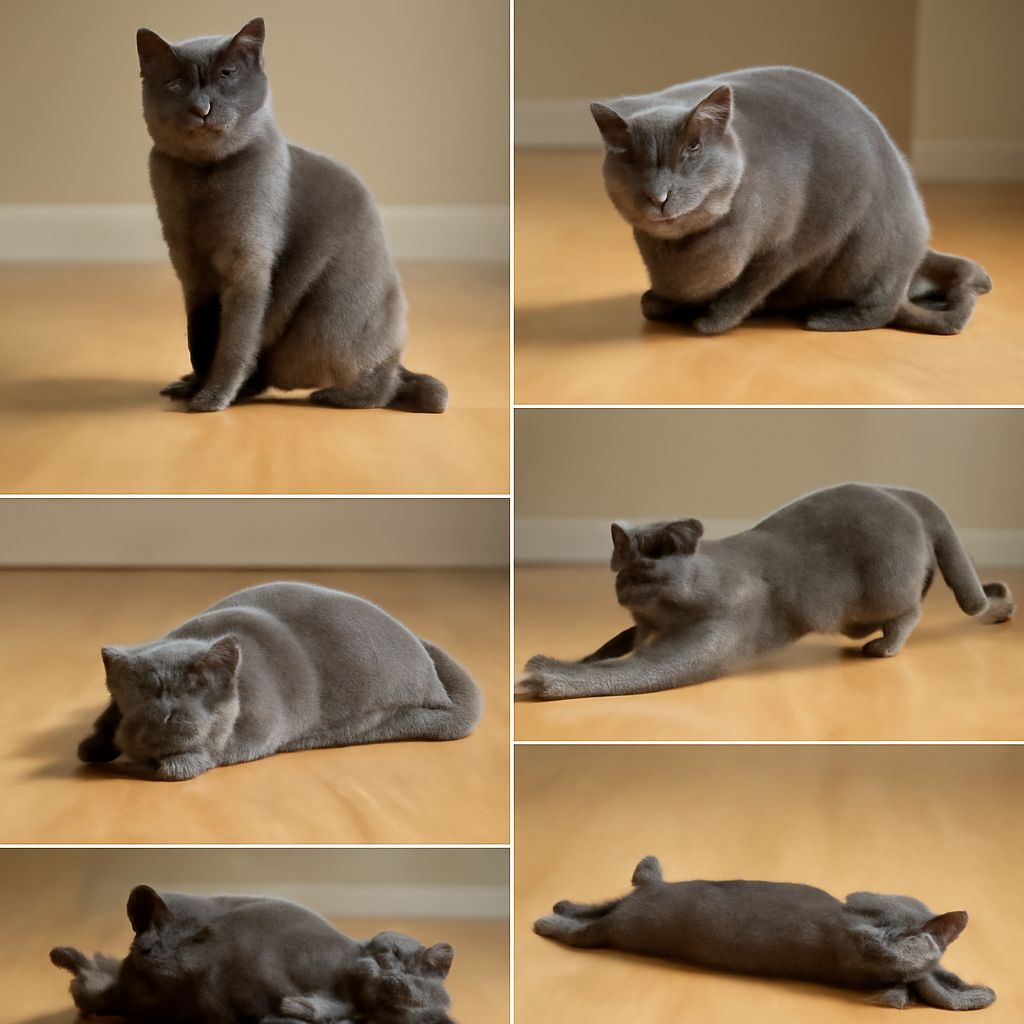
You walk into the room and your cat is mid-stretch, front paws extended, spine arched, tail pointing straight up. It’s one of the most common things cats do, but there’s more behind cat stretching than it looks. You probably wonder: why do cats stretch so often, and is it always a normal thing?
The short answer is yes, a stretching cat is almost always a healthy cat doing something its body needs. Cats stretching throughout the day is a built-in maintenance routine. Each of those cat stretches keeps muscles loose, circulation moving, and the spine aligned. And understanding why do cats stretch gives you useful insight into whether your cat is comfortable, happy, and physically well.
Why Cats Stretch So Often
Muscle Maintenance After Sleep
Cats sleep between 12 and 16 hours a day. Every time they wake up, muscles that have been still for hours need a reset. A cat stretch right after waking is the feline equivalent of a morning yoga routine. It gets blood moving back into limbs that were compressed during sleep, reduces any stiffness, and prepares the body for whatever comes next, whether that’s hunting, playing, or eating.
Circulation and Nerve Function
When a cat lies in one position for a long stretch of time, blood flow slows in the resting limbs. A good full-body stretch reverses that quickly. The spine extension, leg reach, and toe spread you see during a classic stretching motion each serve specific circulatory functions. It’s efficient and instinctive.
Communication Through Body Language
Cats stretching near you is often a social signal. A cat that drops into a stretch right at your feet is displaying comfort and trust. It’s the body language equivalent of saying the environment feels safe. Some cats follow up a stretch with a slow blink, which is another trust signal worth noting.
Types of cat stretches and What They Signal
The Full-Body Extension
This is the classic: front legs forward, back legs extended, spine long, toes splayed. It usually happens right after waking. It’s the most thorough version and a clear sign of a relaxed, healthy cat.
The Sphinx Stretch
Some cats drop into a low stretch where they press their chest to the ground with front legs slightly extended. This targets the shoulder and chest muscles and is common in cats that spend a lot of time on elevated surfaces.
The Elevator Stretch
A quick rear-end elevation while the front stays low. This often means the cat is transitioning between states, moving from rest to activity. You’ll see it right before play or feeding time.
Repeated or Stiff Stretching
If your cat seems to be stretching repeatedly without apparent ease, or the motion looks stiff or labored rather than fluid, that warrants a closer look. Frequent stretching combined with reduced appetite or reluctance to jump can signal muscle soreness or joint discomfort. A vet check is the right call if the pattern persists for more than a day or two.
Supporting Your Cat’s Natural Stretching Habits
Give your cat dedicated spaces that encourage full stretching. A tall scratching post lets cats engage the entire spine and shoulder complex in a vertical stretch, which is one of the most complete versions of the movement. Floor-level scratch pads support horizontal stretching. Multi-level cat trees combine both. Rotating toys and play sessions keep muscles active enough that stretching stays easy and fluid rather than necessary recovery from stiffness.