
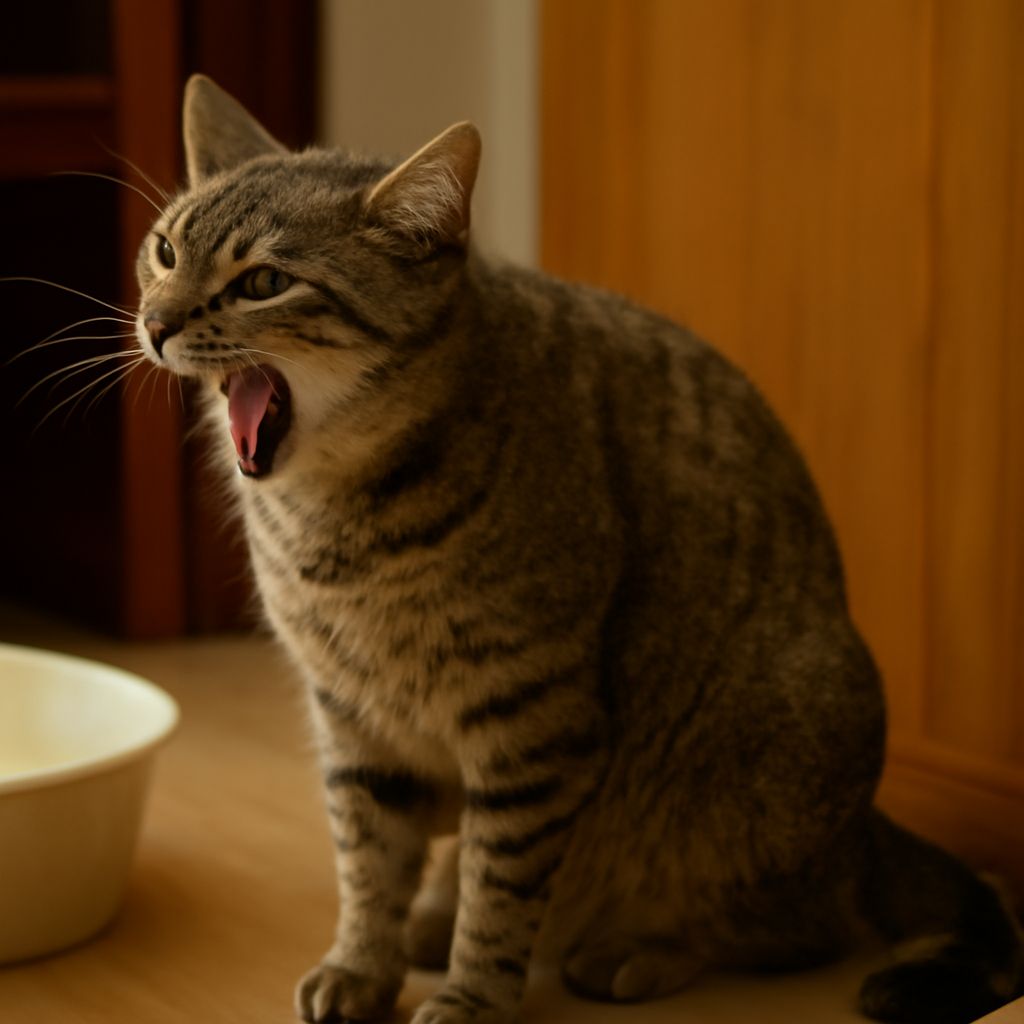
You glance over at your cat and notice the mouth is slightly open, maybe with some rapid shallow breaths. Your first thought is: can cats breathe through their mouth, and is this normal? The answer depends heavily on context. A cat panting with mouth open after a stressful car ride is different from a cat that’s been sitting still and breathing through the mouth for 20 minutes.
Unlike dogs, cats almost never breathe through the mouth under normal conditions. So when you see cat panting with mouth open behavior, it’s a signal worth paying attention to. The question of can cats breathe through their mouths has a yes, but the more important follow-up is: why is this happening right now? A cat mouth slightly open for a moment during sleep is usually nothing. Ongoing mouth breathing related to breathing problems in cats can signal something that needs a vet visit today.
When Mouth Breathing Is Normal for Cats
There are a few situations where open-mouth breathing is expected and not alarming. Extreme stress, like a car ride or a vet visit, can trigger brief panting that resolves on its own within minutes of the stressor ending. Intense physical play in a warm environment can also cause brief mouth breathing. Cats do not regulate heat through panting the way dogs do, but short bursts during play are seen occasionally in active cats.
Some cats hold the mouth very slightly open during deep sleep. This is usually a relaxed, loose-jawed position rather than active mouth breathing and doesn’t involve any labored respiratory effort.
When Mouth Breathing Needs Immediate Attention
If your cat is breathing through an open mouth at rest, in a cool environment, without having just exercised or been stressed, that is a medical situation. Mouth breathing in cats at rest almost always means the nasal passages or airways are compromised in some way.
Upper respiratory infections can block nasal passages entirely, forcing the cat to breathe through the mouth. These infections often come with other signs: eye discharge, sneezing, and reduced appetite. Treatment typically involves supportive care and sometimes antiviral or antibiotic medication depending on the cause.
Asthma and other lower airway diseases can also cause cats to breathe with the mouth open. An asthma episode may look like the cat is trying to cough up a hairball but nothing comes up. The posture is low to the ground with the neck extended and elbows flared out. This is an emergency if it continues for more than a minute or two.
Pleural effusion, where fluid accumulates around the lungs, is another cause of breathing difficulty. The cat may breathe with the mouth open and show reluctance to lie down because the fluid position changes with posture. This is a hospital-level emergency.
Heart disease, foreign bodies lodged in the airway, and trauma to the chest wall are other possible causes of acute breathing problems in cats with open-mouth breathing.
What to Do If Your Cat Is Mouth Breathing
Keep your cat calm and minimize handling. Place them in a quiet, cool environment. If the mouth breathing resolves within 5 minutes after a clear stressor, monitor and note whether it happens again. If the breathing is labored, the gums look pale or bluish, or the cat seems distressed, treat this as an emergency and contact a vet immediately. Do not wait for a regular appointment.
After the Vet Visit
Once any medical causes are ruled out or treated, ask your vet about environmental triggers for respiratory irritation at home. Dusty litter, strong cleaning products, candles, and plug-in air fresheners all irritate cat airways. Switching to a low-dust unscented litter and avoiding aerosol sprays near your cat reduces background respiratory stress.