
Imagine you’re sitting on your cozy couch, a content purring sound vibrating softly beside you. Your feline friend stretches luxuriously, her tail flicking in playful animation. In that moment, a curious thought crosses your mind: “Do cats have bones in their tails?” As you gently touch her tail, you wonder about the anatomy hidden beneath that sleek fur. Fascinated, you ponder, “How many vertebrae do cats have?” and what role these bones play in her graceful movements.
Understanding Cat Tail Anatomy
Do Cats Have Bones in Their Tails?
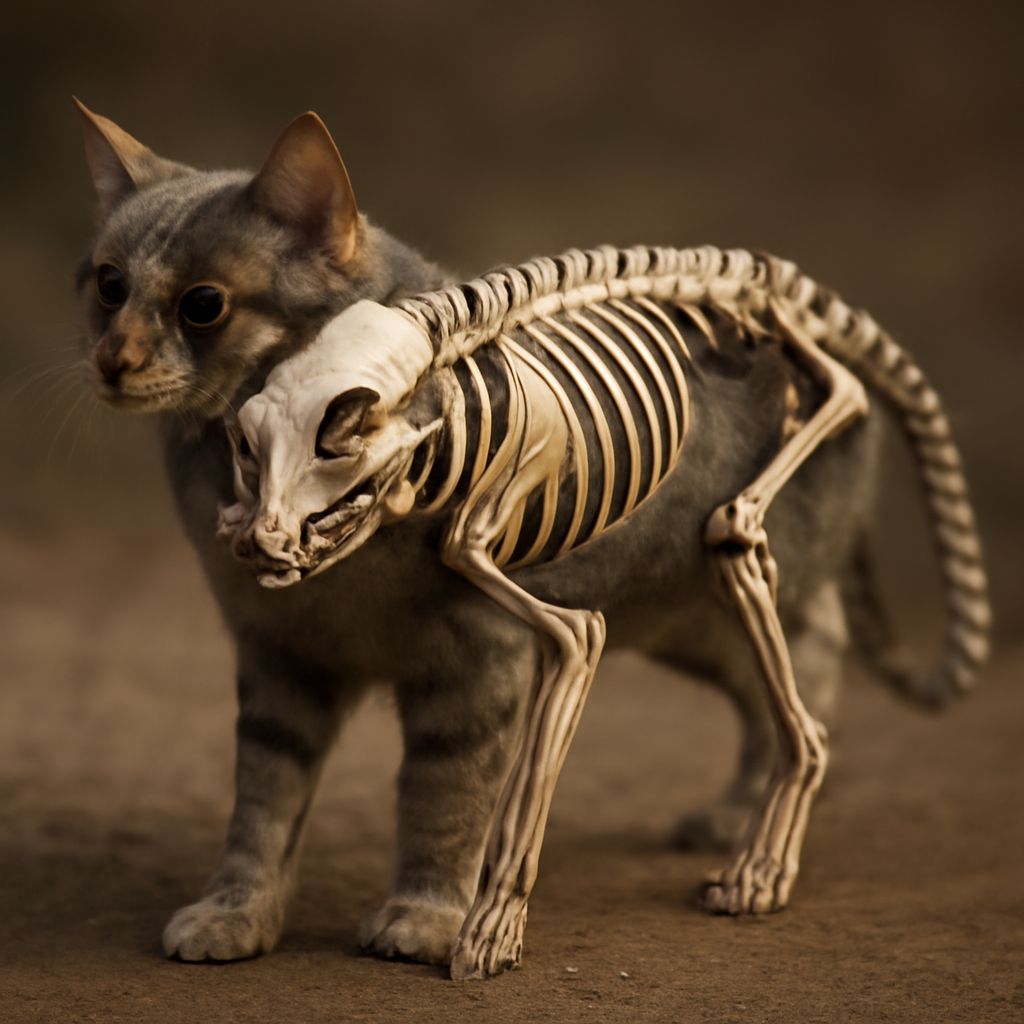
The answer to whether cats possess bones in their tails is a resounding yes. The tail is an extension of the cat’s spine, comprised of small bones known as vertebrae. These vertebrae are uniquely structured to afford both flexibility and strength. Unlike the vertebrae found in the cat’s main spine, tail vertebrae taper in size as they reach the tip of the tail, allowing for a range of motion that aids in communication and expression.
The Role of Cat Tail Bones in Balance Cats are renowned for their exceptional balance, an instinctive prowess often attributed to their tails. The tail acts as a counterbalance when a cat leaps or navigates narrow spaces, such as fences or ledges. The intricate assembly of tail bones allows for precise adjustments during these activities, helping the cat maintain equilibrium. This anatomical feature is not only crucial in agility but also during hunting, allowing them to move stealthily and pounce accurately.
Exploring Cat Skeletal Structure
How Many Vertebrae Do Cats Have?
Feline skeletal structure is fascinatingly intricate, with the tail alone containing between 19 and 23 vertebrae, depending on the breed and individual. The entire spine, including the tail, generally consists of around 50 to 53 vertebrae. This high number contributes to the cat’s flexibility and agility, allowing it to twist and turn with ease. The backbone, along with the tail, creates a supportive framework for the entire body.
The Relationship Between Cat Tails and Cat Ribs
While cat ribs and tails may seem unrelated, they share a close anatomical relationship, as both parts are integral to the feline’s musculoskeletal system. The ribs form a protective cage around vital organs, and they connect with the spine—a structure that extends into the tail. This connection ensures a harmonious structure that supports movement and flexibility. Unlike the rigid ribcage, the tail offers dynamic motion, demonstrating how different skeletal components work together to enhance the cat’s natural instincts and behaviors.
Moreover, the tail’s positioning relative to the ribs aids in body language communication. A cat’s tail can show contentment, agitation, or curiosity, all of which are instinctual signals derived from their evolutionary need for survival and social interaction.
Bottom line: The intricate anatomy of a cat’s tail, with its numerous bones and connection to the spine, plays a crucial role in balance, communication, and movement. Understanding this skeletal structure deepens our appreciation of feline grace and agility.