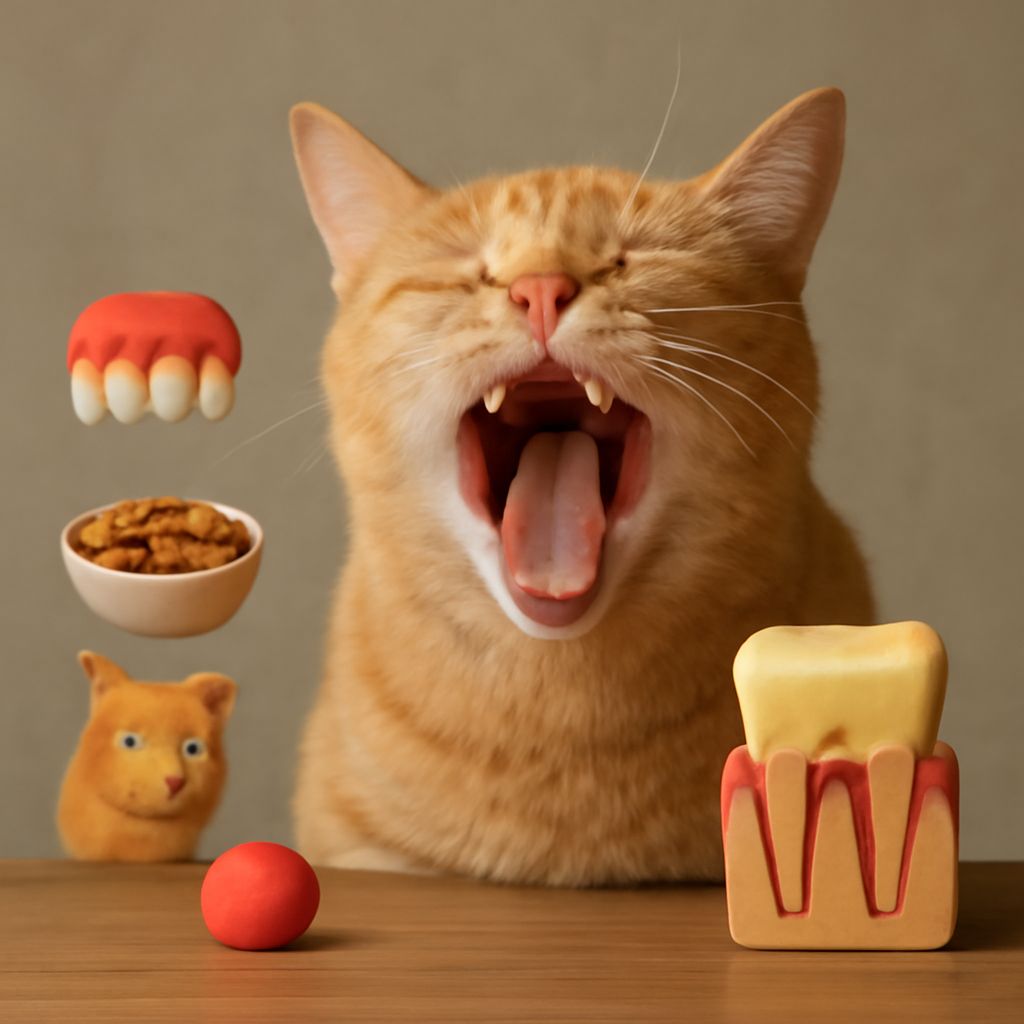
You notice your cat pulling away when you try to pet near the mouth, or you get a whiff of unusually bad breath when they yawn. These can be early signs of cat gum disease — a condition that affects a large percentage of adult cats and often goes unnoticed until it causes real discomfort. Gum disease in cats does not announce itself loudly, which is why regular dental awareness matters for every cat owner.
You might wonder about ibuprofen for cats when you see your pet in obvious mouth pain, but that is never safe — human NSAIDs are toxic to cats. What can i give my cat for tooth pain at home is a common search, but the honest answer is that effective cat tooth pain relief requires veterinary diagnosis and appropriate prescription treatment. This guide covers what cat gum disease looks like, what causes it, and what you can actually do to help.
What Cat Gum Disease Looks Like
Early Signs to Watch For
Gum disease in cats starts with gingivitis — inflammation of the gum tissue along the gum line. Look for redness or puffiness where the gum meets the tooth, especially along the upper back teeth. Mild bad breath, slight drooling, and occasional pawing at the mouth can also show up in early stages. Cats are good at hiding discomfort, so behavioral signs like eating more slowly, dropping food, or chewing on one side are worth noting.
Progressed Disease
Cat gum disease that goes untreated advances to periodontitis, where the infection spreads below the gum line and damages the bone and ligaments holding teeth in place. At this stage, teeth become loose, the gums recede visibly, and eating becomes genuinely painful. Some cats stop eating dry food entirely once periodontitis is established. Bad breath becomes pronounced and persistent.
Tooth Resorption
Feline tooth resorption is a specific condition where the tooth structure breaks down from the inside, often starting at the gum line. It is extremely painful and has no home remedy. A cat with tooth resorption needs veterinary dental care — there is no cat tooth pain relief option that addresses the underlying structural problem.
Causes and Risk Factors
Plaque and Tartar Buildup
Like in humans, gum disease in cats begins with plaque — a film of bacteria that accumulates on tooth surfaces. When plaque mineralizes, it becomes tartar, which cannot be removed by brushing alone. Tartar harbors bacteria along the gum line, triggering the inflammatory response that leads to gingivitis and eventually periodontitis.
Diet and Chewing Habits
Cats that eat only soft wet food have no natural abrasion action to slow plaque formation. Dry food provides some mechanical cleaning benefit, though it is not a substitute for actual dental care. Dental treats and chews designed specifically for cats can help reduce plaque accumulation between professional cleanings.
Genetics and Breed Factors
Some cats are genetically predisposed to more aggressive dental disease. Siamese and Abyssinian cats, for example, have a higher incidence of tooth resorption. Flat-faced breeds like Persians have crowded teeth that trap more debris. Knowing your cat’s breed predispositions helps set realistic dental care expectations.
What Actually Helps: Safe Cat Tooth Pain Relief
What to Avoid
Never give a cat ibuprofen, aspirin, acetaminophen, or any other human pain medication. Ibuprofen for cats is acutely toxic — even a small dose can cause kidney failure. The same applies to most human NSAIDs. There is no safe OTC human medication for feline dental pain.
Veterinary Treatment Is the Path Forward
Professional dental cleaning under anesthesia removes tartar that home care cannot reach. If teeth are beyond saving, extraction eliminates the pain source immediately. Most cats recover from dental extractions quickly and eat well afterward — better than they did when the diseased tooth was causing discomfort. Your vet may prescribe short-term pain medication post-procedure that is formulated specifically for cats.
Home Prevention
Daily tooth brushing with cat-formulated toothpaste is the most effective home prevention for gum disease in cats. Use a finger brush or soft-bristle pet toothbrush. Dental rinses added to water, enzymatic gels, and VOHC-approved dental treats are useful additions for cats that will not tolerate brushing.
Next steps: Schedule a dental exam if your cat has not had one in the past year, shows any signs of mouth discomfort, or has visible tartar buildup. Start a daily or every-other-day brushing routine with cat toothpaste, and ask your vet about prescription dental diets if brushing is not possible.