
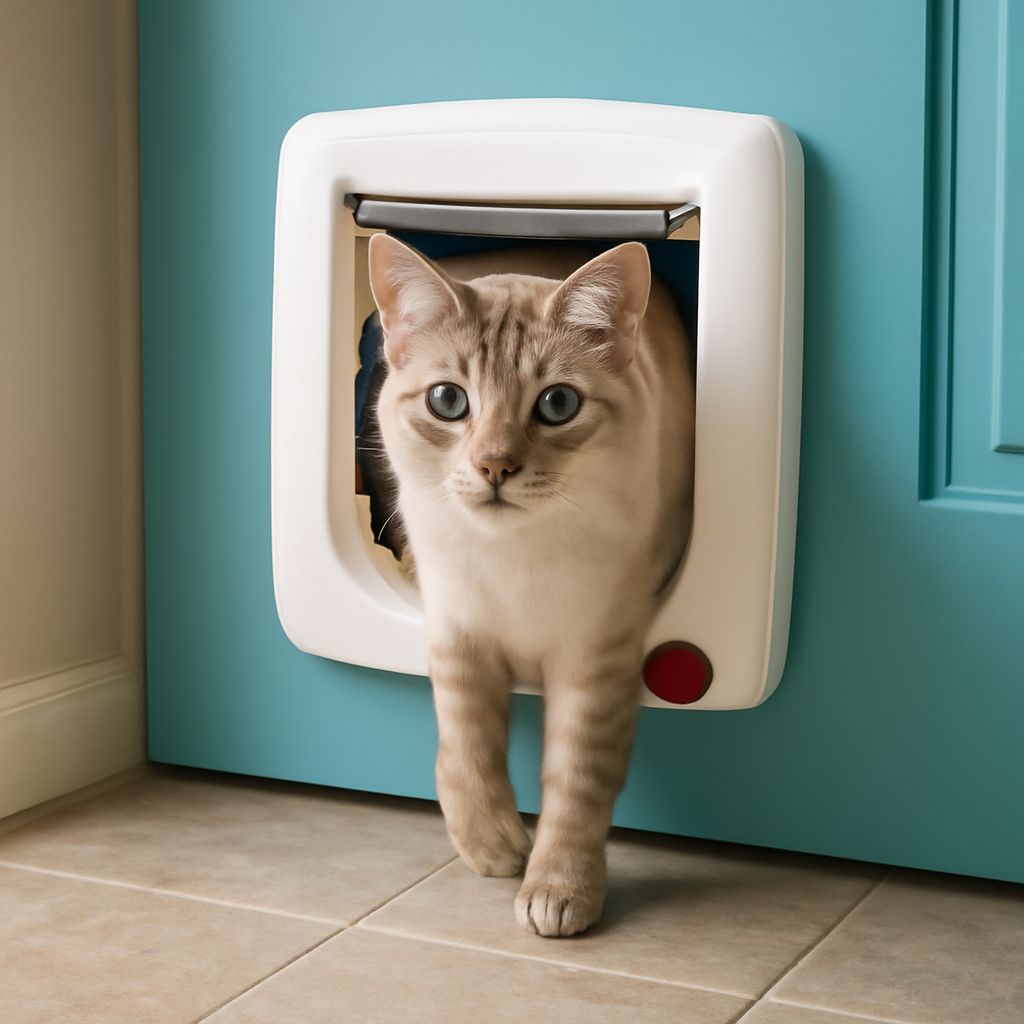
Your cat stares at you from the other side of the door every ten minutes, and you are done getting up to let them in and out. A cat flap is the obvious solution, but the options available have expanded well beyond a simple plastic door. Whether you are looking for a cat door for wall installation, a magnetic model, a microchip-operated unit, or a sliding glass door cat door, getting the right fit for your cat and your home takes a few minutes of research upfront.
Cat flap door technology has improved considerably in the last decade. The basic cat flaps that let any animal in are now the baseline option — above that, you have microchip-controlled units, RFID collar options, and even app-connected models that log when your cat comes and goes. A sliding glass door cat door is a different installation category entirely, requiring a specific insert that fits your door frame. Here is what you need to know before buying.
Types of Cat Flaps and How They Differ
Basic Manual Cat Flap
The most affordable option, a basic manual cat flap door swings freely in both directions, allowing any animal to pass through. It typically has a sliding panel to lock it closed when needed. Fine for indoor-only cats moving between rooms, or for cats in low-wildlife areas. Not suitable if neighborhood cats or other small animals could enter through it.
Magnetic and RFID Cat Flaps Magnetic cat flaps open only when a matching magnet on a collar tag passes close to the sensor. RFID models work similarly but use a small electronic chip in the collar tag. Both types restrict entry to your cat specifically. The collar tag must be attached at all times for access, which can be a problem if your cat loses collars frequently.
Microchip Cat Flap Door
Microchip-operated cat flaps read your cat’s existing implanted microchip — no additional collar tag required. This is the most secure and convenient option for most owners. The unit stores the microchip numbers of up to 30 cats in some models, making it suitable for multi-cat households. Microchip cat flaps cost more than basic units but eliminate collar dependency entirely.
Cat Door for Wall Installation A cat door for wall installation is a completely different project from a door-mounted cat flap. Wall installations require cutting through the wall material — drywall, brick, or siding — and fitting a tunnel extension to bridge the wall’s thickness. Professional installation is often recommended for wall cat doors, particularly in masonry. The result is a permanent access point that does not affect any door and can be placed exactly where you want it.
Sliding Glass Door Cat Door A sliding glass door cat door is not cut into the glass — instead, an insert panel replaces the lower portion of the glass panel or fits into the door’s frame gap. These insert systems are available in custom sizes to fit most standard sliding door dimensions. They are reversible, which is useful for renters, and require no cutting or permanent modification to the door or frame.
Sizing and Installation Basics
Measuring Your Cat
The flap opening should be wide enough for your cat’s widest point (usually the hips or shoulders) and tall enough for them to pass through without ducking sharply. Measure your cat at their widest and add about an inch on each side. Most cat flap door products come in small, medium, large, and extra-large — match the size to your cat, not to the door.
Height Placement
The bottom of the flap opening should sit roughly at the height of your cat’s belly when they are standing normally. Too low and they have to crouch uncomfortably; too high and they need to step up unnaturally. For elderly cats or kittens, lower placement reduces strain on joints.
Draft and Weather Sealing
Cat flaps installed in exterior walls or doors should have a good weather seal — a brush seal or magnetic seal around the flap edge keeps drafts and rain out. Cheaper models skip this and you will feel the difference in winter. Check product reviews specifically for mentions of draft issues before purchasing an exterior-facing cat door for wall or door use.
Next steps: Decide whether you need a wall installation or a door unit first, then determine whether a microchip model is worth the extra cost for your situation. Measure your cat, measure the door or wall space, and read reviews from owners with similar-sized cats. A well-chosen cat flap pays back in convenience within the first week.