Your cat watches the birds through the window with an intensity that makes clear exactly what it’s thinking. A feather cat toy taps directly into that drive — the movement, the unpredictability, and the chase. If you’ve been settling for the same tired wand for two years, it might be time to upgrade.
Cat feather toys come in a wider range of designs than most owners realize, from simple wands to motorized spinners. Cat sticks with feather attachments let you control the action manually, keeping play sessions interactive and responsive to your cat’s mood. A good cat stick does more than entertain — it provides genuine exercise and mental engagement. Understanding what makes a cat feather toy effective helps you get real play sessions rather than a few half-hearted swipes.
Types of Feather Toys and What They’re Good For
Wand and Stick Toys
The classic feather wand — a cat stick with a string and feather attachment — is still the gold standard for interactive play. You control the speed, height, and movement pattern, which lets you keep the cat engaged longer than automated toys. Look for wands with replaceable attachment heads so you can swap in different feather types and shapes as the cat’s interest shifts.
Motorized Feather Toys
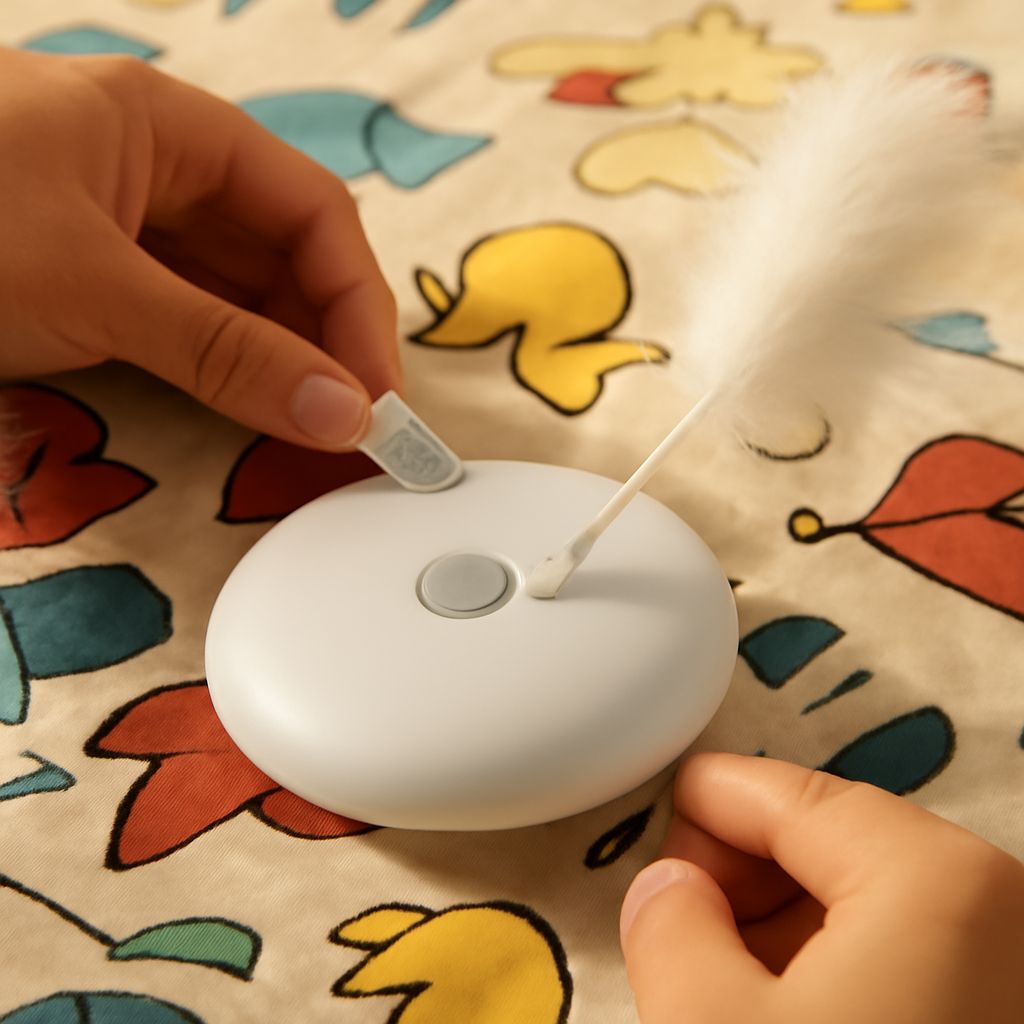
Battery-powered toys that spin or wave feather attachments on their own are useful for independent play when you’re busy. They work well for high-energy cats who need more stimulation than you can provide manually. The downside is that cats often figure out the pattern quickly and lose interest faster than with manual play.
Teaser and Ribbon Variants
Some cat feather toys combine feathers with mylar strips, ribbons, or crinkle material to add sound. This multi-sensory approach appeals to cats whose hunting instinct is triggered as much by sound as by movement. Good for cats who are harder to engage with plain feather movement alone.
How to Play Effectively
How you use a cat stick matters as much as which one you pick. Drag the toy along the ground, let it disappear behind furniture, and make it move in ways that mimic real prey behavior. Erratic, unpredictable movement is far more engaging than steady circular swinging. Let your cat catch the toy periodically — a hunting sequence that never ends in a catch leads to frustration, not satisfaction.
Play sessions of 10–15 minutes, twice a day, are more effective than one long session. End each session with a small food reward so the cat completes the hunt-catch-eat cycle that its instincts expect.
Safety and Maintenance
Feathers on cat feather toys degrade with use and should be replaced before they become a swallowing hazard. Store wand toys out of reach when not in active use — unsupervised play with string-based toys carries entanglement risk. Check the string and attachment points regularly for fraying.
Key Takeaways
A well-chosen feather cat toy and consistent interactive play sessions are among the most effective things you can do for a cat’s physical and mental health. Manual cat sticks give you control over the session; motorized toys fill gaps when you’re not available. Replace worn feather attachments regularly and always supervise string-based play.