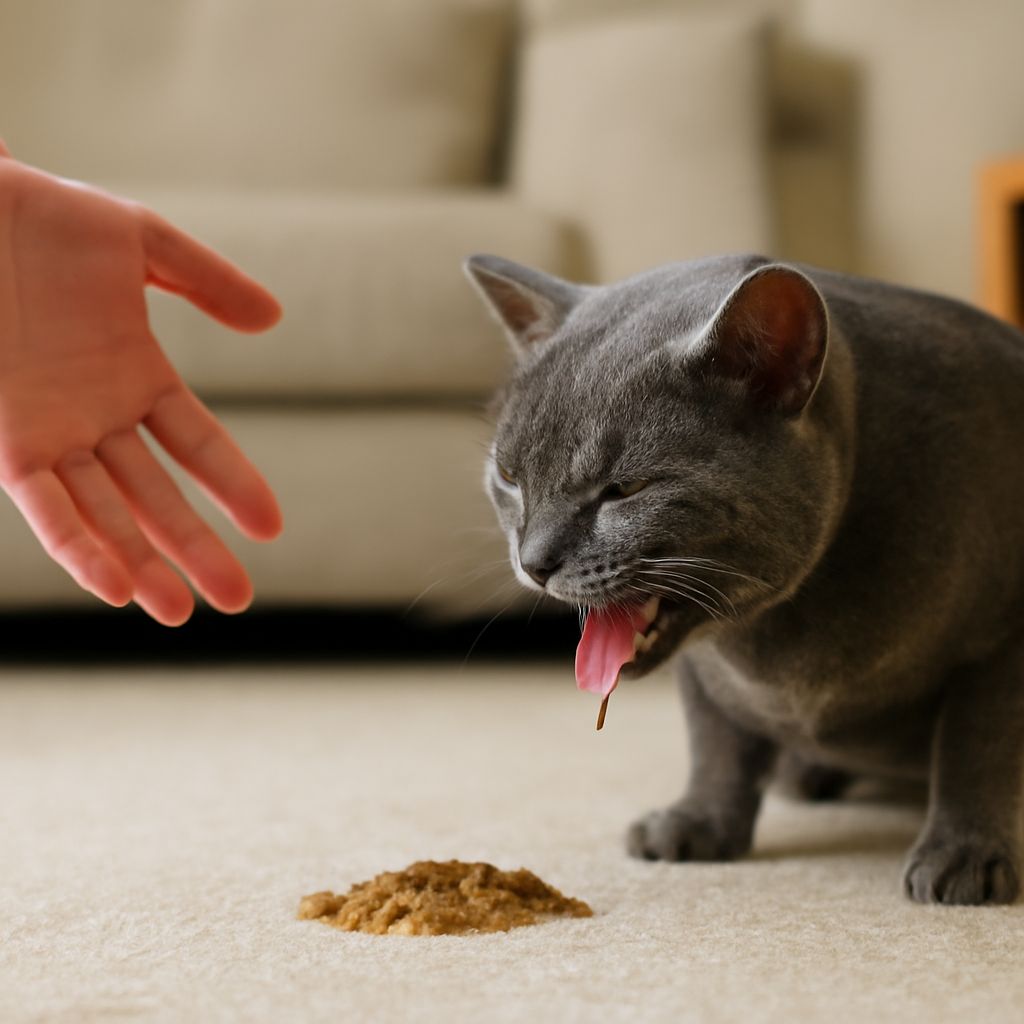
You find a small puddle of yellow-green liquid on the floor and your cat is walking away looking mildly inconvenienced. Cat vomiting bile is one of the more alarming things to discover before your morning coffee, but it’s also one of the most common digestive complaints cat owners deal with. The question is whether what you’re seeing is a benign isolated event or a sign of something that needs attention.
Bile is a digestive fluid produced by the liver and stored in the gallbladder. When a cat puking bile brings it up, it’s usually because the stomach is empty and bile has refluxed into it. That irritation triggers vomiting. Cat vomit bile episodes tend to happen in the early morning, before the first meal. Cats throwing up bile more than once or twice a week, or vomiting that comes with other symptoms, crosses into territory worth investigating. If my cat is throwing up bile regularly, changes in feeding schedule or a vet visit are both warranted.
Why Cats Vomit Bile
Empty Stomach and Bile Reflux
The most common reason is simple: the stomach has been empty too long. Bile produced overnight has nowhere to go and refluxes back into the stomach, causing irritation. Many cats — particularly those fed once a day or who go long hours between meals — will bring up this yellow liquid first thing in the morning. Splitting meals into smaller, more frequent portions often resolves it entirely within a week or two.
Inflammatory Bowel Disease
Chronic intermittent vomiting in cats, including regular bile vomiting, is one of the hallmark signs of inflammatory bowel disease (IBD). With IBD, the gastrointestinal tract becomes chronically inflamed, disrupting normal digestion. Cats with IBD typically vomit multiple times per week over months or years. Weight loss, changes in stool consistency, and variable appetite accompany the vomiting.
Gastritis
Gastritis — irritation of the stomach lining — can be acute (caused by eating something inappropriate) or chronic. A cat throwing up bile after eating grass, a piece of string, or food too quickly may have acute gastritis that resolves within a day. Persistent gastritis needs veterinary evaluation to rule out underlying causes.
Hyperthyroidism
In older cats, hyperthyroidism is a frequent culprit. The overactive thyroid speeds up metabolism, leading to increased appetite, weight loss, and gastrointestinal upset including vomiting. Bile vomiting in a cat over 10 years old warrants a thyroid check alongside other bloodwork.
How to Tell If It Needs a Vet Visit
Signs That Warrant Prompt Care
One isolated episode of bile vomiting in an otherwise healthy cat that eats normally afterward is rarely an emergency. These situations do need prompt attention:
- Vomiting bile more than twice in one day
- Vomiting that persists for more than 24 hours
- Blood in the vomit
- Lethargy, hiding, or obvious pain
- Refusal to eat for more than 24 hours
- Weight loss over days or weeks
What a Vet Will Check
A vet examining a cat with recurring bile vomiting will typically run bloodwork (including thyroid levels in older cats), check for parasites, and may recommend abdominal ultrasound to assess organ structure. Treatment depends entirely on what’s driving the vomiting — it might be as simple as an adjusted feeding schedule or as involved as long-term dietary management for IBD.
At-Home Steps You Can Try First
If the vomiting is infrequent and your cat is otherwise healthy, these adjustments often help. Switch from one large daily meal to two or three smaller ones spread across the day. This keeps something in the stomach at all times and reduces the overnight acid buildup that triggers bile reflux. A late-night snack just before bed can help cats prone to early-morning vomiting episodes.
Slow feeders or puzzle bowls reduce the speed of eating, which lowers the risk of food-triggered vomiting. A highly digestible food — often labeled for sensitive stomachs — can reduce gastrointestinal irritation in cats with recurring digestive issues. If changes in feeding and food don’t resolve the pattern within two weeks, a veterinary visit gives you more specific answers and rules out anything more serious driving the bile vomiting.
Key takeaways: Cat vomiting bile is usually tied to an empty stomach, and adjusting meal frequency is often enough to stop it. Recurring or worsening episodes — especially in older cats — need bloodwork to rule out thyroid disease, IBD, or other underlying causes. One isolated episode in a healthy cat that eats normally afterward is rarely a cause for alarm.