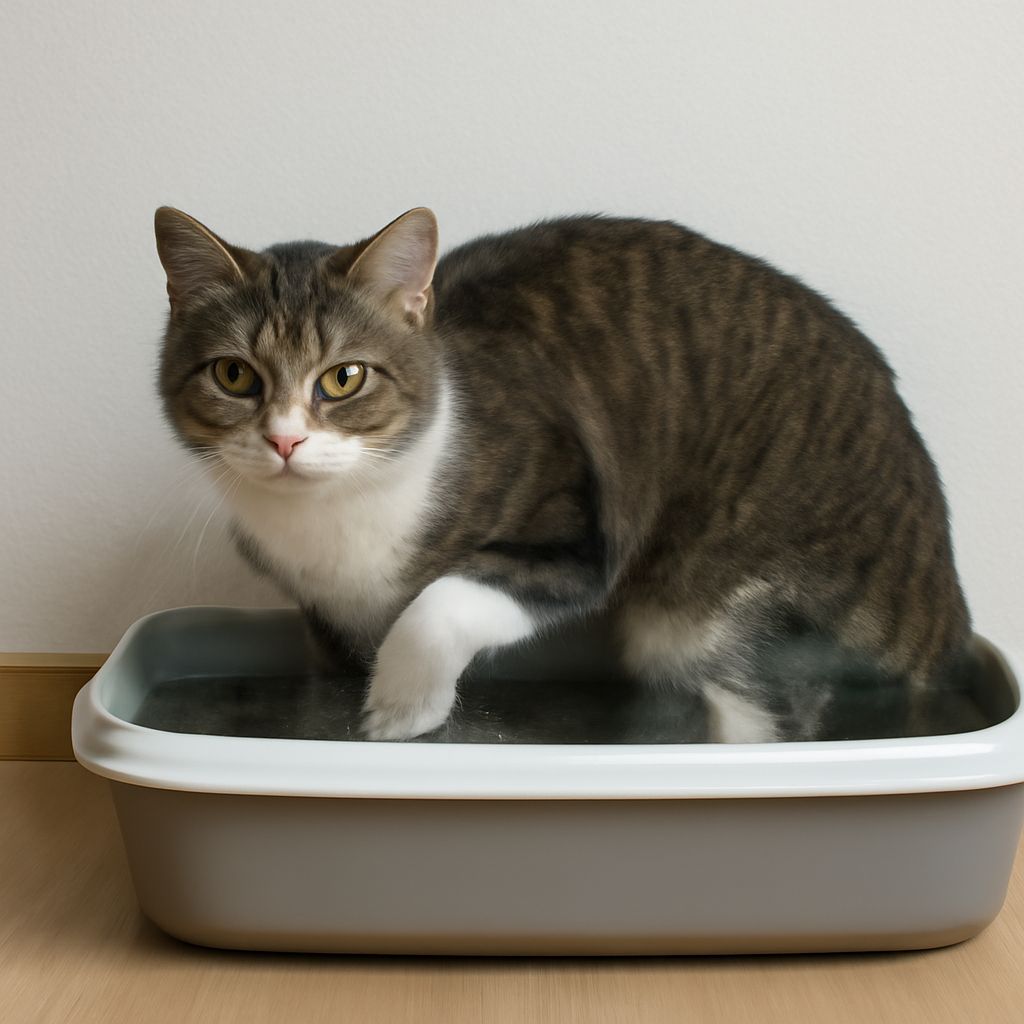
You’re cleaning the litter box and you notice something that stops you cold — the urine is pink, red, or brown instead of yellow. Cats peeing blood is a symptom, not a diagnosis, but it’s one that always warrants a call to the vet. The technical term is hematuria, and it can range from mild to life-threatening depending on the cause.
Finding a cat with blood in urine raises several immediate questions. How much blood? Does your cat seem comfortable or are they straining? Is it a male or female? Male cat blood in urine is particularly urgent because males are more susceptible to urinary blockages, which are fatal if not treated within hours. Cat bloody urine combined with straining and no urine output is an emergency — go to the vet immediately. This guide covers the common causes of blood in male cat urine and in female cats, and explains what you’ll likely encounter at the vet.
Common Causes of Blood in Cat Urine
Feline Idiopathic Cystitis (FIC)
The most common cause of hematuria in cats under 10 years old is feline idiopathic cystitis — bladder inflammation with no identified infectious cause. Stress is a major trigger. Environmental changes, new pets, construction noise, or routine disruptions can cause FIC episodes. Cats with FIC strain to urinate, produce small amounts, and often have visible blood or discolored urine. It tends to resolve within a week with supportive care, but recurs without stress management.
Urinary Tract Infections Bacterial UTIs cause cat bloody urine more often in female cats and older cats than in young males, but they can occur in any cat. Signs include frequent trips to the box, straining, crying during urination, and cloudy or pink urine. Diagnosis requires a urine culture, and treatment is a course of appropriate antibiotics. UTIs in cats shouldn’t be treated with leftover medications — the bacteria need to be identified first.
Urinary Crystals and Stones Struvite and calcium oxalate crystals are the two most common types found in cat urine. Both can cause bladder irritation, bloody urine, and pain. Struvite crystals often dissolve with a prescription dissolution diet; calcium oxalate stones usually require surgical removal. A urinalysis and X-rays or ultrasound are needed to identify the crystal type before treatment is started.
Urinary Blockage in Male Cats Blood in male cat urine combined with straining and no urine output means a blocked urethra until proven otherwise. Male cats have a narrow urethra that can become obstructed by crystals, mucus plugs, or spasms. A blocked cat typically vocalizes in pain, makes repeated trips to the box with no output, and may vomit or become lethargic. This is fatal within 24–48 hours without treatment — don’t wait.
What Happens at the Vet
Your vet will start with a physical examination, palpating the bladder, and checking for pain. A urinalysis tells them whether infection, crystals, or blood cells are present. Additional testing — X-rays, ultrasound, or blood panels — may follow depending on what the urinalysis shows and your cat’s age and history.
Treatment depends entirely on the cause. A blocked cat needs immediate catheterization and hospitalization. FIC is managed with increased hydration, stress reduction, and sometimes pain medication. UTIs get antibiotics. Stones may need surgery or dietary management. The vet’s job is to pinpoint the exact cause — your job is to get there promptly when cats peeing blood appears combined with any other worrying signs.
Next Steps
Switch your cat to a wet food diet or add water to dry food — hydration is one of the most effective long-term strategies for urinary health. Provide multiple clean litter boxes and reduce environmental stressors. Have your vet run a urinalysis annually for any cat with a history of urinary issues. Early detection of recurring crystals or cystitis makes management much more straightforward than treating a crisis.