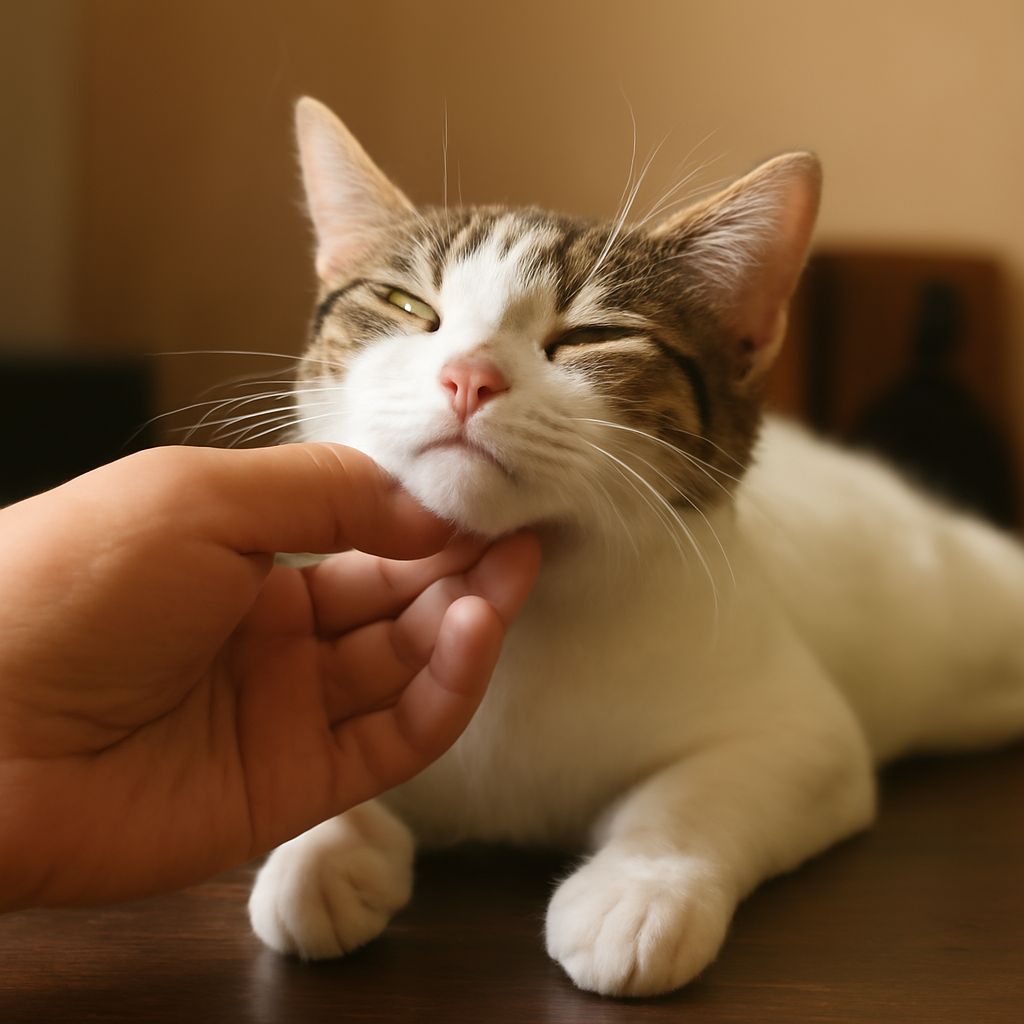
You’re sitting on the couch and your cat jumps up, circles twice, and settles against your leg. Within seconds, that low, steady rumble starts up. You know why cats purr in that moment — they seem content, relaxed, happy to be near you. But purring is more complicated than a simple happiness signal, and understanding it better helps you read your cat more accurately.
People often wonder why do cats purr when you pet them, and the answer has several layers. Cats also purr when they’re anxious, unwell, or even giving birth. If you’ve noticed my cat purrs all the time — even in situations that don’t look particularly cozy — there’s good reason for that. And the question “why does my cat purr” while kneading, nursing, or visiting the vet has a different answer than purring on a warm Sunday afternoon.
The Mechanics of Purring
Cats produce the purr sound through a rapid, rhythmic contraction and relaxation of the laryngeal muscles in the throat. This movement happens at a rate of 25 to 150 times per second, and it affects airflow during both inhalation and exhalation — which is why the sound is continuous rather than only on the outbreath. That constant two-direction rumble is unique to domestic cats and a few wild relatives.
The frequency of purring, typically 25–50 Hz, falls within a range that some researchers believe may promote bone density and tissue healing. This might explain why cats purring when injured or stressed makes biological sense — it could be a form of self-soothing that also has physical benefits. It’s not a proven therapy, but the frequency overlap with known healing ranges is hard to ignore.
Why Cats Purr in Different Situations
Contentment is the most recognizable trigger. When your cat settles into your lap and the purring begins, it generally means they feel safe and comfortable. The body language around it — slow blinking, relaxed posture, half-closed eyes — confirms that reading.
But cats also purr when they’re scared, hurt, or at the vet. This is sometimes called a “solicitation purr” or a stress purr. The cat uses it to self-regulate, the same way some people hum to themselves when anxious. If your cat is purring but also hiding, breathing faster than normal, or not eating, the purring isn’t a sign everything is fine — it’s worth a closer look.
Hunger produces a specific variant. Researchers at the University of Sussex identified a “solicitation purr” that cats use when they want food. It embeds a higher-frequency cry within the normal purr, and humans respond to it instinctively — it sounds more urgent. Many cat owners recognize this type even without knowing the science behind it.
Kittens start purring within days of birth. The sound helps the mother locate them and signals that nursing is going well. This early, functional use of purring carries forward into adult life, which is part of why the behavior remains so flexible in meaning.
Should You Be Concerned If Your Cat Purrs Constantly?
If your cat purrs all the time in clearly relaxed contexts — while eating, napping, or being petted — that’s likely just their personality. Some cats are naturally more vocal through purring than others. Breed plays a role too: certain cats are predisposed to heavy purring.
Watch for changes. A cat that suddenly starts purring much more than usual, or purrs in combination with other signs like weight loss, hiding, or changes in litter box habits, deserves a vet check. Persistent purring with labored breathing can indicate respiratory or heart issues. In those cases, the purring is incidental to something else going on.
Overall, purring is one of the most nuanced and fascinating behaviors in the domestic cat repertoire. Learning to read the context around the purr — body language, surroundings, recent events — gives you a much clearer picture of what your cat is actually communicating.