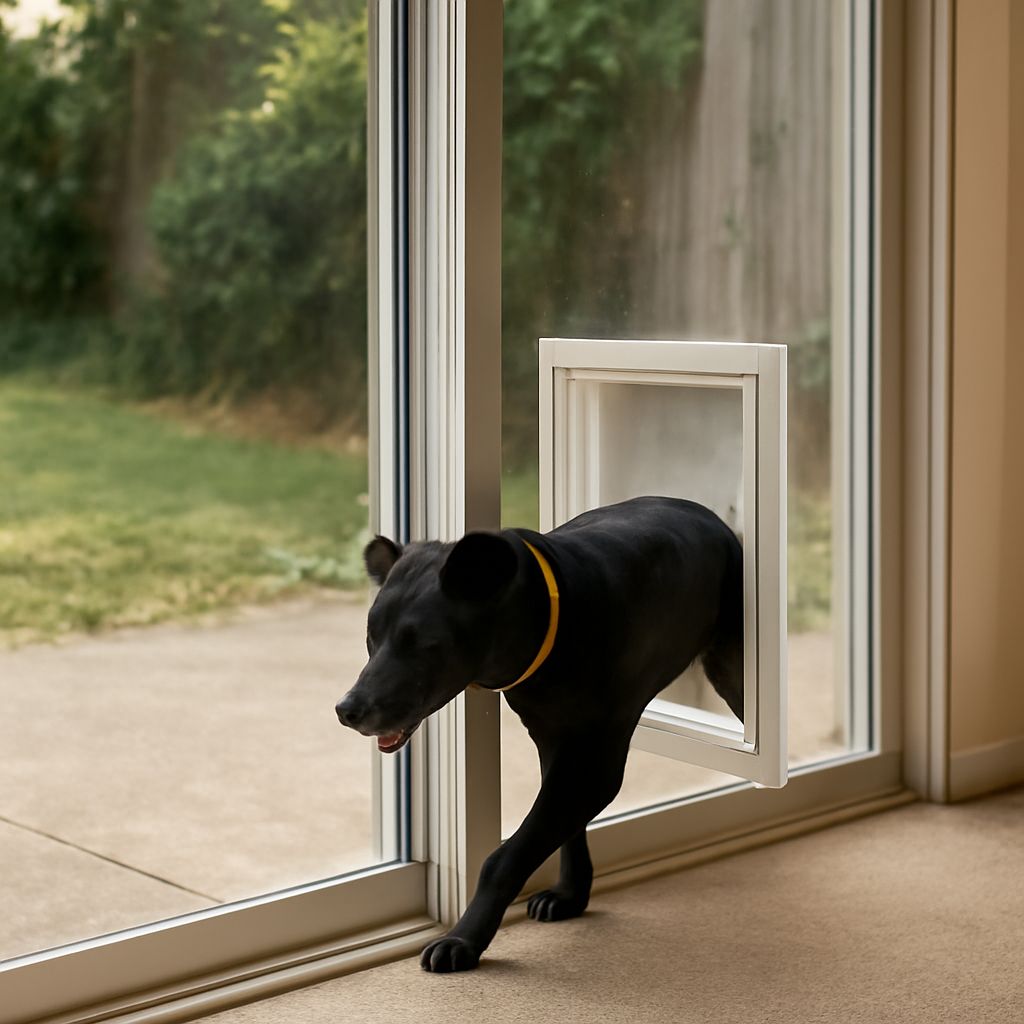
You have a sliding glass door leading to your patio, and right now you’re the one opening and closing it every time your cat wants in or out. You want a cat door for sliding glass door setups — something that lets your cat move independently without you becoming a doorman. The good news is this is a solved problem, and there are several practical options depending on your setup.
Unlike wall-mounted or door-mounted pet doors, a cat door for sliding door installations doesn’t require cutting into your wall or an existing door. A sliding door cat door typically inserts into the frame of your existing door, filling the gap beside the panel. If you’re researching cat doors for sliding glass doors, you’ll quickly find that product quality varies considerably, and the fit matters as much as the flap. And if you’ve seen the term sliding glass cat door used in listings, it’s the same product category — just described from different angles.
How Sliding Door Cat Door Inserts Work
The Panel Insert Design Most sliding door cat door systems use a panel insert — a rigid panel, usually aluminum or PVC, that sits in your door track beside your glass panel. The pet door is built into this insert. When you close your sliding glass door against the insert panel, it fills the gap and creates a usable wall for the pet flap. No cutting, no permanent modification, and no tools beyond basic assembly. The insert is adjustable in height to fit standard sliding door frames.
Security and Lock Compatibility
One concern with panel-style cat doors for sliding glass doors is security. A panel insert that doesn’t lock properly can be lifted or pushed out of the track. Better-quality inserts come with locking pins or security bars that anchor the panel to the track so it can’t be forced open. Check whether the product locks before buying — some budget options skip this entirely.
Measuring Your Door Opening
Before ordering, measure the full height of your sliding door opening from the floor track to the top of the frame. Panel inserts are generally adjustable within a range — typically 76 to 96 inches — but not universally. Also measure the depth of your door track, since some inserts require a minimum track depth to seat properly.
Choosing the Right Flap and Size
Cat Size and Flap Opening
The flap opening needs to match your cat’s shoulder width and height, with enough clearance that the cat doesn’t have to squeeze. A general guideline: measure your cat’s chest height from the floor and add an inch for the minimum flap height. For width, measure the widest point of the cat’s body. Most cats fit through a small or medium pet door, but larger breeds like Maine Coons may need a medium or large opening.
Flap Material Options Standard clear vinyl flaps are the most common and generally the most cost-effective. They hold up well in moderate weather and are easy for most cats to push through. Magnetic flaps close more securely and keep drafts out better, making them worth the extra cost in colder climates. Some pet doors designed for sliding panels now offer double-flap designs with a small airlock between the two flaps, which reduces heat loss significantly.
Electronic and Microchip Options
If neighborhood cats are an issue, or if you want to control which of your own cats can use the door, microchip-activated flaps are available. The flap only opens when the embedded sensor detects your registered cat’s microchip or a compatible RFID collar tag. These cost more and add some mechanical complexity, but they solve specific access problems that a standard flap can’t.
Pro tips recap: Measure your door frame height and track depth before ordering — not all inserts fit all frames. Prioritize inserts with locking security bars. For cats that hesitate at new flaps, prop the flap open for a few days and use treats on both sides to build comfort before you expect your cat to push through independently.