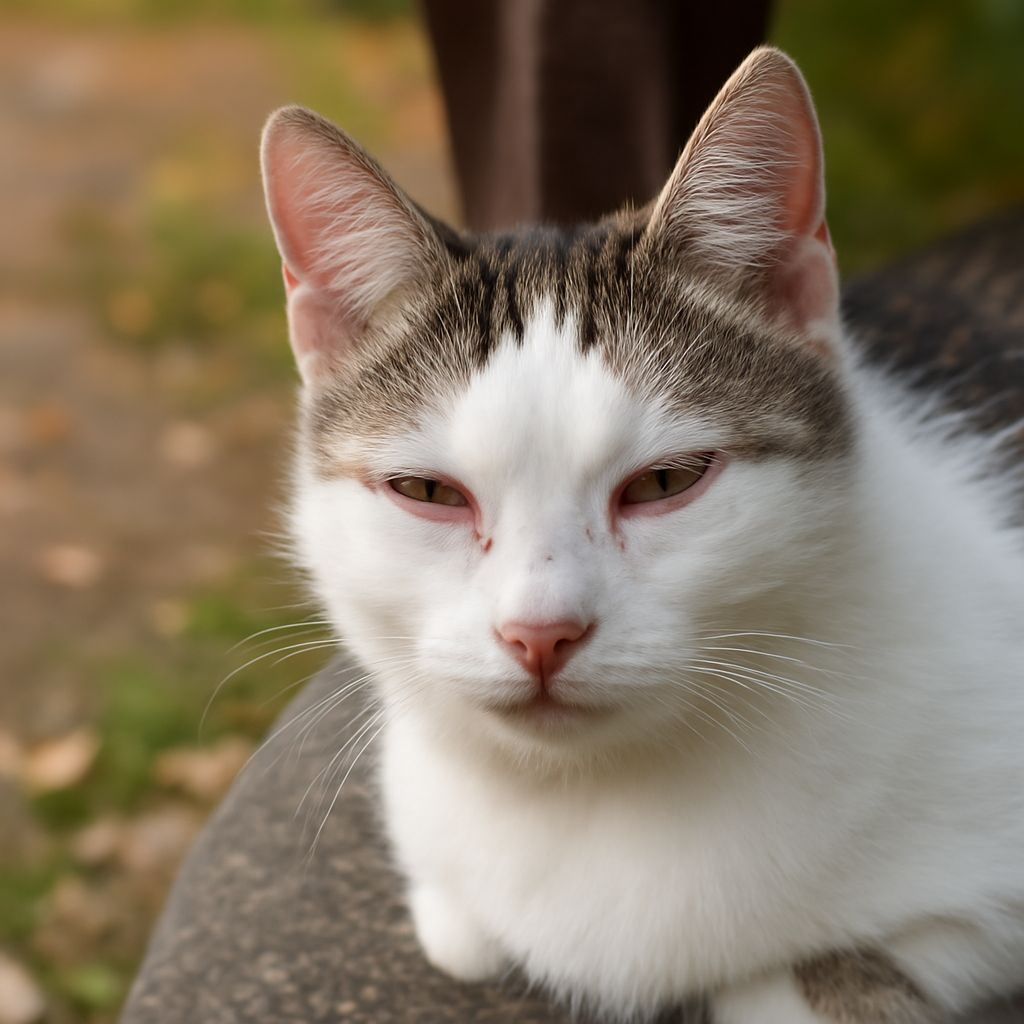
You notice a wet streak below your cat’s eye this morning — something you haven’t seen before. You’re asking yourself: why are my cats eyes watering? It might be nothing. It might be the start of something that needs attention. Knowing the difference matters, and that starts with understanding what’s normal versus what points to an underlying issue.
A cat has watery eyes for a range of reasons, some minor and some worth a vet visit. If your cat with watery eyes also has discharge that’s thick, colored, or crusty, that’s a different picture than simple clear tearing. When a cat has watery eye on just one side, that can point to something localized — a scratch, a foreign object, or a blocked tear duct — rather than a systemic issue. And if your cats eyes watery is a persistent pattern rather than a one-day thing, that changes the conversation.
Common Causes of Watery Eyes in Cats
Breed-Related Tearing
Flat-faced breeds — Persians, Himalayans, British Shorthairs — have facial structures that can cause chronic tear overflow simply because their tear ducts don’t drain as efficiently as those of cats with longer muzzles. If you have one of these breeds and the tearing is consistent but the eyes themselves look clear and healthy, this is often just a cosmetic management issue rather than a health problem. Regular gentle wiping with a damp cloth keeps the fur from staining.
Irritants and Allergies Cats can react to cigarette smoke, dusty litter, cleaning products, and seasonal allergens with increased eye tearing. If the watering started around a change in products or season, that connection is worth checking. Switching to an unscented, low-dust litter is an easy first step if litter is a possible factor.
Upper Respiratory Infections Feline herpesvirus and calicivirus are two of the most common causes of eye discharge in cats. Both are components of the standard respiratory infections that cats can carry, sometimes for life after initial exposure. Flare-ups bring watery or mucousy eye discharge, often accompanied by sneezing or nasal congestion. A cat with repeated bouts of eye tearing alongside respiratory symptoms likely has one of these underlying infections.
Conjunctivitis
Inflammation of the conjunctiva — the tissue lining the inner eyelid and the white of the eye — causes redness, swelling, and discharge ranging from clear to yellowish. Conjunctivitis in cats can be viral, bacterial, or related to the herpesvirus already mentioned. Both eyes are often affected, though one may look worse than the other.
Blocked Tear Ducts or Foreign Objects A single watering eye that won’t clear up points toward something localized. Blocked tear ducts are more common in flat-faced breeds but can occur in any cat. A grass seed, piece of grit, or even a small piece of litter can cause irritation and tearing in one eye. A vet can examine the eye closely to rule out a foreign body.
When to See a Vet
Clear, thin tearing that appears one day and resolves on its own is usually not urgent. But a vet visit is the right call if the discharge is thick, yellow, green, or bloody; if the eye looks swollen, red, or partially closed; if your cat is pawing at the eye; or if the tearing has lasted more than two or three days without improvement. Eye conditions in cats can progress quickly, and early treatment is generally more effective than waiting.
Pro tips recap: Wipe discharge from the eye area gently with a clean, damp cloth — never use human eye drops unless directed by a vet. Keep track of whether one or both eyes are affected, when the tearing started, and any changes in your cat’s environment. That information helps your vet reach an accurate diagnosis faster.