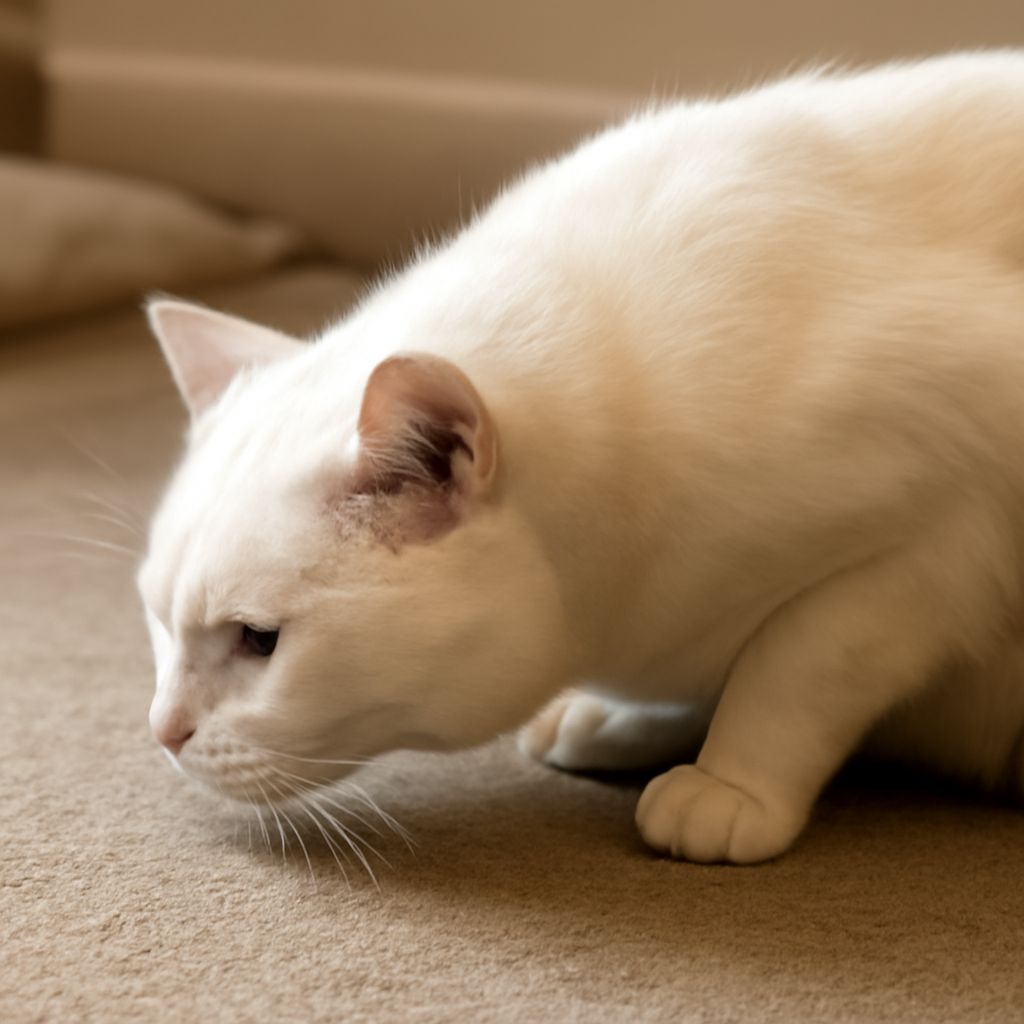
You hear your cat making a low, repeated wheezing sound — crouched low with her neck extended, sides heaving — and you don’t know what’s happening. This is one of the more alarming things a cat owner can witness. Cat asthma is a real condition that affects a meaningful number of cats, and once you know what to look for, it becomes much less mysterious.
The question of can cats have asthma comes up often, and the answer is yes. Cats with asthma experience episodes of airway inflammation and constriction that restrict breathing in a way that looks and functions much like human asthma. An asthma cat doesn’t have it all the time — attacks are episodic and triggered by specific factors. Asthma and cats is a well-documented combination, and veterinary management has improved significantly in recent decades.
What Feline Asthma Looks Like
The Classic Attack Posture
During an asthmatic episode, a cat typically crouches close to the ground with her neck stretched forward and elbows pointed outward, working to pull in air. The breathing is labored — you can see and hear the effort. Some cats cough or wheeze during attacks; others are quiet but visibly struggling. An attack can last seconds or several minutes.
Triggers That Cause Episodes
Cats with airways prone to inflammation react to environmental irritants: cigarette smoke, dust, certain cleaning products, scented candles, dusty cat litter, pollen, and mold. Stress can also trigger episodes in susceptible cats. Identifying your cat’s specific triggers is part of long-term management — eliminate what you can and reduce exposure to what you can’t fully remove.
How Often Attacks Occur
Frequency varies considerably. Some asthmatic cats have attacks once or twice a year; others experience them weekly or daily without treatment. The severity of individual attacks also varies. An occasional mild episode is managed differently than frequent severe ones — your vet’s treatment plan will account for how often and how severely your cat is affected.
Diagnosis and Treatment
How Vets Diagnose Asthma in Cats
There’s no single definitive test for feline asthma. Vets use a combination of approaches: chest X-rays to look for characteristic lung changes, ruling out other conditions (heartworm, lungworm, heart disease, pneumonia), and sometimes bronchoalveolar lavage to examine airway secretions. A cat’s history — the pattern of symptoms, response to bronchodilators — also informs the diagnosis.
Medications Commonly Used Corticosteroids reduce airway inflammation and are the backbone of feline asthma management. They can be given orally, by injection, or via inhaler. Bronchodilators open constricted airways during acute episodes. Inhalers designed for cats — using spacer devices with a mask that fits over the cat’s face — have become increasingly common because they deliver medication directly to the lungs with fewer systemic side effects than oral corticosteroids over the long term.
Environmental Changes That Help
Switching to a low-dust, unscented cat litter removes one common trigger. Running an air purifier in the rooms your cat uses most reduces airborne particulates. Avoiding sprays, aerosols, and heavy fragrances at home also helps. These changes don’t replace medical treatment but reduce how often your cat’s airways are challenged.
Bottom line: Feline asthma is manageable with the right combination of medication and environmental modification. If you suspect your cat has asthma based on recurring respiratory episodes, a vet exam is the starting point — not a wait-and-see approach. Early diagnosis and treatment help prevent severe attacks and reduce long-term airway damage.