
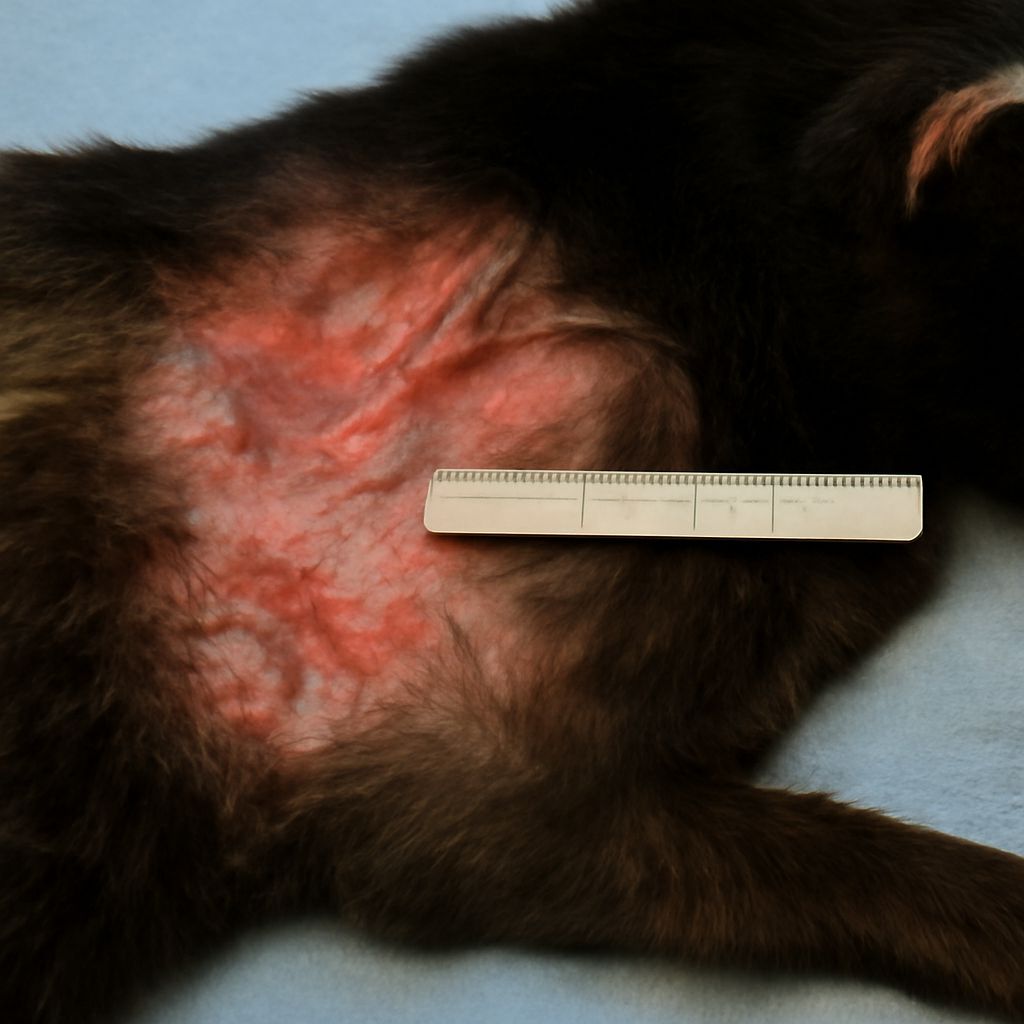
You notice your cat scratching more than usual, or you spot a patch of missing fur while brushing her. Cat skin problems are more common than many owners realize, and they range from minor and easily resolved to conditions that need veterinary treatment. Knowing what to look for early makes a real difference.
Cat skin diseases vary widely in cause and appearance, so identifying one often comes down to pattern recognition: where on the body is it, what does it look like, and what else is the cat doing? If you’re wondering how can you tell if your cat is sick from skin changes, the answer is a combination of visual signs and behavioral shifts. Skin problems in cats rarely exist in isolation — they usually come with other signals. Whether you’re dealing with common cat skin problems like flea-related hair loss or something less familiar, this guide covers the key conditions and what they look like.
Common Cat Skin Conditions and Their Signs
Flea Allergy Dermatitis
This is the most common skin condition in cats. A single flea bite triggers a significant allergic reaction in sensitive cats, causing intense itching, hair loss, and small crusty bumps called miliary dermatitis. The hair loss typically appears at the base of the tail, along the lower back, and on the belly and inner thighs. Finding flea dirt — small black specks at the skin level — confirms the cause even if you don’t see actual fleas.
Ringworm
Despite the name, ringworm is a fungal infection, not a worm. It produces circular patches of hair loss with scaly or crusty edges, most commonly on the head, ears, and forelimbs. Ringworm is contagious to other pets and to people, so prompt identification and treatment matter. Under a Wood’s lamp (an ultraviolet light used by vets), many ringworm lesions glow green — a useful diagnostic tool.
Allergic Skin Disease Beyond flea allergy, cats develop sensitivities to food proteins, dust mites, mold, and pollen. Allergic skin disease tends to produce symmetrical hair loss, redness, and sometimes swelling around the face, neck, and feet. Food-related allergies often cause symptoms year-round, while environmental allergies may be seasonal. An elimination diet or allergy testing through a vet can help identify the trigger.
Mange and Mites Notoedric mange in cats — caused by Notoedres cati — produces intense itching, thick crust, and hair loss, usually starting around the ears and spreading to the face and neck. Demodectic mange is less common in cats but can occur, particularly in immunocompromised animals. Both require veterinary diagnosis and treatment; mange doesn’t resolve on its own.
How to Tell If Your Cat’s Skin Issue Needs a Vet
Any skin condition involving open sores, significant hair loss, crusting, bleeding, or rapid spread warrants a vet visit. Cats that are scratching to the point of breaking skin are at risk of secondary bacterial infection. If you notice weight loss, lethargy, or changes in eating alongside skin changes, those combined signs suggest something systemic rather than a localized skin issue — and that needs prompt professional assessment.
At home, you can help by checking regularly for fleas, keeping bedding clean, and avoiding introducing new grooming products or detergents without considering whether they might cause contact irritation. But diagnosis of feline skin conditions requires a physical exam and often cytology or culture testing — tools only a vet has access to.