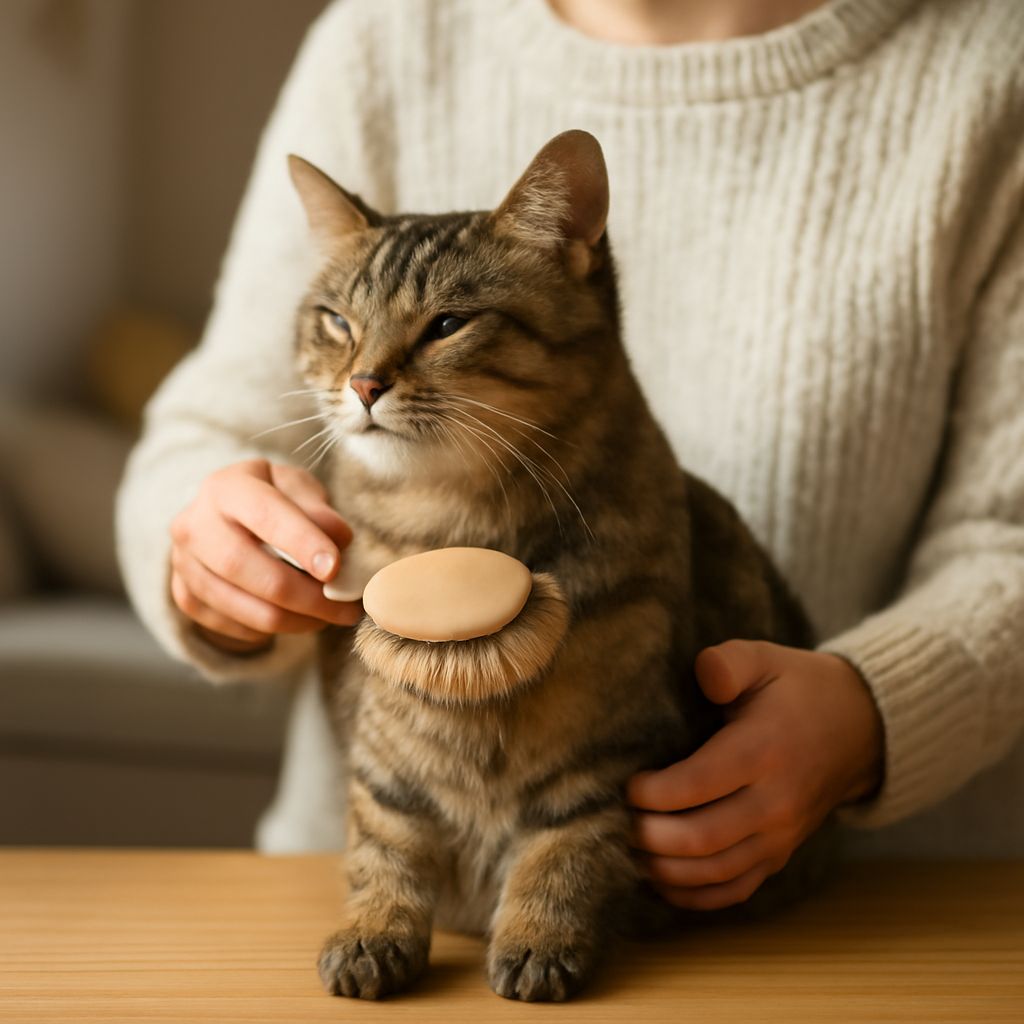
You notice your cat grooming herself more than usual — long sessions that leave patches of thinning fur or even bare skin. Excessive grooming in cats is one of those behaviors that can start gradually and escalate before owners realize how much fur has actually been lost. It’s worth understanding what’s driving it before it becomes a larger problem.
You might have already searched other things trying to piece together the picture: is bacitracin safe for cats for any skin irritation you noticed? Could adenocarcinoma in cats explain weight changes alongside the grooming? Maybe you’ve looked at tumors in cats pictures trying to assess whether what you’re seeing on your cat’s skin looks concerning. And if your cat attacks me unprovoked has been happening alongside the grooming changes, that behavioral shift might be connected. All of these concerns can intersect in ways that point toward a single underlying cause.
Why Cats Groom Too Much
Skin Irritation and Parasites
The most common cause of over-grooming is something itchy. Fleas are the obvious culprit — even a small infestation causes intense irritation, and some cats are allergic to flea saliva, meaning one bite triggers a much bigger response. Check the base of the tail and along the belly for flea dirt (small dark specks) or actual fleas. Mites, ringworm, and other skin parasites can produce similar results.
Allergies
Cats can develop allergies to food ingredients, environmental triggers like dust mites or pollen, or contact allergens. Food allergies often show up as skin problems — itching, crusting, or hair loss — along the neck and face. Environmental allergies tend to produce more generalized symptoms. If over-grooming started after a food change or a seasonal shift, allergy is worth considering.
Pain
Cats often lick at areas of the body where they feel pain, even if the pain is internal. A cat that constantly grooms one specific spot — a flank, a hip, the belly — may be responding to joint pain, bladder discomfort, or another internal issue. This is one situation where the grooming itself isn’t the main problem; it’s a signal pointing to something else.
Stress and Anxiety
Psychogenic alopecia is the clinical term for stress-induced over-grooming. It’s common in indoor cats with limited environmental enrichment, after major household changes, or in cats that are naturally anxious. The grooming provides a self-soothing effect, but it escalates. Behavioral changes like unprovoked aggression alongside grooming can suggest the cat is in a stressed or overstimulated state.
When to Involve a Vet
Skin Changes to Watch For
Thinning fur in one area is an early sign. Actual bald patches, redness, broken skin, or scabbing indicate more advanced grooming-related damage. Any open sore from grooming needs veterinary attention — bacteria from the mouth introduce infection risk quickly. Applying products like bacitracin ointment to a cat’s skin without vet guidance isn’t advisable, as absorption through the skin and licking of the area raises safety concerns specific to cats.
Lumps, Masses, and Weight Changes
If you notice a lump beneath the skin alongside behavioral changes, that warrants an exam. Skin and internal masses in cats range from benign cysts to conditions that require treatment. Changes in weight alongside any skin or behavioral symptoms should always be evaluated by a vet, who can determine whether any testing is needed.
The Behavioral Component
Cats that groom excessively and also display unprovoked aggression or marked behavioral shifts may benefit from a combined approach — addressing any physical cause first, then working with your vet on behavioral support if the grooming continues once physical causes are ruled out.
Bottom line: Excessive grooming always has a cause, and finding it is the job of a veterinary exam rather than guesswork. Start with the obvious — fleas and skin irritation — and work outward from there with your vet’s help. The sooner the underlying driver is identified, the faster the grooming and any related fur loss can be addressed.