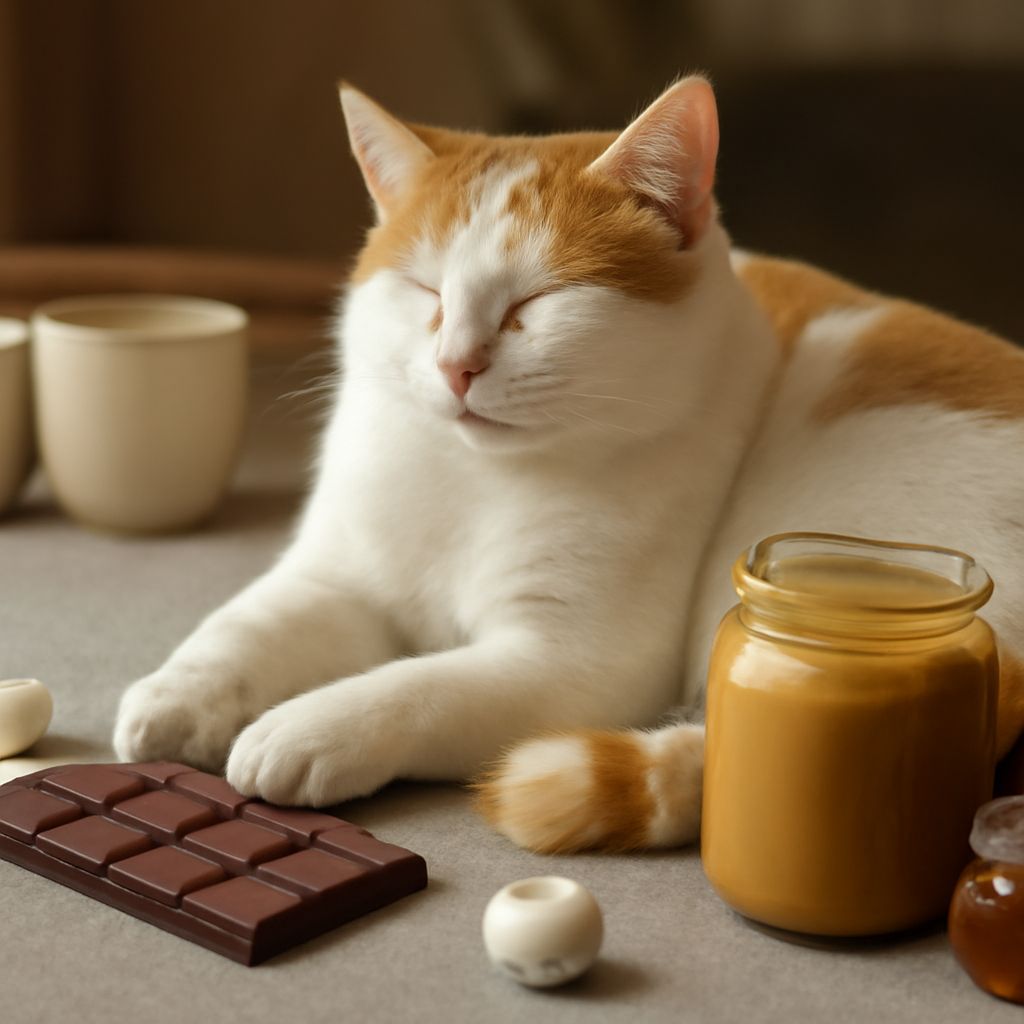
You’re making a sandwich and your cat is watching with the intensity of someone who believes they deserve a share of everything you eat. You dip a finger in the peanut butter and wonder: can cats eat peanut butter? It’s a harmless thought — until you realize you actually don’t know the answer. You’ve seen dogs given peanut butter all the time, but cats are different creatures with different metabolisms and different tolerances.
Is peanut butter bad for cats in the way chocolate is, or is it more of a “not ideal but not dangerous” situation? Do cats eat peanut butter by choice, or only when humans offer it? And if you give it as an occasional treat, what’s the actual risk? Let’s look at what the evidence says about cats peanut butter interactions and what a sensible approach looks like.
Is Peanut Butter Safe for Cats?
The Short Answer
Peanut butter is not toxic to cats the way onions, grapes, or xylitol are. If your cat licked a small amount off your finger, they’re almost certainly fine. But “not toxic” is different from “safe to feed regularly,” and peanut butter falls firmly in the “not recommended as food” category for cats.
Why Cats Eat Peanut Butter Rarely by Choice Cats are obligate carnivores — their digestive systems and nutritional requirements are built around meat. Do cats eat peanut butter when offered? Some will, some won’t. Cats lack functional taste receptors for sweetness, so the appeal isn’t flavor. For cats that do eat peanut butter, the attraction is usually the fatty, creamy texture rather than any taste preference. Most cats that sample it once show little interest in having it again.
The Fat and Calorie Problem
Peanut butter is calorically dense — about 94 calories per tablespoon, almost entirely from fat and protein. For a cat whose daily caloric need is roughly 200 to 300 calories total, even a teaspoon of peanut butter represents a meaningful percentage of daily intake with no nutritional benefit. Cats peanut butter consumption, even in small amounts, can contribute to weight gain if it becomes a regular thing. Overweight cats have significantly higher risk of diabetes, joint problems, and fatty liver disease.
Xylitol: The Hidden Danger Some peanut butter brands use xylitol as a sugar substitute. Xylitol is extremely toxic to dogs and there is concern about its effects on cats, though cat data is more limited. Regardless of the level of proven risk to cats specifically, any food containing xylitol should be kept away from all pets. Always check the ingredients before offering any peanut butter to your cat.
Other Risks: Aflatoxins, Additives, and Digestive Upset
Aflatoxin Contamination
Peanuts are prone to aflatoxin contamination — a naturally occurring mycotoxin from certain molds that can develop during storage. Most commercial peanut butter is tested and regulated, but aflatoxin exposure is a real concern, particularly with some natural or imported peanut products. Cats are generally more sensitive to aflatoxins than humans, making this another reason to keep peanut butter occasional rather than routine even if the jar seems fine.
Salt and Additives
Commercial peanut butters often contain added salt, stabilizers, and partially hydrogenated oils. High sodium intake stresses feline kidneys, which are already prone to disease in older cats. Natural peanut butters with just peanuts (and possibly salt) are safer than heavily processed versions, but neither makes a particularly good cat treat when purpose-made options exist.
Digestive Reactions
Cats that eat peanut butter in more than trace amounts sometimes experience digestive upset: soft stool, vomiting, or gassiness. The fat content is the primary driver. Cats’ digestive systems handle fat differently than dogs or humans, and sudden high-fat intake can cause gastrointestinal distress even when the food isn’t technically toxic.
If You Do Give Peanut Butter to Your Cat
If you want to use peanut butter to hide a pill — one of the most common practical reasons — a very small amount (pea-sized) used rarely is unlikely to cause harm for a healthy adult cat. Use a natural peanut butter with no xylitol, minimal salt, and no added sweeteners. Don’t make it a regular treat. If your cat refuses it, that’s actually the better outcome — pill pockets or a small amount of wet food are safer delivery mechanisms anyway.
Bottom line: Peanut butter isn’t poisonous to cats, but it offers no nutritional value and carries real risks from its fat content, potential additives, and the xylitol present in some brands. A lick here and there for a healthy cat is unlikely to cause harm; regular treats of peanut butter are a different matter. Choose cat-specific treats that support their actual nutritional needs instead.