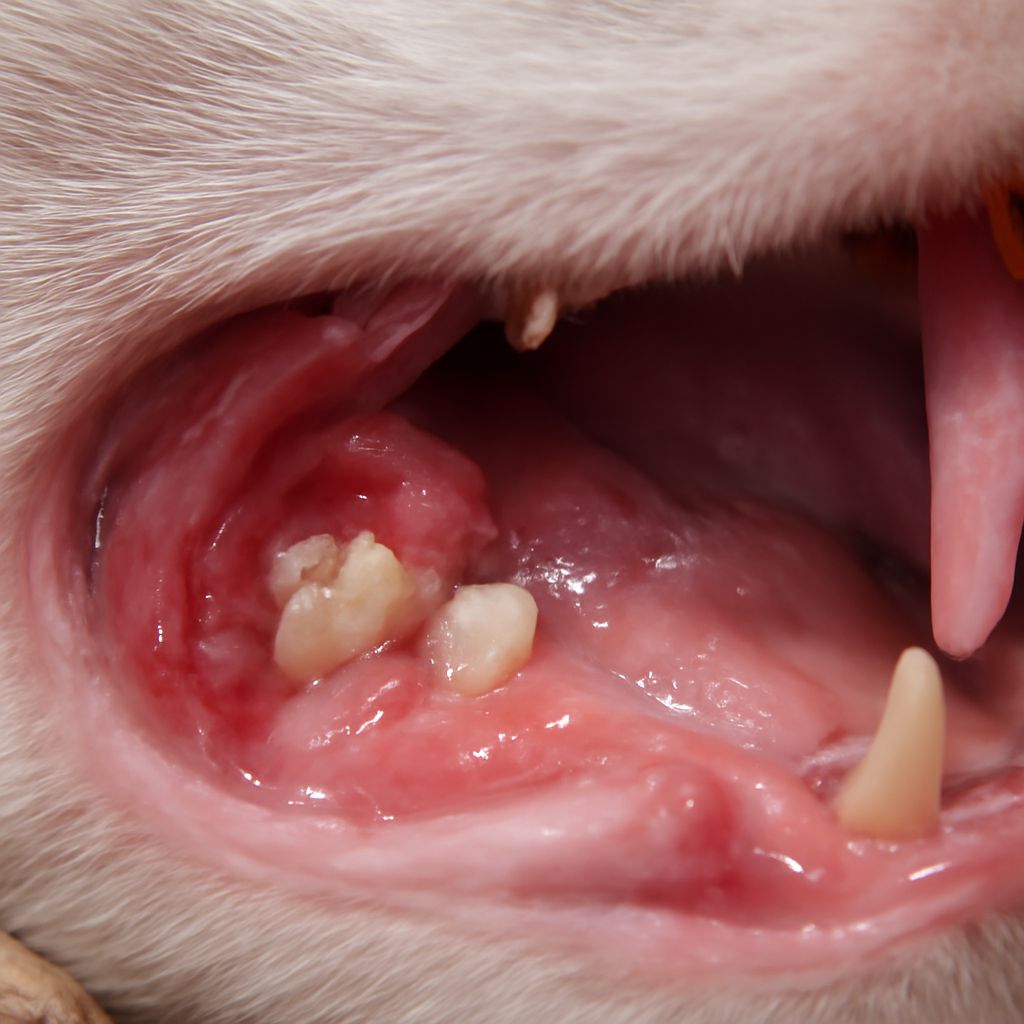
Your cat has been eating less, pawing at their face, drooling more than usual, and their breath has gotten noticeably worse. You took a careful look in their mouth and saw red, angry-looking tissue along the gumline and further back in the throat area. Your vet mentioned the word “stomatitis” at the last appointment, and you’ve been trying to understand what that actually means and whether it can be managed long-term.
Cat stomatitis is one of the more serious and frustrating oral health conditions in cats. It’s not a simple cat mouth infection like a single infected tooth — it’s a whole-mouth inflammatory process that can affect multiple tissue types simultaneously. What is stomatitis in cats, exactly? It’s widespread, painful inflammation of the oral mucosa (the tissue lining the mouth), often extending into the back of the throat. Stomatitis in cats treatment is genuinely challenging, and understanding your options is the first step toward helping your cat.
What Is Cat Stomatitis and Why Does It Happen?
The Immune Response Behind Feline Stomatitis Cat stomatitis is primarily an immune-mediated condition. The cat’s immune system mounts an exaggerated inflammatory response to dental plaque — the bacteria that naturally accumulate on tooth surfaces. In healthy cats, the immune system tolerates this; in cats with stomatitis, it attacks aggressively, causing painful inflammation throughout the mouth. Why some cats develop this hypersensitivity and others don’t is not fully understood, but genetics and viral history are likely contributors.
Feline calicivirus (FCV) and feline herpesvirus (FHV-1) are associated with stomatitis cases. Cats with chronic viral infections appear more likely to develop the condition, though the relationship is complex and not simple cause-and-effect. Cats that came from shelters, stray situations, or multi-cat environments have higher rates of stomatitis, possibly due to higher viral exposure.
Recognizing the Signs of Cat Mouth Disease
The signs of cat mouth infection and inflammation in stomatitis are hard to miss once you know what to look for. Affected cats drool heavily, often with bloody saliva. They may start at food and then pull back because eating hurts. Weight loss follows. Some cats paw at their face repeatedly or resent being touched around the head. Bad breath is nearly universal. The inside of the mouth — when you can get a look — is bright red, swollen, and may bleed easily.
Diagnosis and Staging of Feline Stomatitis
Your vet will use a combination of physical examination, dental radiographs (to assess tooth root health), and sometimes biopsy to confirm what is stomatitis in cats versus other oral conditions like squamous cell carcinoma or eosinophilic granuloma complex. Blood work rules out systemic disease and assesses kidney and liver function before any anesthetic procedures.
Stomatitis is graded by severity — from mild gingival inflammation confined to the gumline to severe caudal stomatitis extending into the fauces (the back of the throat), which is the most painful and treatment-resistant form. The severity determines which treatment approach is appropriate.
Stomatitis in Cats Treatment: What Works
Dental Cleaning and Tooth Extraction The first-line stomatitis in cats treatment is full-mouth or near-full-mouth tooth extraction. This sounds drastic, but removing the teeth removes the dental plaque that the immune system is reacting to. Research shows that roughly 60% of cats achieve complete remission after full-mouth extraction; another 20% achieve significant improvement. Cats adjust to being toothless remarkably well and can eat soft food comfortably.
Partial extraction — removing only affected teeth — is less likely to achieve lasting remission because the remaining teeth continue to provide a surface for plaque accumulation and immune stimulation.
Medical Management for Cat Mouth Infection
For cats that are not surgical candidates or in the period before surgery, medical management provides temporary relief. Short courses of corticosteroids reduce inflammation; cyclosporine has shown better long-term results with fewer side effects for some cats. Antibiotics address secondary bacterial infection but don’t address the underlying immune response driving the cat mouth disease.
Regular professional dental cleanings, anti-viral support for FCV/FHV-positive cats, and immune modulators are sometimes combined into a long-term management protocol for cats that respond partially to extraction.
Pain Management
Pain control is non-negotiable. Cats with stomatitis need adequate analgesics — buprenorphine, meloxicam, or gabapentin depending on the case — both perioperatively and as part of any ongoing management. Untreated oral pain affects quality of life significantly and makes cats reluctant to eat.
Cat stomatitis is a serious cat mouth disease, but the prognosis with appropriate treatment is much better than many owners expect. Full-mouth extraction gives the majority of affected cats their comfort and appetite back within weeks of surgery. Work closely with a vet experienced in feline dentistry for the best outcomes.