
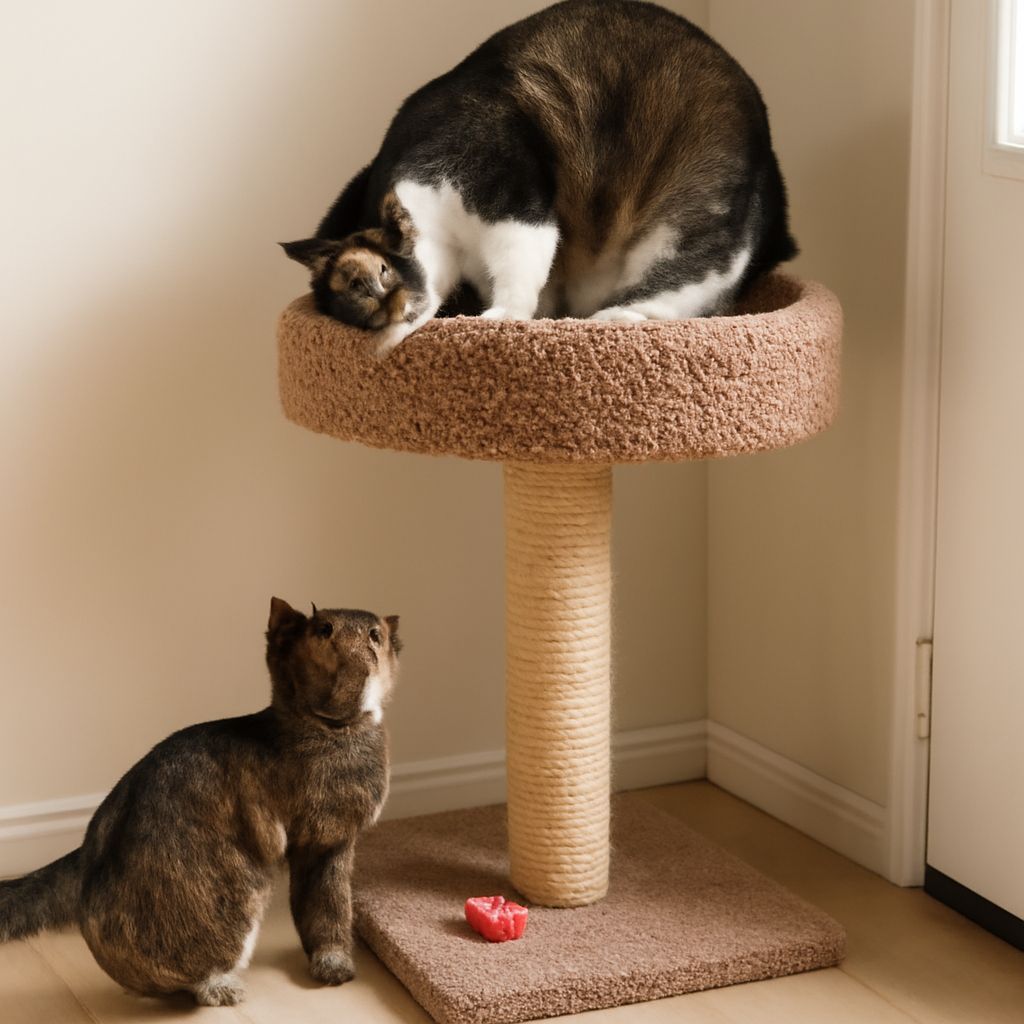
Your cat spends most of the day looking for the highest spot in the room. A tall cat tree gives them that height safely, keeps them off your shelves, and provides scratching surfaces that protect your furniture. But not all cat trees are built to last — a wobbly unit scares cats away and becomes unusable quickly. Whether you want a solid wood cat tree for long-term durability, a cat tree with hammock for a cat that likes to curl up midair, a cat pole for vertical scratching, or something closer to cat castles with multiple levels and hideaways, here’s what to look for.
Why Height Matters for Cats
Cats instinctively seek vertical space for security. A tall cat tree offers elevation that reduces anxiety, especially in multi-cat households or homes with dogs. Cats positioned high feel safer and survey their territory more effectively. This isn’t a luxury — vertical enrichment reduces stress-related behavior including hiding, aggression, and inappropriate elimination.
The taller the tree, the more jumping stages it needs to be accessible to older cats or kittens. A cat tree over 5 feet should have multiple platforms at graduated heights rather than a single jump to the top.
Solid Wood Cat Tree vs Standard Particle Board
Most mass-market cat trees use particle board covered in carpet or sisal. These are affordable but degrade within a year or two under regular use — especially if the cat is large or multiple cats use the same unit. A solid wood cat tree uses actual wood framing, which holds weight better and doesn’t wobble after months of climbing and jumping.
Solid wood cat tree models cost more — typically $150 to $400 compared to $50 to $150 for particle board versions — but last years longer. For households with large breeds or multiple cats, the investment pays off quickly in replacement costs avoided.
Cat Tree with Hammock: What to Look For
A cat tree with hammock includes a fabric or rope cradle suspended between posts or from a platform base. Cats that prefer enclosed, rocking sleeping spots often choose hammocks over flat perches. The hammock fabric should be machine washable and the attachment points should use secure metal hardware rather than cheap plastic clips that fail after heavy use.
Look for a cat tree with hammock where the hammock is positioned at least partway up the structure — cats rarely use ground-level resting spots on a tree they could otherwise climb.
Cat Pole: Standalone Scratching and Climbing
A cat pole is a floor-to-ceiling tension-mounted scratching and climbing post. It takes up minimal floor space and provides excellent vertical scratching surface. Sisal-wrapped cat poles are more durable than carpet-covered versions. The tension mounting system needs to be checked periodically — poles that loosen over time wobble and get abandoned.
Cat Castles: Multi-Level Structures
Cat castles are large, multi-unit configurations — several towers connected by bridges, ramps, and tunnels. They work best in dedicated spaces or large rooms. Multi-cat households benefit most from these setups because they create multiple territories and reduce competition for prime perching spots.
Next Steps
Measure ceiling height before buying a tall cat tree to ensure the top platform doesn’t force a crouched posture. Place the tree near a window if possible — cats use high spots primarily to observe, and a window view dramatically increases time spent on the tree. Stabilize the base with a non-slip pad if your flooring is smooth.