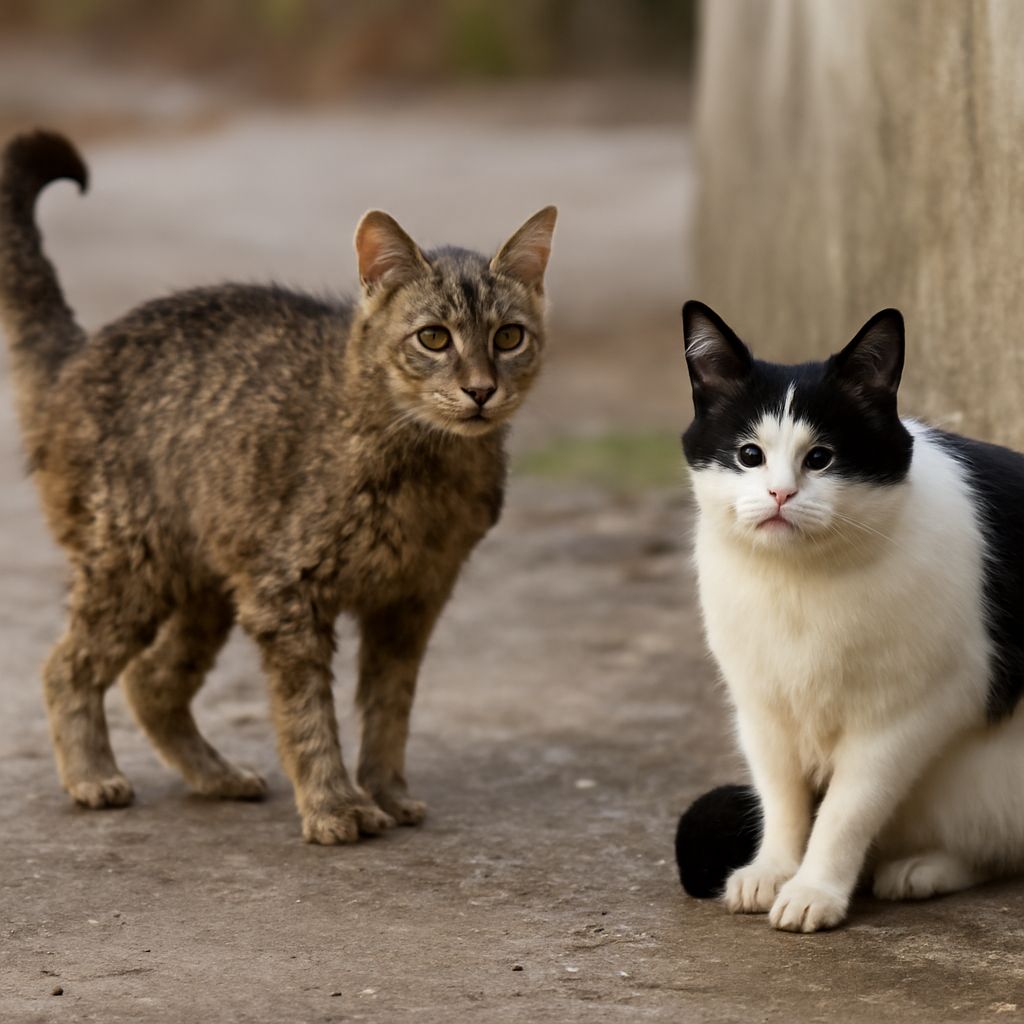
You spot a thin cat huddled near a dumpster. It bolts the moment you step closer. Is that a stray or a feral cat? Knowing what is a feral cat matters if you want to help — because the approach that works for a stray can backfire with a truly feral animal. Understanding the feral vs stray cat distinction is the first step toward doing something useful for either one.
Questions about how long do feral cats live, what feral cat lifespan looks like in different environments, and whether the cats sometimes spelled ferrell cats online can ever be domesticated all have practical answers worth knowing.
What Is a Feral Cat?
A feral cat is a domestic cat that has had little or no contact with humans during the critical socialization window — roughly 2 to 7 weeks of age. Without positive human exposure during that period, cats develop a deep-seated wariness of people that is very difficult to reverse in adult life. Feral cats are not wild animals biologically, but they behave like them socially.
They typically live in colonies near food sources — restaurants, farms, neighborhoods — and form loose social groups. They hunt, scavenge, and avoid human contact as a survival strategy.
Feral vs Stray Cat: The Key Differences
A stray cat was once a pet or at least socialized with humans. They may be lost, abandoned, or have wandered. Strays often make eye contact, approach people cautiously, and can usually be re-socialized and adopted. The feral vs stray cat distinction shows up quickly: a stray may meow at you; a feral will flatten and flee or freeze silently.
Kittens born to feral mothers can be socialized if handled regularly before 7 weeks. Older feral cats rarely adapt to indoor pet life, and forcing the issue causes chronic stress for the animal.
How Long Do Feral Cats Live?
Feral cat lifespan is significantly shorter than for indoor pets. Outdoor feral cats face threats including vehicles, disease, parasites, predators, and harsh weather. The average feral cat lifespan is 2 to 5 years without intervention. Cats in managed TNR (trap-neuter-return) colonies with regular food and monitoring live longer — often 7 to 10 years or more. The question of how long do feral cats live depends heavily on colony management and local conditions.
TNR Programs and Colony Management
Trap-neuter-return is the most widely supported approach for managing feral cat populations. Cats are trapped humanely, neutered, vaccinated for rabies, and returned to their territory. A tipped left ear marks them as TNR cats. TNR stops reproduction, reduces roaming and fighting, and gradually reduces colony size without the cruelty of lethal control.
Can Feral Cats Be Tamed?
Kittens under 4 to 5 weeks, handled daily, can become loving house cats. Adults are a different story. Some semi-feral cats — those with partial socialization — can adapt over months of patient work, but most adult ferals are happier outdoors in a managed colony than inside a home.
Bottom Line
A feral cat is not a stray cat with bad manners — it’s an animal that never learned humans are safe. Feral cat lifespan improves dramatically with TNR and colony care. If you’re encountering cats you’re unsure about, contact a local TNR group for guidance on how to help responsibly.