You know you’re supposed to brush your cat’s teeth, but the idea of it sounds chaotic. Finding the right cat toothpaste is the first step, and it matters more than most owners realize — human toothpaste is toxic to cats, so using anything off the bathroom shelf isn’t safe. Whether you’re looking for the best cat toothpaste on the market or want to try making toothpaste for cats at home, here’s what actually works.
You may have also ended up here searching for cat laser — a completely different product — so we’ll touch on that briefly too. Dental care and play gear both matter for a healthy cat.
Why Cat Toothpaste Is Different from Human Toothpaste
Fluoride and Xylitol Are Dangerous for Cats
Standard human toothpastes contain fluoride, which is toxic to cats when swallowed. Many also contain xylitol — a sweetener that causes liver failure in some animals. Cats groom themselves and will swallow whatever you put in their mouths, so the formulation of cat toothpaste matters a great deal. Purpose-made toothpaste for cats uses safe, digestible ingredients.
Flavor Makes Compliance Easier
The best cat toothpaste comes in flavors cats actually tolerate — poultry, malt, seafood, and beef are common. A toothpaste that smells appealing to your cat makes the brushing process dramatically easier. Many cats come to accept or even enjoy brushing when the paste flavor is something they like.
Best Cat Toothpaste Options
Enzymatic Formulas
Enzymatic cat toothpaste contains glucose oxidase and lactoperoxidase — enzymes that produce hydrogen peroxide in the presence of saliva. This helps break down plaque even between brushing sessions. Virbac C.E.T. is the most widely recommended enzymatic toothpaste for cats among veterinary dental specialists. It’s available in poultry, malt, and vanilla-mint flavors.
Gel-Based Formulas
Gel formulas are easier to apply for some cats and coat the gums well. They work similarly to paste but may be better tolerated by cats that object to the texture of thicker toothpastes for cats.
Homemade Cat Toothpaste
Homemade cat toothpaste recipes typically use baking soda as a mild abrasive, combined with water or low-sodium broth. The basic formula: a quarter teaspoon of baking soda mixed with enough water or broth to form a paste. Avoid adding salt, essential oils, or flavorings that aren’t food-safe for cats. Homemade toothpaste for cats lacks the enzymatic action of commercial products but is a reasonable temporary option.
Cat Laser: A Quick Note
A cat laser pointer is one of the simplest and most popular interactive toys available. Cats chase the moving dot instinctively. Always end a laser session with a physical toy the cat can “catch” — a feather wand, a toy mouse — so the hunt ends with an actual catch rather than frustrating indefinite pursuit.
How to Brush a Cat’s Teeth
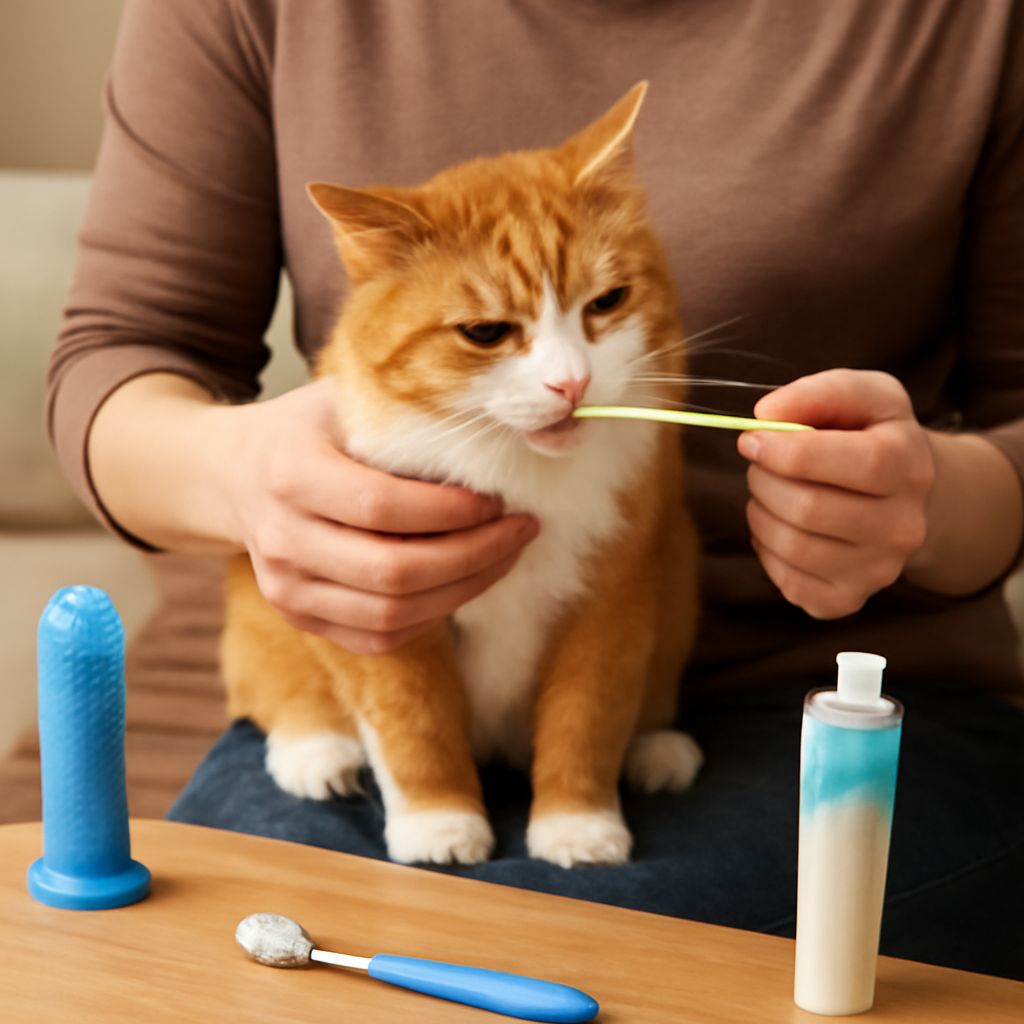
Start by letting your cat taste the toothpaste from your finger. Gradually move to rubbing a finger along the gumline, then introduce a finger brush, then a small soft-bristle pet toothbrush. Focus on the outer surfaces of the upper teeth — where tartar builds fastest. Daily brushing is ideal; three times per week is the minimum for meaningful plaque control.
Safety Recap
Never use human toothpaste on cats. Check that any cat toothpaste is fluoride-free and xylitol-free before purchasing. When using homemade cat toothpaste, keep amounts small and avoid adding anything beyond baking soda and safe broth. If your cat’s gums are red, swollen, or bleeding, see a vet for a dental exam before starting a home brushing routine.