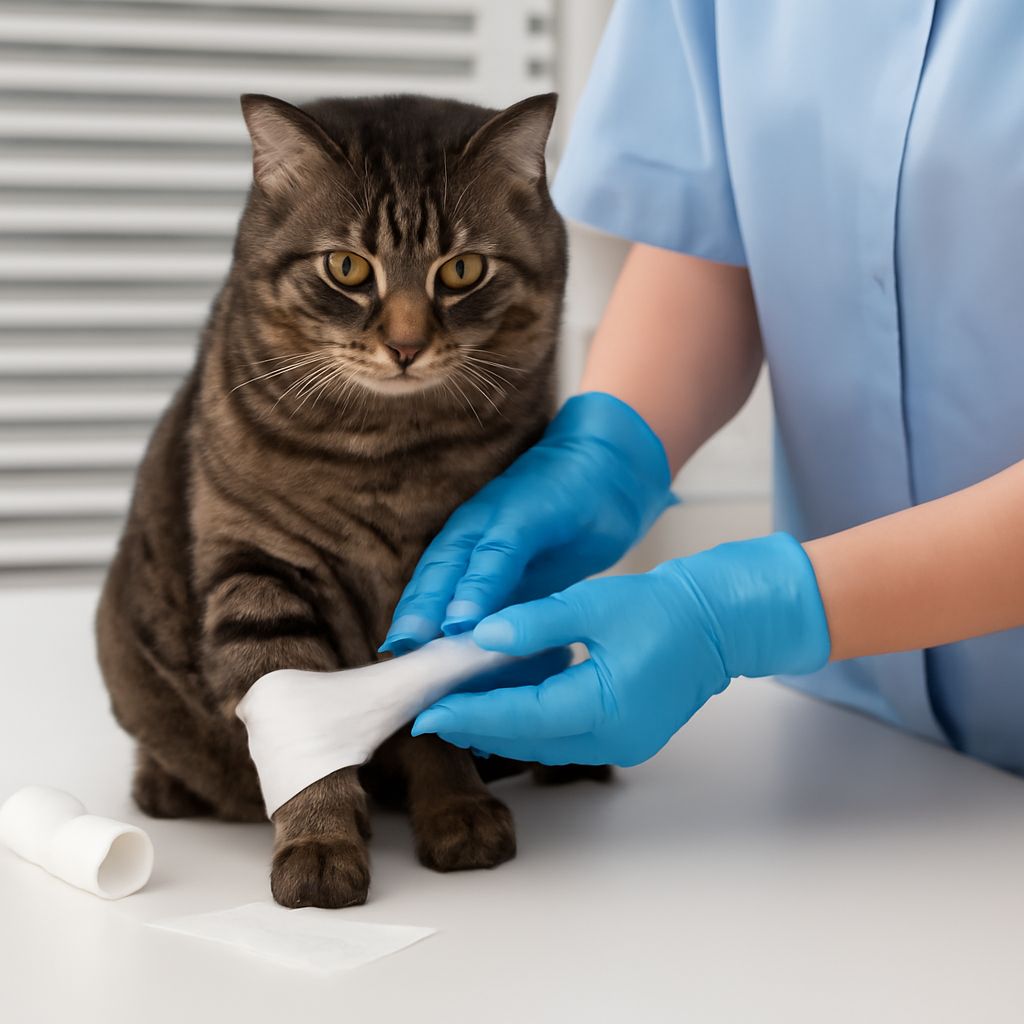
You noticed your cat limping and found a puncture wound on their leg, or maybe a bite mark on the scruff that has swollen since yesterday. Cat wound care is a skill every cat owner eventually needs, and knowing what to do in those first few minutes makes a real difference in how well an injury heals. Some wounds can be managed at home with proper cleaning and monitoring. Others need a vet the same day.
How to heal an open wound on a cat depends on the wound type, depth, and how contaminated it is. Wound care for cats at home is appropriate for minor surface lacerations and shallow scrapes. Cat wound treatment for anything deeper, bite-related, or showing signs of infection belongs at a clinic. Cat wounds come in many forms, and the most common one owners underestimate is the bite wound, which looks small on the surface but carries bacteria deep into tissue.
Assessing the Wound
What to Look For Before doing anything else, look at the wound under good light. Is it a surface scratch, a clean cut, or a puncture? Is there significant bleeding? Is the tissue around it swollen, warm, or discolored? A wound that is actively bleeding, very deep, or located near the eye, face, or joint needs veterinary care before you attempt any home treatment.
Bite wounds are the most deceptive injury type in cats. The entry point may be a single small hole, but the bacteria introduced go deep and multiply quickly. A bite wound that looks minor today can become an abscess requiring surgical drainage within 48 to 72 hours. When in doubt on a bite wound, call your vet the same day even if the wound looks small.
Stabilizing the Cat
An injured cat may scratch or bite when in pain. Use a towel to gently wrap the cat if needed during your examination. Stay calm and move slowly. A cat that feels restrained will resist more strongly, so light holds and brief handling work better than forceful control for most situations.
Cleaning and Dressing a Minor Wound
Safe Cleaning Products Flush the wound gently with saline solution or clean water. Remove visible debris. A mild antiseptic wash appropriate for cats, such as diluted chlorhexidine solution, can be used if recommended by your vet. Do not use hydrogen peroxide, iodine, or rubbing alcohol directly on wounds, as these damage tissue and delay healing.
Pat the area dry with clean gauze rather than cotton balls, which can leave fibers in the wound. Apply a thin layer of veterinary wound gel if available. Keep the wound clean and dry and prevent your cat from licking the area.
Preventing Licking and Monitoring
An e-collar, also called a cone, prevents licking more reliably than any other method. Soft recovery collars are available as a less rigid alternative if your cat strongly resists the traditional cone. Licking introduces mouth bacteria to the wound and physically prevents healing.
Check the wound twice daily for signs of infection: increasing redness, swelling, discharge, warmth, or odor. A wound that is healing normally will look progressively better with each passing day. Any wound that looks worse after 24 to 48 hours needs veterinary assessment.
When to Go to the Vet
Go immediately for wounds with heavy bleeding that does not stop within five minutes of firm pressure, wounds near the eyes or in the mouth, suspected bite wounds, any wound with visible deep tissue, or a cat that is in obvious pain or cannot bear weight on an affected limb.
Go within 24 hours for wounds that look minor but were caused by a bite or scratch from another animal, any wound on the paw or near a joint, or any wound in a cat that has not had a recent tetanus or rabies vaccination update if applicable in your region.
Safety recap: cat wound care at home is suitable only for minor, clean, surface-level injuries. Any bite wound, deep laceration, or wound showing infection signs needs professional treatment. When you are unsure about severity, calling your vet to describe what you are seeing is always the right first step rather than waiting to see how it develops.