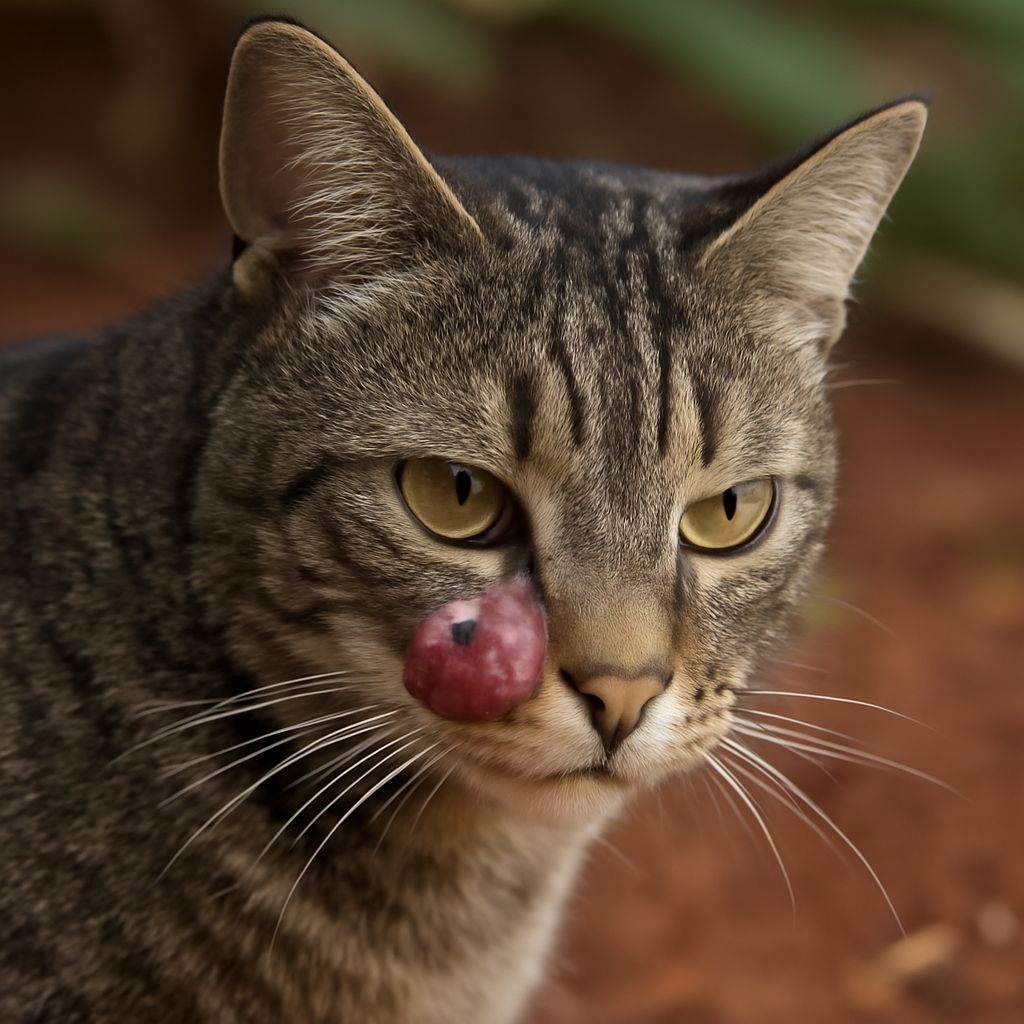
You are petting your cat and your fingers land on a warm, swollen lump you did not notice before. Or maybe your cat flinched when you touched a spot that looks slightly matted with fur. An abscess on cat is one of the more common skin issues in cats, especially those that go outdoors and get into the occasional scrap with other animals. It is a localized pocket of infection, and while it can look alarming, knowing what you are dealing with makes the response much clearer.
An abscess in cats typically forms when bacteria get pushed under the skin during a bite wound. The puncture seals over on the surface while bacteria multiply underneath, producing pus. Abscesses in cats often go undetected for days because fur covers the area and cats tend to hide discomfort. What looks like an abcess on cat from the outside may be a firm lump one day and a draining wound the next. Knowing how to treat an abscess on a cat, or when to let your vet do it, is genuinely useful knowledge.
What an Abscess Looks Like
Early Signs In the early stages, an abscess often feels like a firm, warm swelling under the skin. The cat may be tender in that area, licking at it or reacting when you touch it. You might also notice the cat moving differently if the abscess is near a limb joint or on the neck where range of motion is affected.
Fever, lethargy, and reduced appetite often accompany an abscess as the body fights the infection. A cat that was fine yesterday and today seems off and has a swollen area deserves a close look, particularly if they roam outside.
When It Ruptures
Abscesses frequently rupture on their own, releasing a thick, foul-smelling discharge. The fur around the site becomes matted and wet. This is actually a step in the resolution process, as the pressure releases and the body begins clearing the infection. But a ruptured abscess still needs attention because the wound can close and reinfect if not properly cleaned and left to drain.
After rupture, the area may look raw and ragged. Some owners mistake a ruptured abscess for a bite wound or other injury. The characteristic odor of the discharge is usually the clearest indicator of what you are looking at.
Treatment and Home Care
Why Vet Care Is Usually Needed Most abscesses require veterinary treatment. Your vet will clip the fur around the site, clean it thoroughly, and ensure the abscess drains fully. Antibiotics are typically prescribed to address the bacterial infection. In some cases, a drain is placed temporarily to keep the wound open and allow complete drainage over a few days.
Attempting to squeeze or lance an abscess at home without proper training and sterile equipment can push infection deeper, spread it to surrounding tissue, or cause significant pain to your cat. The short-term discomfort of a vet visit is far preferable to a worsening infection.
At-Home Support After Vet Treatment
Once your vet has addressed the abscess, your job is to follow the aftercare instructions carefully. This usually means keeping the area clean, preventing your cat from licking or chewing at the wound (an e-collar helps), and completing the full antibiotic course even if the site looks better quickly.
Warm compresses applied gently to the area for a few minutes several times a day can help keep drainage moving if your vet recommends it. Watch for signs of spreading redness, increasing swelling, or the cat seeming to feel worse despite treatment, as these signal a need to return to the clinic.
Bottom line: an abscess on a cat is a bacterial infection that almost always needs antibiotic treatment and proper wound management. Recognizing the signs early and getting veterinary care promptly means faster healing and less discomfort for your cat. Preventing future abscesses comes down to keeping your cat indoors or closely supervising outdoor time to reduce the chance of fights.