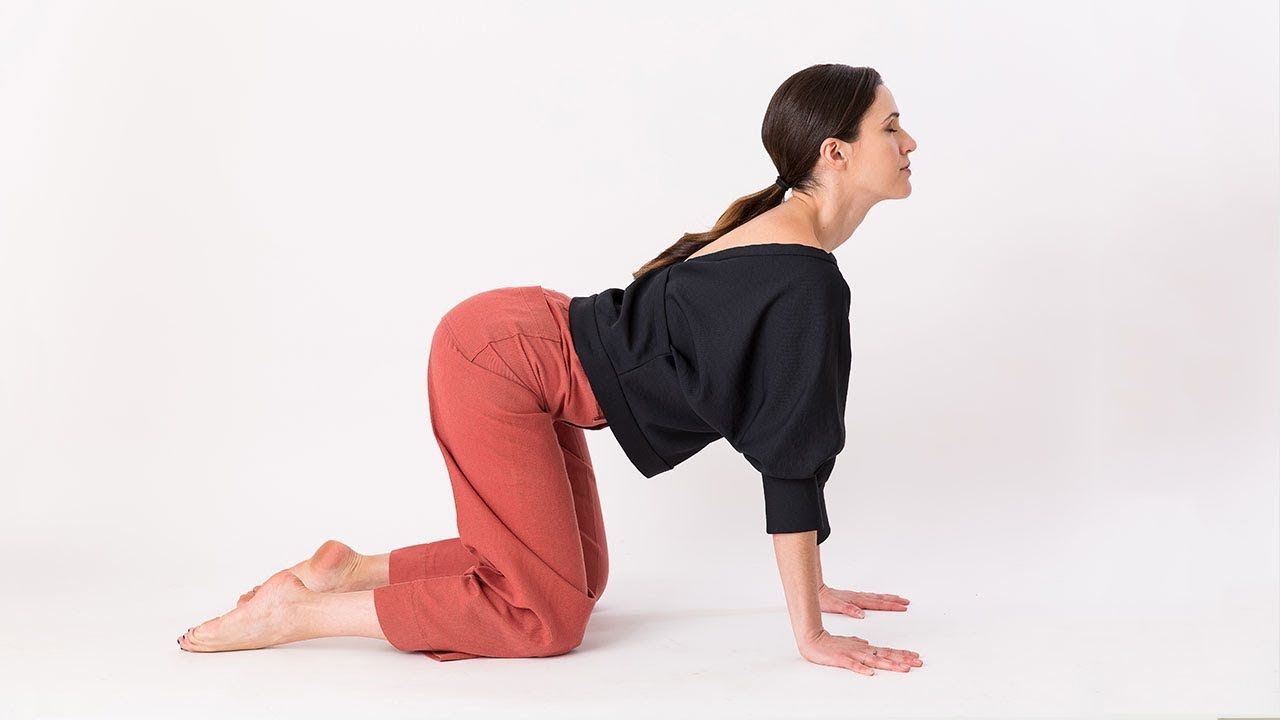
Your back feels tight after a long day at a desk, and someone suggests you try the cat cow stretch. You get down on the floor, arch and round your back a few times, and — surprisingly — it helps. This movement is one of the most widely used spinal mobility exercises in yoga and physical therapy, and its simplicity is a feature, not a flaw.
Whether you’ve encountered the cat cow exercise in a yoga class or a physical therapy handout, the mechanics are the same. The cat cow yoga pose moves your spine through two complementary shapes: flexion (rounding) and extension (arching). Combined, they form the cat cow yoga sequence that warms the spine, activates the core, and loosens the muscles along the back. The cat cow pose yoga tradition places this movement near the beginning of many flows, and there’s good reason for that.
How to Do the Cat-Cow Movement Correctly
Starting Position
Begin on hands and knees. Wrists should sit directly under your shoulders, knees under your hips. Your spine is in a neutral position — not arched or rounded, just flat. Take a breath here before you begin moving.
The Cat Shape (Flexion)
On an exhale, press your hands and knees into the floor and round your back toward the ceiling. Your tailbone tucks under, your belly draws up, and your chin drops toward your chest. This is the “cat” portion of the stretch — mimicking the Halloween-cat arch. Hold briefly, then inhale to transition.
The Cow Shape (Extension)
On the inhale, let your belly drop toward the floor, lift your tailbone and chest, and gaze gently forward or upward. Your lower back curves inward, your shoulder blades draw together, and your core engages lightly to support the lumbar. This is the “cow” position. Move slowly between the two shapes, coordinating each transition with your breath.
Common Mistakes to Avoid
Moving too fast is the most common error. The benefit of this exercise comes from controlled, deliberate movement through the full range. Also avoid collapsing into your wrists — keep the weight distributed across your palms and fingers. If wrist discomfort is an issue, perform the movement on fists or use a folded blanket under your hands.
Benefits of the Cat-Cow Sequence
This two-part movement targets the lumbar spine, thoracic spine, and cervical spine in sequence. Regular practice improves spinal mobility and can reduce stiffness that builds up from prolonged sitting. The breathing coordination also builds body awareness and helps activate the parasympathetic nervous system, which supports stress reduction.
For people with mild lower back tightness, the spinal flexion and extension pattern helps restore normal range of motion. Physical therapists and yoga instructors alike recommend this exercise because it has a very low injury risk when performed with correct alignment. People with disc injuries or acute back pain should check with a healthcare provider before adding any spinal movement exercise.
Variations and Modifications
If being on hands and knees is uncomfortable, the same spinal movement can be done seated in a chair. Place your hands on your knees, and alternate between rounding and arching your back. The range of motion is smaller but the mechanics are identical. Another option is to perform the movement lying on your back with knees bent, tilting your pelvis forward and back against the floor.
Next Steps
Add 8–10 slow repetitions of this movement to your morning routine or at the start of any workout. Pair it with a thread-the-needle stretch for thoracic rotation and you’ll have a simple daily mobility sequence that takes under five minutes. If you’re working with a physical therapist or yoga instructor, mention that you’re practicing this movement so they can assess your form and suggest progressions.